Foundation warning signs, from hairline to serious
Some cracks and sticking doors are minor. Some are signs of movement that needs fast attention. The key is to stay calm, look at the pattern, and get the right evaluation before you hire anyone.
Start with severity, not panic
A foundation problem is not always an emergency. Houses move a little over time. Concrete shrinks as it cures. Dry and wet seasons can change the soil. That said, foundation and structural problems can be serious and sometimes a safety risk.
A useful way to think about warning signs is in three levels:
- Often minor or cosmetic: very thin hairline cracks, especially in new concrete or drywall; one sticky door during humid weather; small settlement that has not changed.
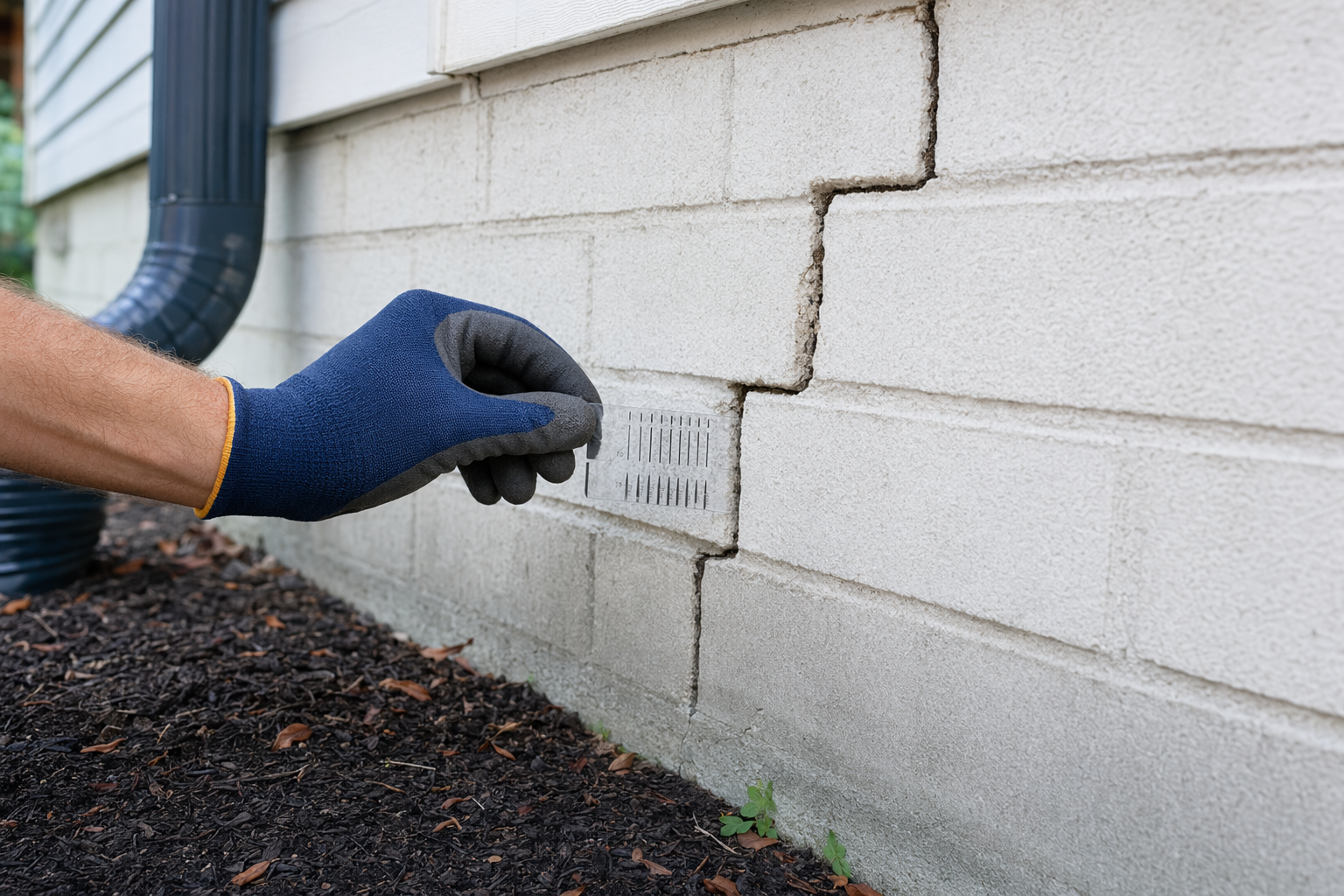
- Needs prompt evaluation: stair-step cracks in brick or block, repeated sticking doors and windows, sloping floors, cracks that keep getting longer or wider, gaps at trim, water entering a basement or crawl space.
- Urgent warning signs: a wall that is actively leaning or moving, large new cracks opening quickly, bulging basement walls, sudden floor drop, broken framing sounds with visible movement, or signs of possible collapse.
If you see urgent signs, leave the area and contact a licensed structural engineer or your local building department right away. Do not wait for a sales visit.
For non-urgent concerns, BedrockBearing can help you understand what you are seeing and get matched with licensed, insured foundation repair pros at no cost. But before hiring a contractor, we strongly recommend an independent, licensed structural engineer who does not also sell the repair. That step protects you from being sold work you do not need.
Signs that are often minor, and signs that deserve real attention
Not every crack means foundation failure. But the type, size, location, and change over time matter.
Often minor or cosmetic
- Very thin hairline cracks in poured concrete or drywall that do not change.
- Small shrinkage cracks near windows or corners after construction.
- A single interior door that sticks only during humid months.
- Tiny surface flaking or old patched cracks that have stayed the same for years.
Worth watching closely
- Cracks wider than hairline, especially if they reappear after patching.
- Diagonal cracks above doors or windows.
- Small gaps between baseboards, crown molding, cabinets, or countertops and the wall.
- Floors that feel a little uneven in one area.
- Water stains, damp smells, or efflorescence on basement walls.
More concerning signs
- Stair-step cracks in brick, block, or masonry.
- Horizontal cracks in basement or retaining walls.
- A bowing, bulging, or leaning wall.
- Multiple doors and windows suddenly sticking or not latching.
- Gaps between exterior brick and window frames, garage slabs, porches, or steps pulling away from the house.
- Repeated seasonal movement that gets worse each year.
Urgent signs
- A wall that appears to be moving now.
- Large new cracks opening over days or weeks.
- A basement wall that is visibly bulged inward.
- A sudden drop in floor level or obvious sag with cracking.
- Cracking with noises, falling material, or any sign part of the structure could fail.
For a fuller checklist, see foundation warning signs.
What these signs can mean
The same symptom can come from different causes. A crack is only a clue. The real cause may be soil movement, drainage, water pressure, poor compaction, expansive clay, settlement, tree roots, plumbing leaks, slope conditions, or a wall taking lateral pressure from wet soil.
A few examples:
- Vertical crack in a poured concrete wall: sometimes normal shrinkage, sometimes settlement if it is wider or changing.
- Stair-step crack in brick: can point to differential settlement, but the pattern and location matter.
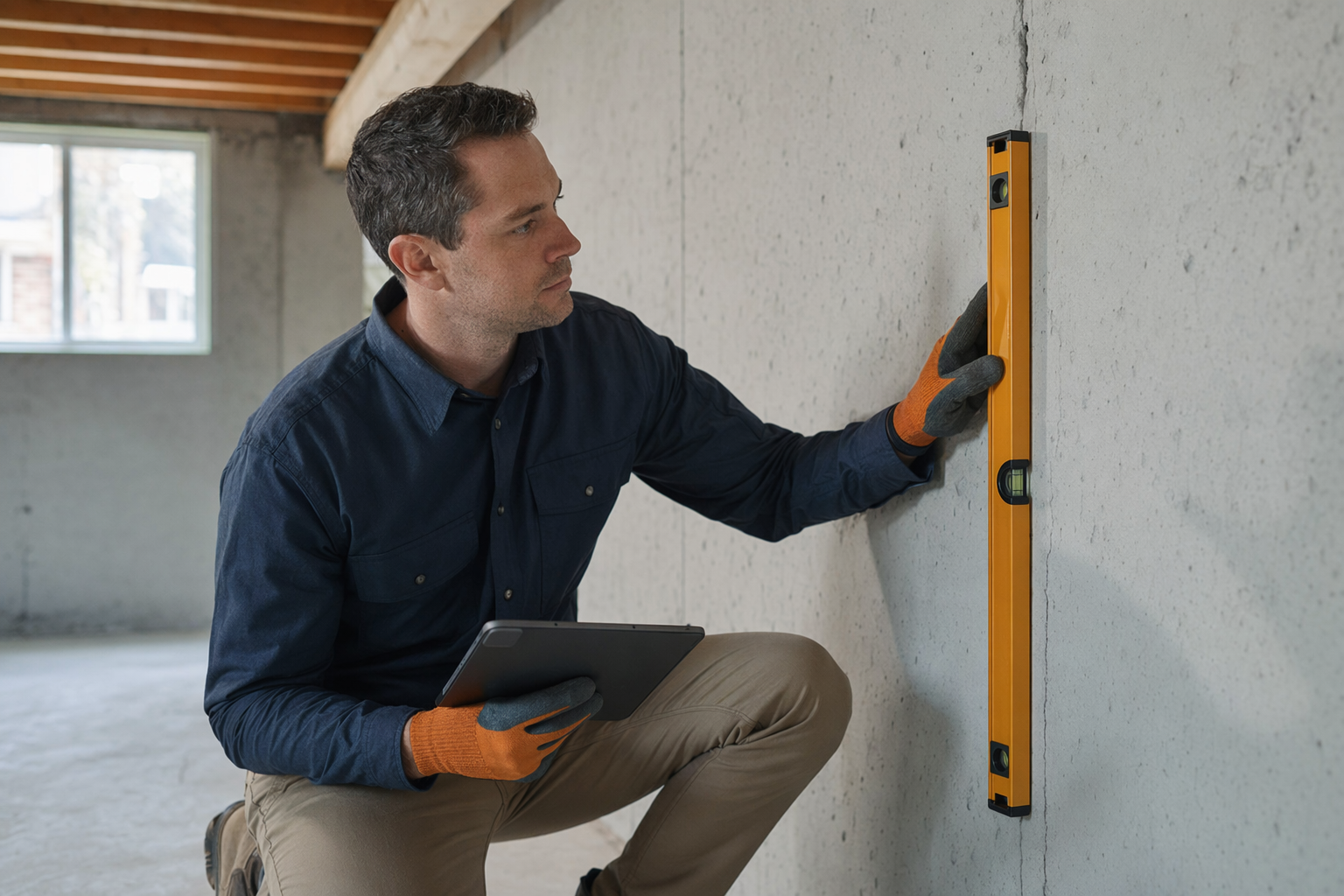
- Horizontal crack in a basement wall: often more serious because it may suggest pressure pushing the wall inward.
- Sticky windows plus sloping floors: can happen when one part of the home settles more than another.
- Water in the basement: may be a drainage or waterproofing issue, not a foundation repair issue by itself, though water can make structural problems worse.
This is why an independent, licensed structural engineer matters. An engineer evaluates the movement and likely cause. A contractor sells a repair method. Those are not the same job. If the person inspecting also profits from a bigger repair, that is a conflict you should notice.
An independent structural engineer report often costs about $400-$1,200. That is usually money well spent before a large repair. You can read more about that step here: structural engineer evaluation.
What to do if you notice a warning sign
Use a simple process:
- Document what you see. Take clear photos. Add the date. Measure crack width if you can. Note whether a door rubs, a window will not lock, or a floor feels out of level.
- Check for change. Ask: is it old and stable, or new and growing? Fast change matters more than age alone.
- Look for water clues. Downspouts dumping near the house, standing water, clogged gutters, wet crawl spaces, or a damp basement can all make movement worse.
- Treat urgent signs as urgent. If a wall is actively moving, badly bulging, or there are signs of imminent collapse, leave the area and contact a licensed structural engineer or local building department right away.
- Get an independent engineer first for significant concerns. This is especially important before expensive work like piers, wall anchors, beams, or major waterproofing.
- Then compare written estimates from licensed and insured contractors. Verify the license and insurance yourself. Get the scope, method, price, and permit responsibilities in writing before any deposit.
Typical repair costs vary a lot by cause, soil and site conditions, access, method, and region. Honest rough ranges include:
- Crack injection: $300-$2,500
- Slabjacking or foam lifting for a typical area: $600-$3,500
- Steel push or helical piers: $1,200-$3,000 per pier, with many jobs needing 8-12 piers for totals around $10,000-$30,000+
- Bowing-wall stabilization: $4,000-$15,000+
- Basement waterproofing or drainage: $2,000-$12,000
These are estimates, not quotes. The real price depends on the actual problem and fix. For broader pricing context, see costs.
Common mistakes that cost homeowners money
People get burned when they move too fast or trust the wrong person.
Mistake 1: Treating cosmetic patching as a diagnosis
Caulk, paint, or filler can hide a symptom without solving the cause.
Mistake 2: Assuming every crack needs piers
Some homes need underpinning. Many do not. Piers can be the right answer, but only when the movement and cause support that method.
Mistake 3: Skipping the independent engineer
This is one of the biggest and most expensive mistakes. A contractor may be honest, but an independent engineer gives you a separate opinion with no repair sale attached.
Mistake 4: Focusing only on price
A low bid can leave out drainage work, cleanup, permits, engineering, or enough piers or supports. Compare the scope, not just the number.
Mistake 5: Not verifying license and insurance
Always verify both yourself. Do not rely only on a business card or promise.
Mistake 6: Paying too much up front
Get the full scope and price in writing before any deposit. Know who pulls permits. Hold final payment until the agreed work is complete.
If you are comparing companies, use a simple checklist and ask hard questions. This guide helps: vet a foundation contractor.
Your next step
If you are seeing cracks, sticking doors, sloping floors, or basement wall movement, do not ignore it. But do not let anyone scare you into a same-day contract either.
Here is the safest path:
- Urgent movement or collapse risk: leave the area and call a licensed structural engineer or local building department.
- Non-urgent but real concern: schedule an independent, licensed structural engineer evaluation first.
- After that: compare estimates from licensed and insured contractors, verify credentials yourself, and follow local permits and code.
BedrockBearing is a free matching service. We help homeowners, including new immigrants and non-native English speakers, explain what they are seeing and get connected with licensed, insured foundation repair pros. We do not inspect, design repairs, or perform the work. You compare options. You choose who to hire. You hold the final payment.
If you are ready, you can get matched now.
Small cracks can be normal, but growing cracks, bowing walls, sloping floors, and repeated sticking doors need real attention. If a wall is moving or collapse seems possible, leave the area and call a licensed structural engineer or building department now. Otherwise, get an independent structural engineer first, then compare written estimates from licensed and insured contractors.