Piering & underpinning
Piering and underpinning are ways to support a settling foundation by transferring weight to stronger soil or deeper bearing layers. They can solve real movement problems, but they are not a one-size-fits-all fix, and they are often oversold.
What piering and underpinning are
Piering and underpinning are repair methods used when part of a home settles, sinks, or keeps moving because the soil under it is not supporting the load well enough. The goal is simple: move the weight of the structure to more stable support.
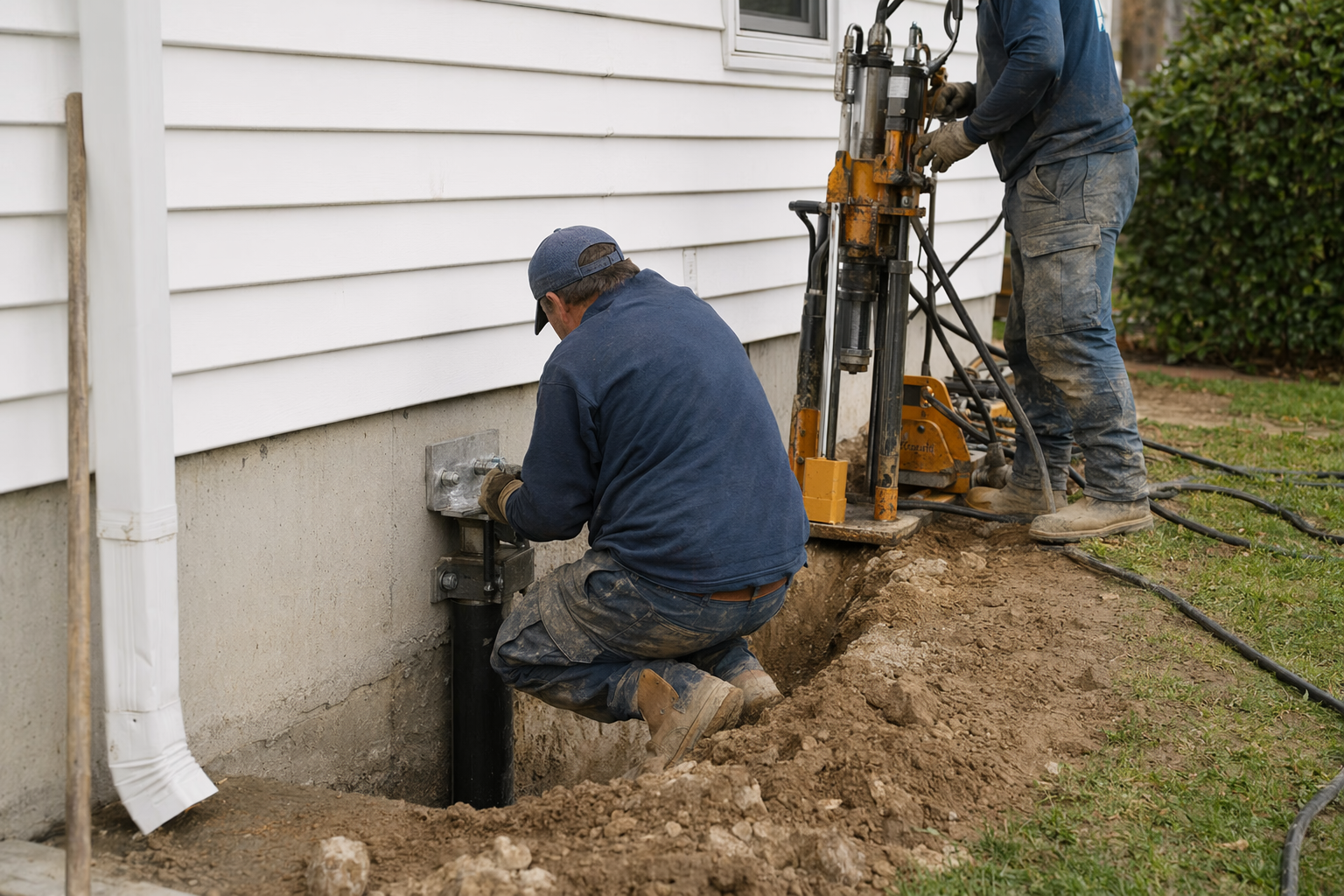
In plain terms, crews install steel piers or helical piers next to the footing, attach brackets to the foundation, and use the piers to support the home. In some cases, they may lift part of the structure toward its earlier position. In other cases, the safer goal is only to stop further settlement.
This method is common for:
- settling corners
- stair-step brick cracks
- doors or windows that suddenly stop working right
- sloping floors tied to foundation movement
- gaps between walls, trim, or exterior masonry
But not every crack or slope means you need piers. Some homes need crack repair, drainage work, or a different structural fix instead. That is why BedrockBearing strongly recommends an independent, licensed structural engineer first. An engineer who does not also sell the repair can tell you whether piering is actually needed. Read more about that here: structural engineer evaluation.
How the process usually works
A typical piering or underpinning job follows these steps:
- Independent evaluation first. A licensed structural engineer reviews the movement, crack pattern, site drainage, and likely cause. That report often costs about $400-$1,200.
- Repair design and scope. The recommended solution should say where support is needed, how many piers may be required, and whether lifting is appropriate.
- Contractor pricing. Licensed and insured contractors price the work based on access, depth, soil resistance, equipment, and how much of the foundation must be supported.
- Permits and layout. Local permit rules vary. Follow local code, and make sure the scope is in writing before any deposit.
- Excavation and installation. Small areas are excavated near the footing. Steel push piers or helical piers are installed until suitable bearing resistance or depth is reached, depending on the system and site conditions.
- Load transfer. Brackets connect the piers to the foundation, and the structure load is transferred onto the new support points.
- Possible lift and stabilization. Some jobs include a controlled lift. Some do not. Full cosmetic recovery is not guaranteed.
- Backfill and cleanup. The area is closed up, and you should receive written scope details, warranty terms if offered, and permit documentation where required.
Two common systems are:
- Steel push piers: driven downward using the structure's weight as resistance
- Helical piers: screwed into the ground like large steel screws
The right system depends on the structure, the soil, access, water conditions, and the repair goal. BedrockBearing does not inspect, design, or install pier systems. We are a free matching service that helps you compare licensed, insured local pros after you understand the problem. If you want to see this service in context, start here: piering & underpinning service details.
Typical cost range
Piering and underpinning are usually among the more expensive foundation repairs, but sometimes they are the right fix for real settlement.
Typical pricing often lands here:
- Steel push or helical piers: about $1,200-$3,000 per pier
- Many homes need 8-12 piers, so a lot of jobs end up around $10,000-$30,000+
Real price depends on:
- the actual cause of movement
- soil and site conditions
- how deep the piers must go
- how many support points are needed
- access for equipment and excavation
- whether the job includes lifting
- local labor, permit, and engineering requirements
Important: these are typical ranges and estimates, not quotes or guarantees.
Be careful with very low bids. A low number can mean fewer piers than needed, missing permit costs, weak cleanup terms, or vague language about lift results. Be just as careful with high-pressure sales. A big crack does not automatically mean you need a full pier job.
If the real issue is water, expansive soil, a bowing wall, or a localized crack, another service may be more appropriate, such as foundation crack repair or foundation waterproofing.
How long it takes and what to expect at your house
Most residential pier jobs take a few days to about two weeks, depending on the number of piers, weather, access, permit timing, and whether interior work is involved.
What homeowners often notice during the job:
- excavation around parts of the foundation
- noise and vibration from installation equipment
- temporary disruption to landscaping, walks, or porches near work areas
- measured lifting in some cases, but not always
- cracks that may change slightly during stabilization or lift attempts
A few honest points matter here:
- Stopping movement is often the main goal.
- A contractor may be able to achieve some lift, but perfect re-leveling is not guaranteed.
- Cosmetic repairs like drywall patching, trim adjustment, or masonry tuckpointing may still be needed after the structural work.
- If movement is ongoing or severe, treat it seriously. If you see a wall actively moving, large new cracks opening quickly, or signs of possible collapse, leave the area and contact a licensed structural engineer or your local building department right away.
If you are not sure whether what you are seeing is minor or urgent, review these common signs: foundation warning signs.
Pros, limits, and when it makes sense
Piering can be a good solution when the problem is true settlement and the load needs to be transferred to better support. But it is not magic.
Pros
- Can stabilize a settling foundation
- Can address deeper support issues when shallow soils are weak
- Sometimes allows partial lift of settled areas
- Usually more direct than repeated cosmetic patching that does not solve the cause
Limits and cons
- Expensive compared with smaller repairs
- Not every home with cracks needs piers
- The wrong layout or too few piers may not solve the problem well
- Lift results vary, and cosmetic damage may remain
- Drainage, gutters, grading, plumbing leaks, or expansive soil issues may still need separate correction
Piering often makes sense when an independent engineer ties the symptoms to settlement at specific load points. It makes less sense when the recommendation is based only on a sales visit with no real explanation of cause, soil behavior, or why this method is better than other options.
If one contractor says you need 12 piers and another says 6, do not guess. Ask each to explain the load path, pier spacing, target areas, and whether they are trying to stop movement or also lift. Then compare that against the engineer's report.
What to ask before you hire anyone
Use this checklist before signing:
- Are you licensed and insured for this work in my area? I will verify both myself.
- Will you pull permits if required, and will the scope follow local building code?
- What exactly is causing the movement in your opinion, and how does this repair address that cause?
- How many piers are included, where will they go, and why?
- Are you proposing push piers or helical piers? Why is that system right for this structure and site?
- Is the goal stabilization only, or attempted lift too?
- What results are not guaranteed?
- What repair items are excluded, such as interior crack repair, masonry repair, drainage correction, or landscaping restoration?
- What is the total written scope and price before any deposit?
- What warranty is offered, by whom, and what does it actually cover?
Also ask for a copy of the engineer's report if one exists, and compare bids line by line. You should control the process: an engineer evaluates, you compare estimates, you choose who to hire, and you hold final payment until the written scope is complete.
If you need help comparing local options, BedrockBearing can match you, at no cost, with licensed and insured foundation repair pros. Start here: get matched or review our tips on how to vet a foundation contractor.
Engineer first, then compare bids
This is the part many homeowners skip, and it is where people get burned.
A contractor sells repairs. That does not make every contractor dishonest, but it does create a built-in conflict. An independent, licensed structural engineer who does not also sell the repair can tell you whether piering is necessary, how urgent the issue appears, and what type of fix should be considered.
That step can protect you from:
- buying a larger repair than you need
- choosing the wrong method for the real cause
- paying for cosmetic lift promises that were never realistic
- missing drainage or soil problems that should be addressed too
BedrockBearing is a free matching service. We do not inspect foundations, design repairs, or give engineering advice. We help homeowners, including non-native English speakers, understand the issue and connect with licensed, insured local pros so they can compare written estimates. For a broader look at pricing, see foundation repair costs.
Piering can be the right fix for real foundation settlement, but it is costly and often oversold. Get an independent licensed structural engineer first, then compare written estimates from licensed and insured contractors, verify license and insurance yourself, and do not pay for promises that are not in writing.