How to vet a foundation repair contractor
A foundation repair job can cost a lot, and the wrong contractor can make a bad problem more expensive. The safest path is simple: get an independent structural engineer’s evaluation first, then compare licensed, insured contractors on the same written scope.
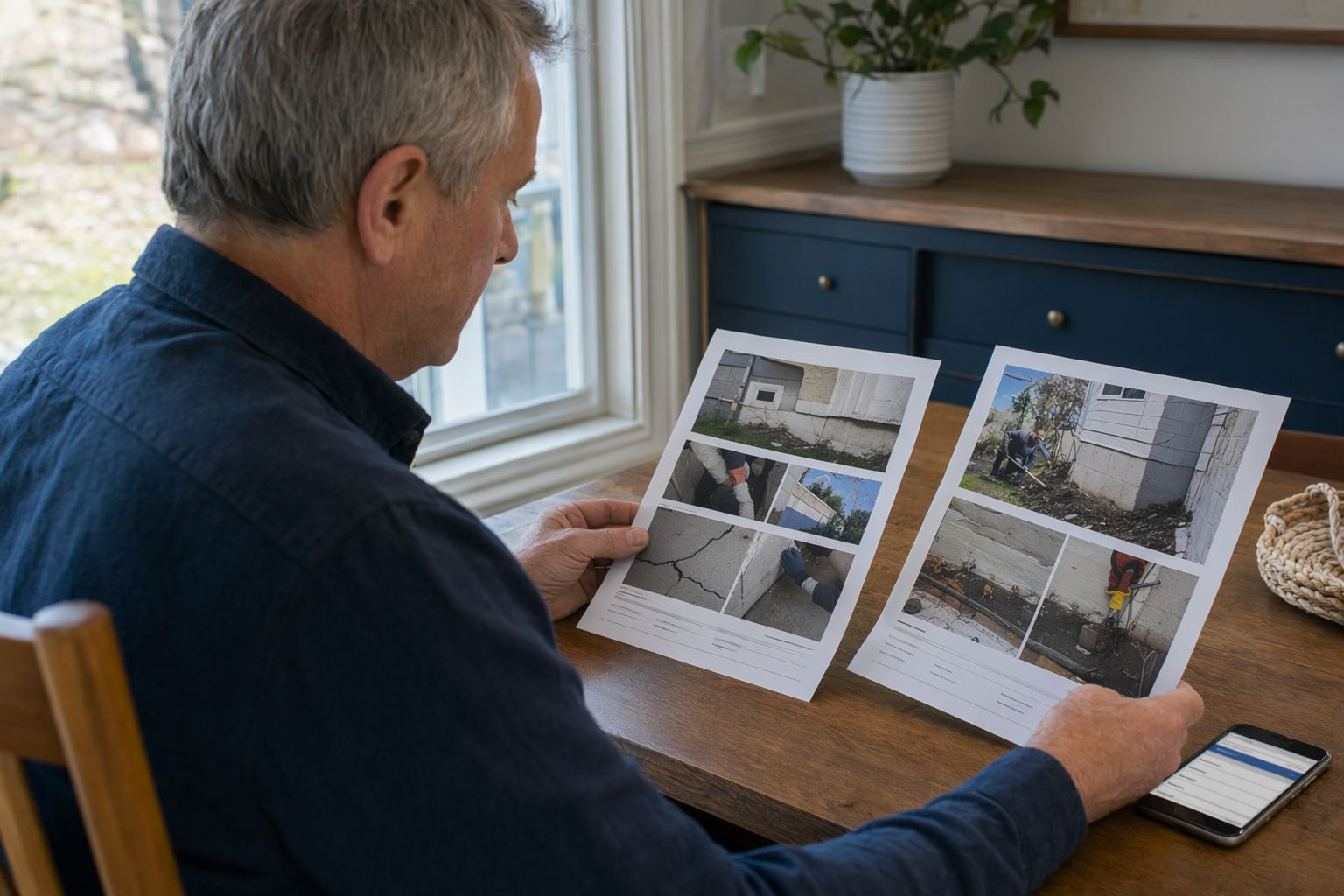
Start with an independent structural engineer, not a sales visit
Before you hire any foundation repair contractor, get an evaluation from an independent, licensed structural engineer if you can. Independent means the engineer does not also sell the repair. That matters because a contractor is there to sell a job, while an engineer should tell you what problem exists, how serious it is, and what kind of fix may be appropriate.
This step often protects homeowners from paying for work they do not need. An independent structural engineer report often costs about $400-$1,200. That is usually small compared with a repair job that may run into the thousands or tens of thousands.
A good engineer evaluation can help answer basic questions:
- Is this cosmetic cracking, settlement, water pressure, poor drainage, wood rot, or something else?
- Is the movement old and stable, or active and getting worse?
- Does the home need monitoring, drainage work, crack repair, wall stabilization, piers, or a different solution?
- Does the condition look serious enough that the local building department should be contacted?
If you are seeing urgent warning signs such as a wall actively moving, large new cracks opening quickly, doors suddenly jamming with obvious new shifting, or any sign of possible collapse, leave the area and contact a licensed structural engineer or your local building department right away. BedrockBearing is a free matching service. We do not inspect foundations or give engineering advice. We help you understand the issue and connect with licensed, insured pros. You can also read more about an engineer-first approach here: structural engineer evaluation.
What a trustworthy contractor should be willing to show you
Once you have an engineer report, or at least a clear description of the problem, start vetting contractors carefully. A reliable foundation repair contractor should be able to explain the proposed fix in plain language and back it up with documents.
Look for these basics:
- License and insurance. Ask for the contractor license number if your state or locality requires one. Ask for proof of general liability insurance and, where applicable, workers' compensation. Verify both yourself.
- A written scope of work. It should say what they will do, where they will do it, what materials or system they will use, how many piers or anchors are included if relevant, cleanup details, and who handles permits.
- A reason for the method chosen. For example, if they recommend piers, they should explain why settlement appears to be the issue and why that method fits your soil, site, and home layout. If they recommend wall stabilization, they should explain whether the wall is bowing from lateral pressure and what the limits of the system are.
- A clear price structure. Real foundation costs are usually estimates until conditions are fully known. The real price depends on the cause, the soil and site conditions, access, the method required, and the area. Be careful if a salesperson gives an instant "today only" number without a solid written scope.
- Permit and code compliance. Ask whether local permits are required and who will pull them. Foundation and structural work often needs permit review.
Typical ranges can help you sanity-check a proposal, but they are not quotes. For example, crack injection may run about $300-$2,500 depending on size and access. Slabjacking or foam lifting for a typical area may run about $600-$3,500. Steel push or helical piers are often around $1,200-$3,000 per pier, and many jobs need 8-12 piers, so larger jobs can be $10,000-$30,000+. Bowing-wall stabilization with carbon fiber or beams may run $4,000-$15,000+. Waterproofing or drainage work may run $2,000-$12,000. You can compare more typical ranges here: foundation repair costs.
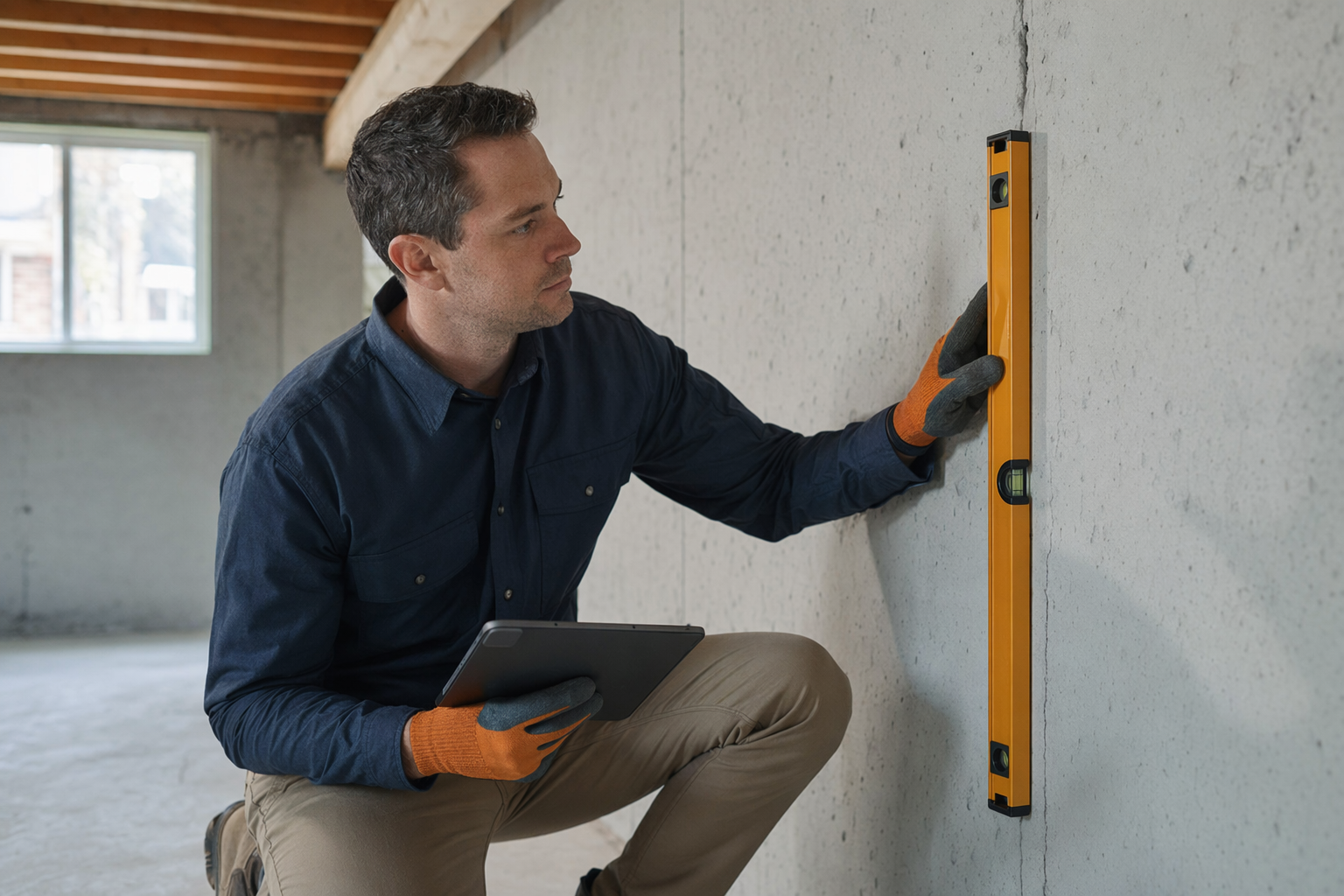
How to compare bids without getting confused
Many homeowners get three estimates and still feel stuck because each company proposes a different fix. The best way to compare bids is to make sure everyone is pricing the same problem.
Use this process:
- Start with one diagnosis. An independent engineer report is best. If you do not have one, write down the exact symptoms you are seeing: crack locations and width, sloping floors, sticking doors, water entry, bowing walls, gaps at trim, and whether the issue seems to be getting worse.
- Ask each contractor to respond to the same information. Send the same photos, notes, and engineer report to every bidder.
- Compare line by line. Look at quantity, materials, depth assumptions, warranty terms, permit responsibility, cleanup, and whether patching/finish work is included.
- Ask what could change the price. Hidden footing conditions, poor access, deeper competent bearing, drainage issues, or extra excavation can all affect cost.
- Do not judge on price alone. The cheapest bid can be incomplete. The highest bid can be oversized. What matters is whether the scope fits the actual problem.
If one contractor says you need 12 piers, another says 6, and another says only drainage, stop and slow down. That is exactly when an independent engineer helps most.
If you want a starting point for common repair types, these pages may help: piering and underpinning and bowing wall stabilization.
Red flags that should make you pause
Some foundation companies do good work. Some are mainly good at selling fear. Be cautious if you hear any of the following:
- "You must sign today." High-pressure same-day discounts are a bad sign on expensive structural work.
- "You do not need an engineer." That is a major red flag, especially on larger jobs.
- No one explains the cause. A proposal without a believable diagnosis is just a sales sheet.
- They will not show license or insurance documents. Do not rely on verbal claims.
- Vague warranties. Ask what is covered, for how long, who honors it, and what voids it.
- Large deposit demands before permits, schedule, or written scope. Get the scope and price in writing before any deposit.
- They minimize obvious safety issues. If a wall is moving, a contractor should not brush it off.
- They recommend a very expensive repair without discussing drainage, water, grading, plumbing leaks, or tree/root issues. Sometimes the root cause is outside the footing itself.
Also be careful with photos and demos that are meant to scare you. Cracks and movement can be serious, but not every crack means the house is failing. On the other hand, some warning signs do need urgent attention. Review common signs here: foundation warning signs.
A practical hiring checklist before you sign
Use this short checklist to protect yourself:
- Get an independent licensed structural engineer evaluation before hiring, especially for major work.
- Get 2-4 written estimates from licensed and insured contractors.
- Verify the license and insurance yourself.
- Make sure each bid states the scope, materials, quantities, exclusions, permit responsibility, payment terms, and cleanup.
- Ask whether the price is an estimate and what site conditions could change it.
- Ask who will be on site, how long the job should take, and whether subcontractors will be used.
- Follow local permits and building code.
- Do not pay the full amount up front. Hold final payment until the agreed work is completed.
BedrockBearing is a free matching service for homeowners. We do not perform inspections or repairs. We help you compare options and connect with licensed, insured foundation repair pros, and participating pros pay a flat fee to be included. You stay in control: the engineer evaluates, you compare estimates, you choose who to hire, and you hold the final payment.
If you want help finding companies to compare, start here: get matched.
Do not hire a foundation contractor just because a salesperson says your house is in danger. First, get an independent licensed structural engineer if the issue looks serious or the repair is expensive. Then compare written bids from licensed, insured contractors, verify their documents yourself, and make sure the scope, price, permits, and warranty are clear before you pay a deposit.