Where your foundation repair budget goes
Foundation repair bills can feel confusing fast. The real cost is usually not just "the fix". It is diagnosis, access, labor, equipment, materials, permits, and the level of risk and difficulty at your property.
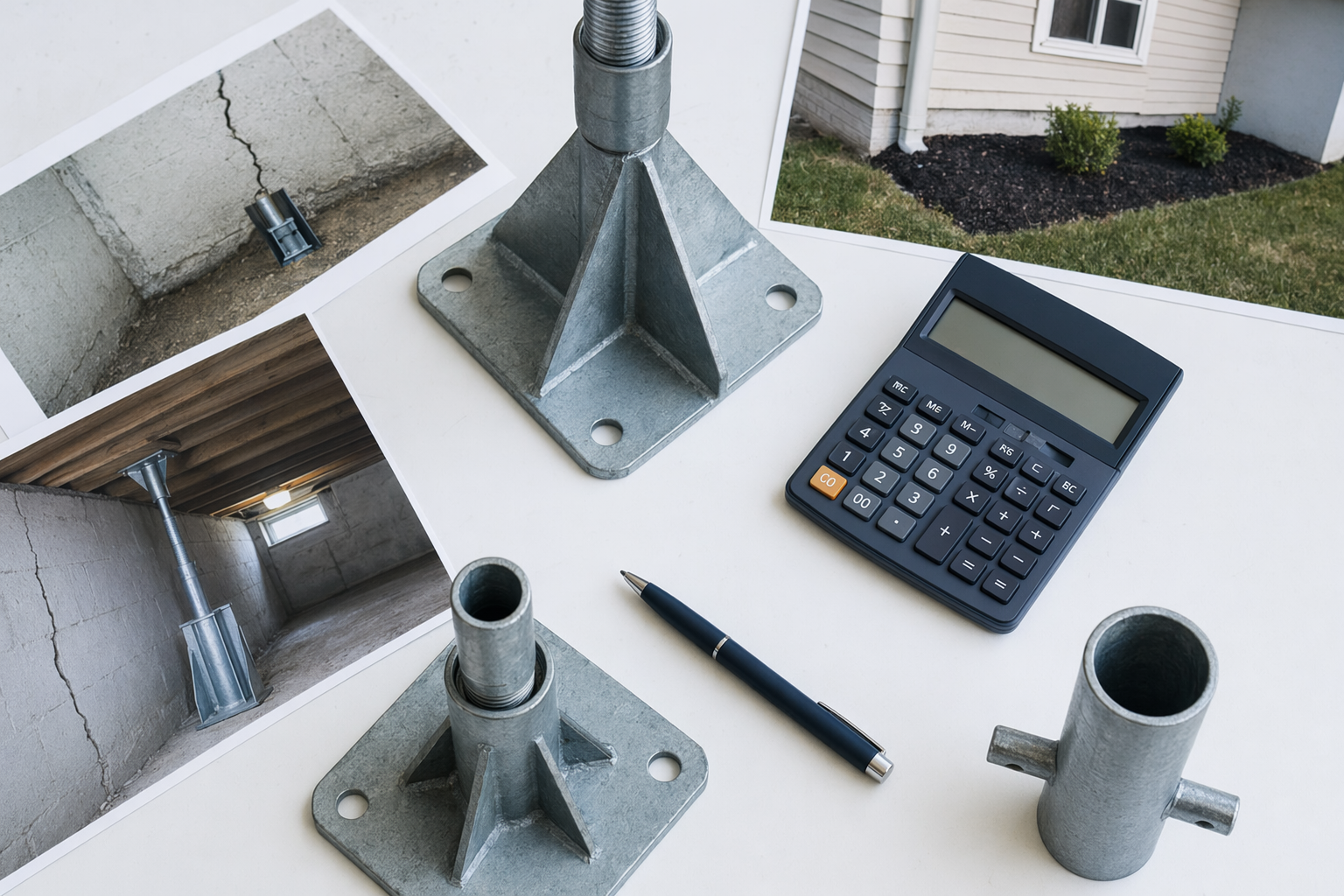
The biggest cost is usually the cause, not the crack you can see
A visible crack or a sticking door is often just the symptom. The real price depends on why the foundation is moving, how much it has moved, what type of foundation you have, and what method is actually needed.
Typical ranges can help you plan, but they are not quotes. Real price depends on the cause, the soil and site conditions, access, the method required, and your area.
Common examples:
- Crack injection for a non-structural leak path or minor concrete crack may run about $300-$2,500.
- Slabjacking, mudjacking, or foam lifting for a typical settled area often runs about $600-$3,500.
- Steel push piers or helical piers often run about $1,200-$3,000 per pier. Many jobs need 8-12 piers, so total cost can land around $10,000-$30,000+.
- Bowing wall stabilization with carbon fiber or steel beams may run about $4,000-$15,000+.
- Basement waterproofing or drainage work often runs about $2,000-$12,000.
- An independent structural engineer report often costs about $400-$1,200.
That engineer cost matters. It can save you from paying for the wrong repair. We strongly recommend an evaluation by an independent, licensed structural engineer before hiring a contractor, especially on bigger jobs. The engineer should not also be selling the repair. See what an engineer evaluation is for if you are not sure where to start.
What your money usually pays for
Homeowners sometimes think they are paying only for piers, foam, epoxy, or wall straps. In reality, the bill often includes several parts.
1. Diagnosis and planning
A real fix starts with understanding the pattern of movement, drainage, soils, and load path. BedrockBearing does not inspect or diagnose foundations. We are a free matching service. But this is exactly why an independent engineer is so important before repair work is sold.
2. Labor and equipment
Excavation, lifting equipment, pier-driving tools, concrete breaking, haul-off, and crew time add up quickly. Tight crawlspaces, finished basements, landscaping, decks, or limited side-yard access usually raise the price.
3. Materials
Steel piers, helical piers, carbon fiber straps, steel beams, drainage pipe, sump components, membranes, and specialty grout or foam all have different costs and limitations.
4. Site conditions
Clay soils, fill soils, poor drainage, tree roots, a steep lot, nearby structures, or high groundwater can change both method and price.
5. Permits and code compliance
Some work needs permits or inspections. Follow local permits and building code. Get the scope and price in writing before any deposit.
6. Finishing and cleanup
Concrete patching, interior access cuts, dirt removal, restoring a walkway, or reconnecting parts of the site may or may not be included. Ask exactly what is included and what is not.
If you want a broader view of typical numbers by repair type, see foundation repair costs.
Why two bids can be far apart
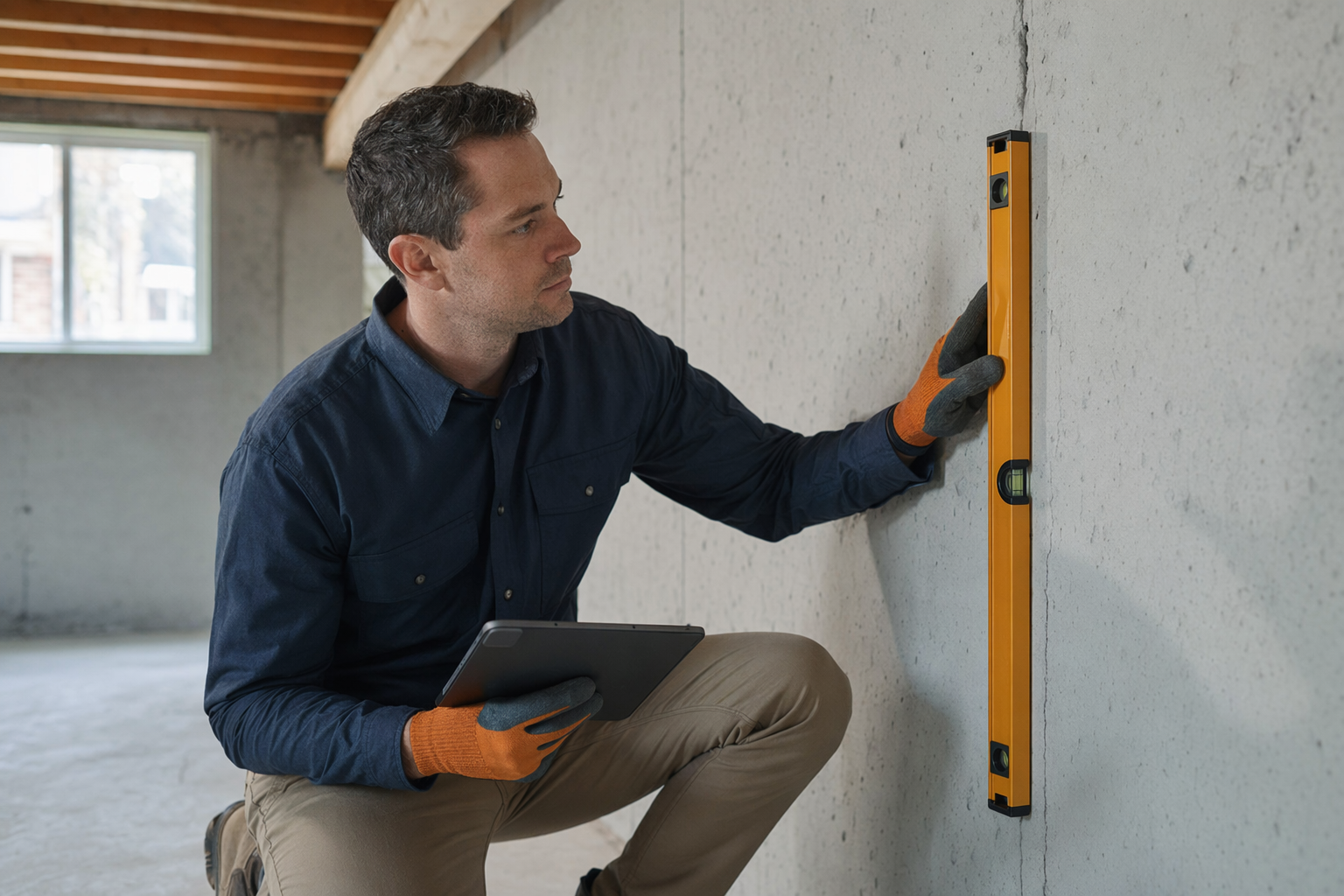
It is normal to see a big spread between estimates. That does not always mean one company is dishonest. But it can mean the companies are solving different problems.
A lower bid may be lower because:
- It covers fewer piers or shorter beams
- It skips drainage or water control that may be part of the cause
- It assumes easier access than you actually have
- It leaves out permit fees, patch-back, disposal, or cleanup
- It recommends a temporary symptom fix instead of a movement fix
A higher bid may be higher because:
- It includes more engineering detail or a bigger scope
- It includes difficult excavation or tight-access labor
- It uses a different stabilization system
- It includes waterproofing, drainage, or concrete restoration with the structural work
This is why homeowners get burned when they compare only the bottom-line number. Compare:
- Exact scope of work
- Repair method proposed and why
- Number and spacing of piers, straps, or beams if applicable
- What prep, patching, cleanup, and permit handling are included
- Warranty terms in writing
- Whether the recommendation matches an independent engineer's report
If a contractor wants to start expensive work without recommending an engineer on a significant structural issue, slow down. You can read more about how to vet a foundation contractor.
What to do before you spend real money
Use this order. It protects you.
1. Take warning signs seriously
If you see a wall actively moving, large new cracks opening, major leaning, or signs of possible collapse, leave the area and contact a licensed structural engineer or your local building department right away. Foundation and structural problems can be serious and sometimes a safety risk.
2. Document what you see
Take clear photos. Note crack width, location, when you first noticed it, whether doors stick, whether floors slope, and whether water shows up after rain. This helps the engineer and the contractors later.
3. Get an independent structural engineer evaluation
This is the best money most homeowners spend. The engineer evaluates. The contractor prices the repair. Those should ideally be separate.
4. Then get estimates from licensed and insured contractors
Verify the license and insurance yourself. Ask each company to bid from the same engineer report or scope when possible.
5. Read the writing carefully
Make sure the proposal says what is included, what is excluded, permit responsibility, cleanup, patch-back, and payment schedule. Do not rely on verbal promises.
6. Hold final payment until the agreed work is complete
You compare estimates. You choose who to hire. You hold the final payment.
If you are still at the "what am I even looking at" stage, foundation warning signs can help you sort what you are seeing.
Common budget mistakes homeowners make
These mistakes are expensive because they lead to the wrong repair or a repair that does not last.
- Paying for repair before paying for diagnosis
Skipping the independent engineer can turn a $700-$1,200 evaluation into a five-figure guessing game.
- Fixing the crack but not the movement
A crack repair may stop a leak or seal a surface opening, but it may not solve settlement, lateral pressure, or drainage problems. For example, foundation crack repair is not the same as piering or wall stabilization.
- Choosing by price alone
The cheapest option can be the most expensive if it does not address the cause.
- Ignoring water
Poor grading, downspouts, hydrostatic pressure, and drainage problems often make foundation issues worse. Sometimes waterproofing or drainage is part of the real solution, not an optional extra.
- Not verifying license and insurance
Always verify for yourself. Do not assume a truck logo or business card means coverage is current.
- Paying a large deposit without a clear written scope
Get the scope and price in writing before any deposit. Follow local permit rules and code.
- Waiting too long when movement is obvious
Not every crack is an emergency. But active movement, bowing, repeated water entry, or worsening settlement should not sit for months while you hope it stops on its own.
Your next step if you are worried about cost
Start with facts, not pressure. BedrockBearing is a free matching service for homeowners. We help you explain what you are seeing and get matched with licensed, insured foundation repair pros. Participating pros pay a flat fee to participate. The service is free to you.
We do not inspect, engineer, or repair foundations. We do strongly recommend that you get an independent, licensed structural engineer evaluation before hiring a contractor for significant structural work.
A simple next-step plan:
- Gather photos and a short description of what you see
- Note whether the problem is getting worse and whether water is involved
- If there are urgent safety signs, leave the area and call a structural engineer or local building department now
- Otherwise, request matches and start comparing options at get matched
The goal is not to buy the fastest fix. The goal is to understand the problem, compare written scopes, and choose the right licensed and insured pro for your home.
Do not shop foundation repair by price alone. First, take serious warning signs seriously. Then get an independent licensed structural engineer to evaluate the problem, compare written estimates from licensed and insured contractors, verify license and insurance yourself, and choose the repair that fits the real cause, not just the visible crack.