Slabjacking vs Piering
These two methods solve different foundation problems. **Slabjacking** lifts and fills under a slab. **Piering** transfers the load deeper when soil near the surface is not reliable. The right choice depends on the cause, not just the symptom.
What each method is really for
Homeowners often hear two very different sales pitches for the same house. One company says foam or mudjacking. Another says piers. That usually means you need a better diagnosis first.
Slabjacking is a lifting method. Material is pumped under a settled slab to fill voids and raise it. This is commonly used on concrete slabs, garage floors, patios, sidewalks, and sometimes parts of a slab-on-grade home when the issue is minor settlement or washout.
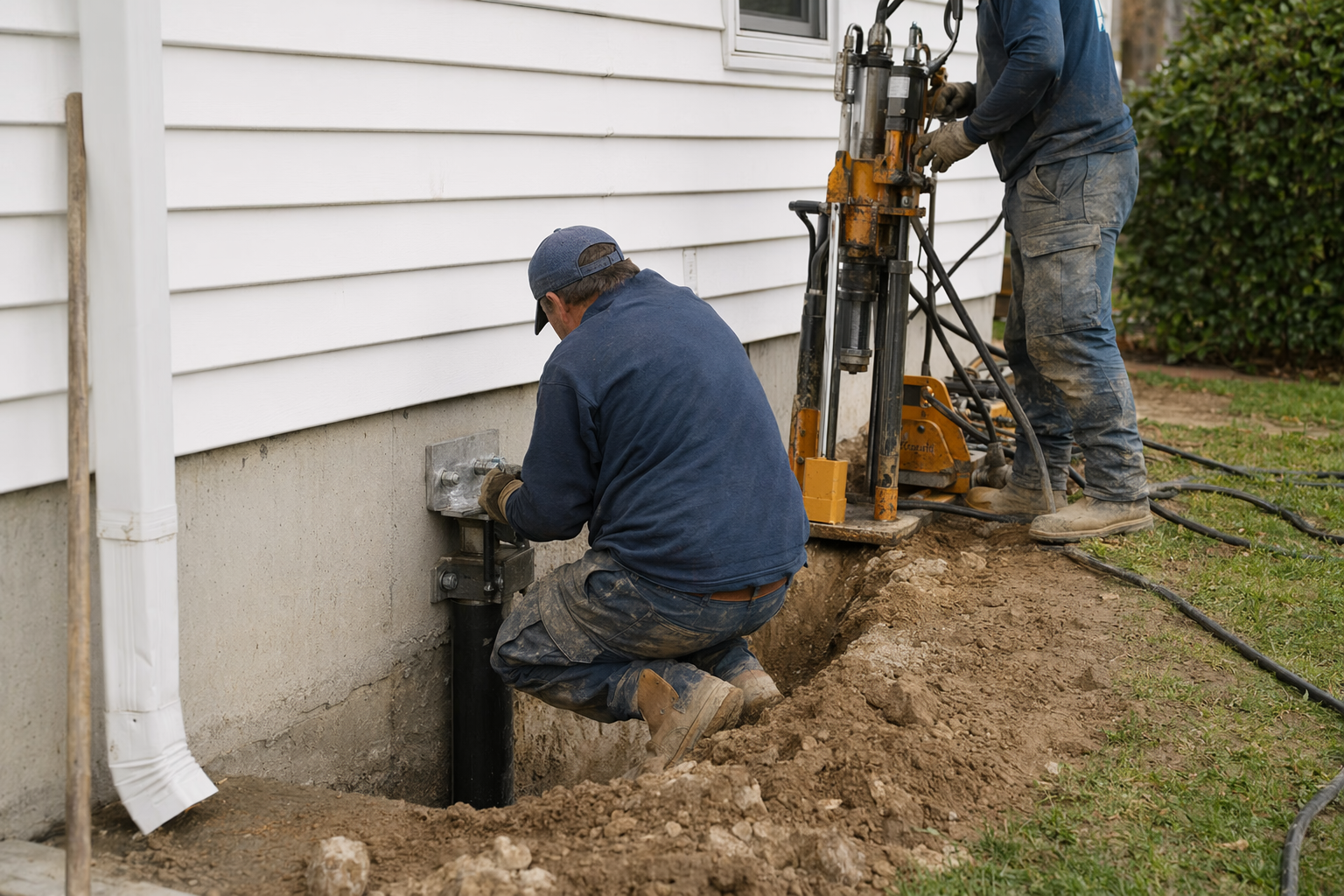
Piering is an underpinning method. Steel push piers or helical piers are installed deeper into the ground to support and sometimes lift the structure. This is often used when the upper soils are weak, moving, shrinking, expanding, or repeatedly failing.
The key question is simple: Did the concrete just lose support under it, or does the structure need a new load path to more stable soil?
Before hiring any repair contractor, BedrockBearing strongly recommends an evaluation by an independent, licensed structural engineer who does not also sell the repair. That extra step can protect you from buying work you do not need. See what an engineer evaluation can do.
Quick comparison: slabjacking vs piering
1. Best use
- Slabjacking: Sunken slab areas, small settlement, voids from washout, settled garage floors, walkways, some slab-on-grade sections.
- Piering: Ongoing settlement, deeper soil problems, load-bearing walls dropping, repeated movement, larger structural correction.
2. How it works
- Slabjacking: Pumps grout or foam under concrete to fill empty space and lift.
- Piering: Installs steel piers below the foundation to transfer weight to more stable soil or bearing strata.
3. Typical cost range
- Slabjacking: about $600-$3,500 for a typical area.
- Piering: about $1,200-$3,000 per pier, with many jobs needing 8-12 piers, so often $10,000-$30,000+.
4. What affects the real price
- Cause of movement
- Soil and site conditions
- Access for equipment
- Amount of lift needed
- Size and weight of the structure
- Repair method required
- Your area and local permit rules
5. Main advantage
- Slabjacking: Usually faster and less expensive when the problem is truly a void or minor settlement.
- Piering: Better for deeper, recurring, or structural settlement problems.
6. Main limit
- Slabjacking: It does not fix bad deep soils. If the support problem keeps happening, settlement can return.
- Piering: More invasive and expensive. It is not the right answer for every crack or every sunken slab.
If you want background on pier systems, see piering and underpinning basics.
How to tell which one may fit your problem
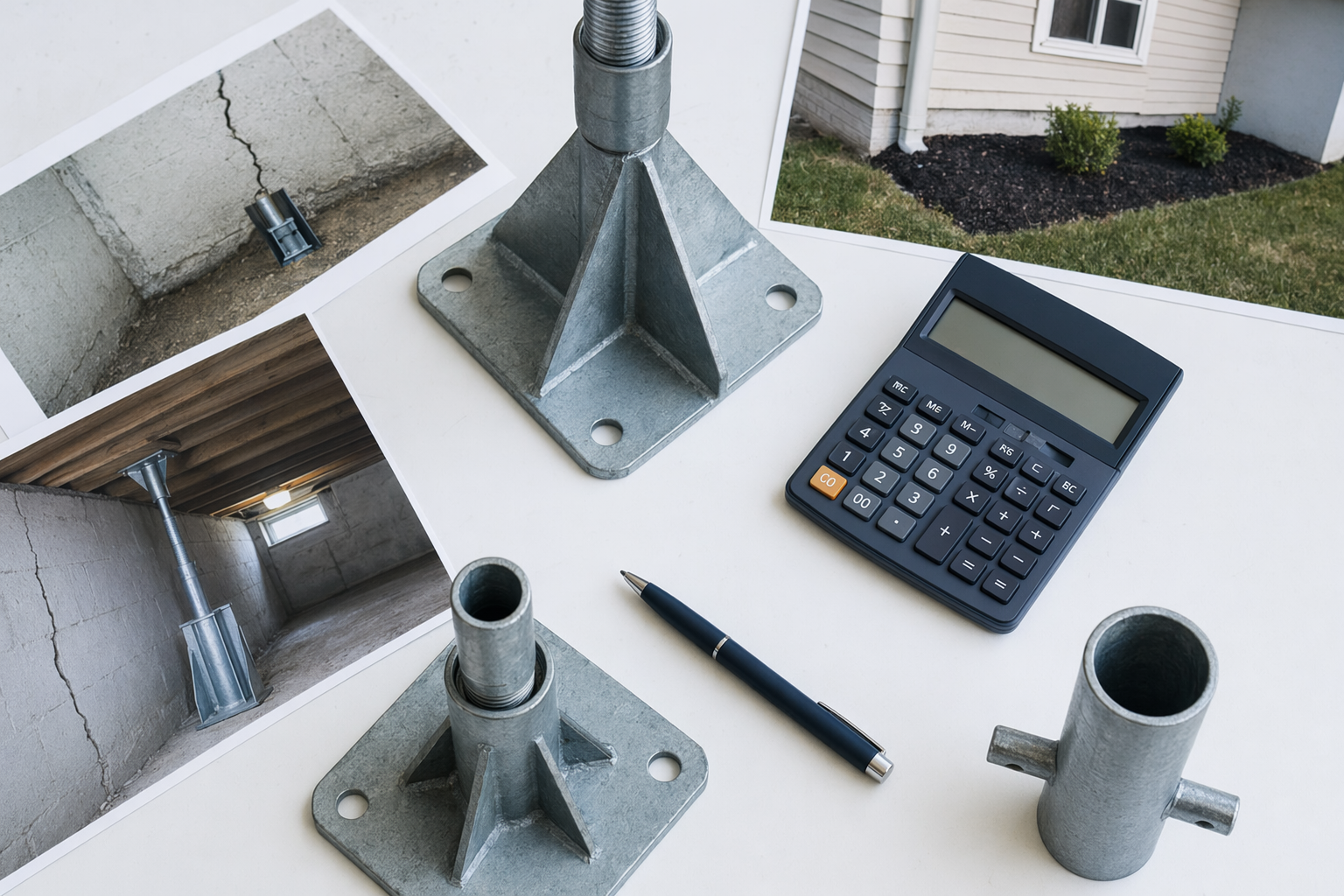
No website can diagnose your house. But these patterns can help you ask better questions.
Slabjacking may be worth discussing when:
- A garage floor, patio, porch slab, or interior slab section has settled but walls are not clearly moving.
- There is evidence of soil washout or a void under concrete.
- The settlement looks limited to one area and has not kept getting worse.
- Doors and windows in the main structure are mostly normal.
Piering is more likely to come up when:
- A corner or side of the home keeps dropping.
- Cracks keep reopening after cosmetic patching.
- Doors or windows stick because framing is out of square.
- Exterior brick cracks follow a stair-step pattern.
- Interior floors slope more over time.
- The home is on expansive clay, poorly compacted fill, or another site with known deeper soil trouble.
Important: a visible crack does not automatically mean you need piers. And a sunken slab does not automatically mean foam will solve it. The real issue is the cause.
If you are seeing cracking, review common warning signs. If a wall is actively moving, large new cracks are opening, or there are signs of possible collapse, leave the area and contact a licensed structural engineer or your local building department right away.
Where homeowners get burned
The biggest mistake is choosing the cheapest repair method before confirming the problem.
Here is the honest version:
- A contractor who only sells lifting may recommend lifting.
- A contractor who only sells piers may recommend piers.
- Neither sales pitch is a substitute for an independent engineering opinion.
A licensed structural engineer who does not also sell the repair can help answer:
- Is this cosmetic, moderate, or structural?
- Is movement ongoing or old and stable?
- Is water part of the cause?
- Do you need drainage, crack repair, slab lifting, piers, or some combination?
That independent report often costs about $400-$1,200. Many homeowners save far more than that by avoiding the wrong repair.
Also keep these rules in mind:
- Hire licensed and insured contractors and verify the license and insurance yourself.
- Get the scope, method, and price in writing before any deposit.
- Follow local permits and building code.
- Hold final payment until the agreed work is completed.
If water is part of the problem, waterproofing or drainage may matter as much as structural work. See foundation waterproofing basics.
What to do next
1. Write down what you see
Note where cracks are, what doors stick, whether floors slope, and whether the problem is getting worse. Photos help.
2. Start with an independent structural engineer
This is the safest path when the cause is unclear or the stakes are high.
3. Then compare repair proposals
Compare the contractor bids to the engineer's recommendations, not just to each other.
4. Check credentials yourself
Verify license, insurance, references, and permit requirements.
5. Use a free matching service if you want help finding local pros
BedrockBearing is a free matching service for homeowners. We help you describe what you are seeing and get matched with licensed, insured foundation repair pros in your area. You compare estimates. You choose who to hire. Start here: get matched or review more foundation cost ranges.
A calm next step beats a rushed decision. The goal is not to buy the biggest repair. The goal is to buy the right repair, if any repair is needed.
Slabjacking fills and lifts a slab. Piering supports a foundation deeper down. They are not interchangeable. If the cause is unclear or the problem seems serious, get an independent licensed structural engineer first, then compare written estimates from licensed and insured contractors.