Repairing vs Replacing a Foundation
Sometimes a foundation can be stabilized and repaired. Sometimes part of it, or rarely most of it, may need replacement. The right answer depends on the cause, how much movement has happened, the soil and drainage conditions, access, and what an **independent, licensed structural engineer** finds.

Start here: most homes are repaired, not fully replaced
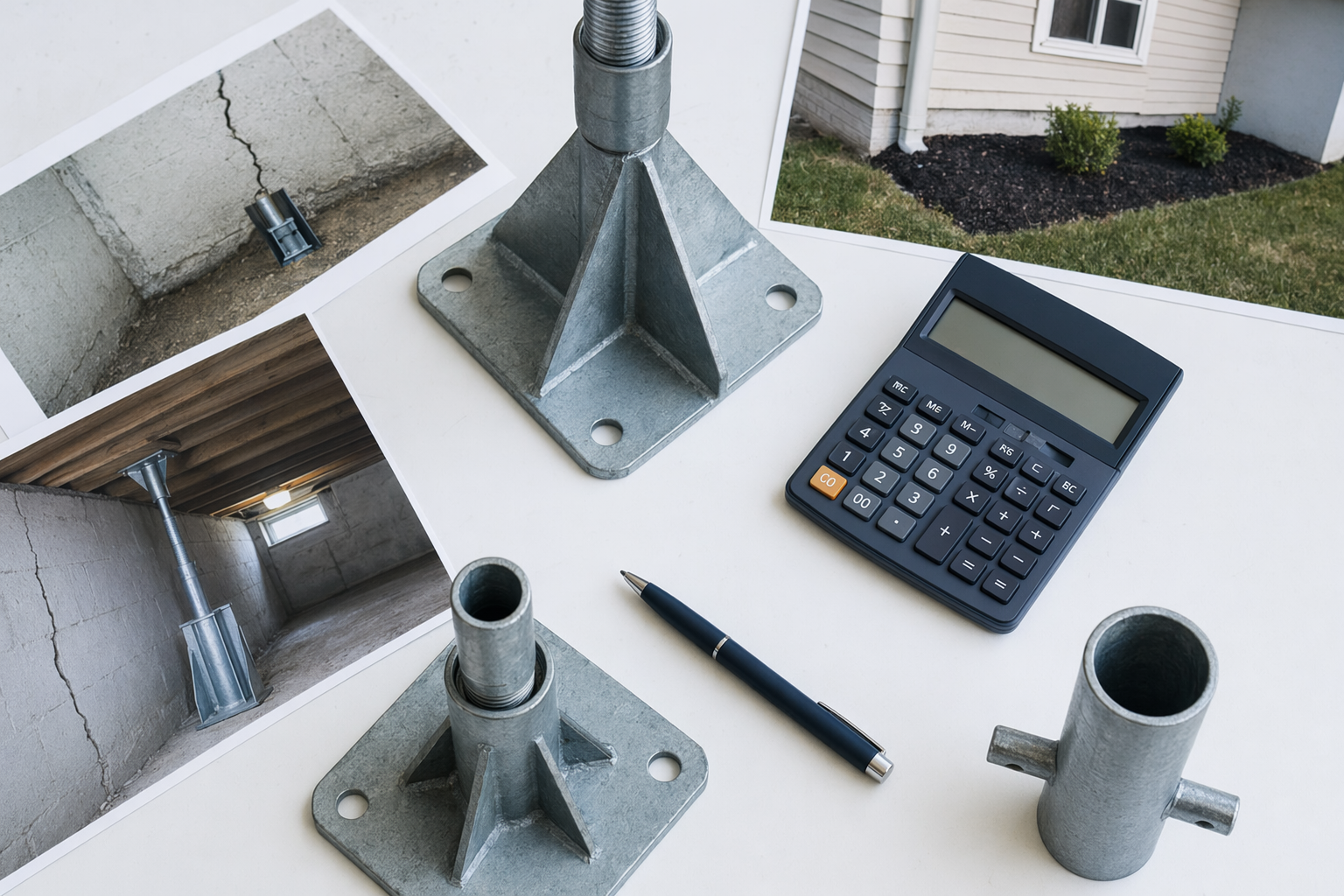
A lot of homeowners hear the word "foundation" and fear the worst. In real life, full foundation replacement is less common than targeted repair. Many problems can be addressed by fixing drainage, stabilizing movement, sealing cracks, supporting settled areas with piers, or reinforcing a bowing wall.
BedrockBearing is a free matching service. We do not inspect, design repairs, or tell you what method your house needs. What we can do is help you understand the difference between repair and replacement, and help you connect with licensed, insured pros. We strongly recommend getting an evaluation from an independent structural engineer who does not also sell the repair before you hire a contractor. That step often protects homeowners from paying for more work than they need. Learn more about that here: independent engineer evaluation.
Take warning signs seriously. If a wall is actively moving, large new cracks are opening fast, doors suddenly will not open because the frame is shifting, or there are signs of possible collapse, leave the area and contact a licensed structural engineer or your local building department right away.
Repair vs replacement: honest side-by-side comparison
Here is the plain version:
- Repair means stabilizing, reinforcing, waterproofing, or lifting part of the existing foundation.
- Replacement usually means removing and rebuilding all or a major section of the foundation after temporary support of the structure.
Repair is often the better fit when:
- settlement is limited to certain areas
- cracks are repairable and the wall or slab is still salvageable
- the main issue is drainage, water pressure, or isolated soil movement
- a bowing wall can be stabilized without full rebuild
- the home can be made safe and serviceable without removing the whole foundation
Replacement may be considered when:
- there is widespread failure across most of the foundation
- masonry or concrete is badly deteriorated and no longer reliable to build on
- previous repairs failed because the underlying conditions were never corrected
- a wall has severe displacement, rotation, or damage that cannot reasonably be stabilized
- a major remodel or lifting project makes replacement more practical than piecemeal repair
Typical cost ranges, not quotes:
- crack injection: $300-$2,500
- slabjacking or foam lifting for a typical area: $600-$3,500
- steel push or helical piers: about $1,200-$3,000 per pier, with many jobs needing 8-12 piers for totals around $10,000-$30,000+
- bowing-wall stabilization with carbon fiber or beams: $4,000-$15,000+
- basement waterproofing or drainage improvements: $2,000-$12,000
- independent structural engineer report: often $400-$1,200
A true foundation replacement can cost far more than typical repair work because it may involve shoring the structure, demolition, excavation, rebuilding, drainage work, permits, and restoration. The real price depends on the cause, soil and site conditions, access, the method required, and your area. For repair cost background, see foundation repair costs.
How to tell which path makes sense
Do not choose based on fear. Choose based on cause, extent, and evidence.
1. Figure out what is happening
Settlement, expansive clay, poor drainage, frost, hydrostatic pressure, tree roots, plumbing leaks, old materials, and bad past work can all create similar symptoms. A crack alone does not tell the whole story.
2. Measure how much of the foundation is affected
One corner settling is different from failure around the whole house. Localized movement often points toward repair. Broad structural distress may point toward bigger work.
3. Separate cosmetic symptoms from structural problems
Drywall cracks and sticking doors matter, but they are indirect signs. The important question is whether the foundation is still performing safely or continuing to move.
4. Ask whether the existing foundation can be reliably stabilized
If yes, repair may be the sensible choice. If the materials are too deteriorated or the wall geometry is too far gone, replacement of that section may be more realistic.
5. Look at water and drainage first
Many expensive failures get worse because gutters, grading, downspouts, and groundwater were ignored. If the water problem stays, even a costly structural fix can disappoint. Related reading: foundation waterproofing.
6. Get an independent engineer's opinion before contractor sales pitches
This is the step many homeowners skip. An engineer who does not profit from the repair method can tell you whether repair is enough, whether replacement is really needed, and what scope should be priced.
If you are not sure how serious your symptoms are, review common foundation warning signs.
What homeowners get wrong when comparing bids
The cheapest number is not always the lowest real cost. The biggest number is not always the most honest either.
Common mistakes:
- Comparing different scopes like they are the same job. One contractor prices 8 piers. Another prices 14 plus drainage. Another suggests replacement. Those are not apples to apples.
- Skipping the engineer. Without an independent evaluation, you may only hear solutions that a seller happens to offer.
- Ignoring permits and code. Follow local permit rules and building code. Ask who is responsible for permits, inspections, and drawings if required.
- Not verifying license and insurance yourself. Always hire licensed and insured contractors and verify both directly.
- Paying a large deposit before you have details in writing. Get the scope, materials, warranty terms, exclusions, timeline, cleanup, and total price in writing before any deposit.
- Assuming replacement means "better" by default. Sometimes it is necessary. Sometimes it is oversold.
A smart comparison usually includes:
- the engineer's findings
- a clear repair or replacement scope
- how drainage and water will be handled
- what elevation or level correction is realistic
- permit responsibility
- cleanup and restoration details
- payment schedule and final sign-off terms
Before signing, use this checklist: how to vet a foundation contractor.
Your next step if you are worried now
Keep it simple:
1. Document what you see
Take photos of cracks, leaning walls, water entry, uneven floors, and doors or windows that stick. Note when you first noticed changes.
2. Do not guess at the fix
A crack can come from settlement, shrinkage, water pressure, or something else. Different causes need different solutions.
3. Get an independent structural engineer evaluation
This is often the best money you can spend early.
4. Then compare licensed, insured contractors
If repair is appropriate, compare estimates for the same scope. If replacement is recommended, ask why repair is not enough and have that reason explained in plain language.
5. Use a free matching service if you need help finding local pros
BedrockBearing can help you connect with licensed, insured foundation repair professionals at no cost to you. You compare estimates. You choose who to hire. You hold the final payment. Start here: get matched.
If there is an urgent safety concern, leave the area and contact a licensed structural engineer or your local building department right away.
Most foundation problems can be repaired without replacing the whole foundation, but some serious cases need partial or major rebuild work. Get an independent licensed structural engineer to say what is really needed first, then compare written estimates from licensed and insured contractors, verify permits and insurance yourself, and only pay based on a clear scope.