Push Piers vs Helical Piers
Push piers and helical piers are both common ways to support a settling foundation. The right choice depends on the **cause of movement**, the soil, the weight of the house, access to the work area, and what an **independent licensed structural engineer** says is actually needed.
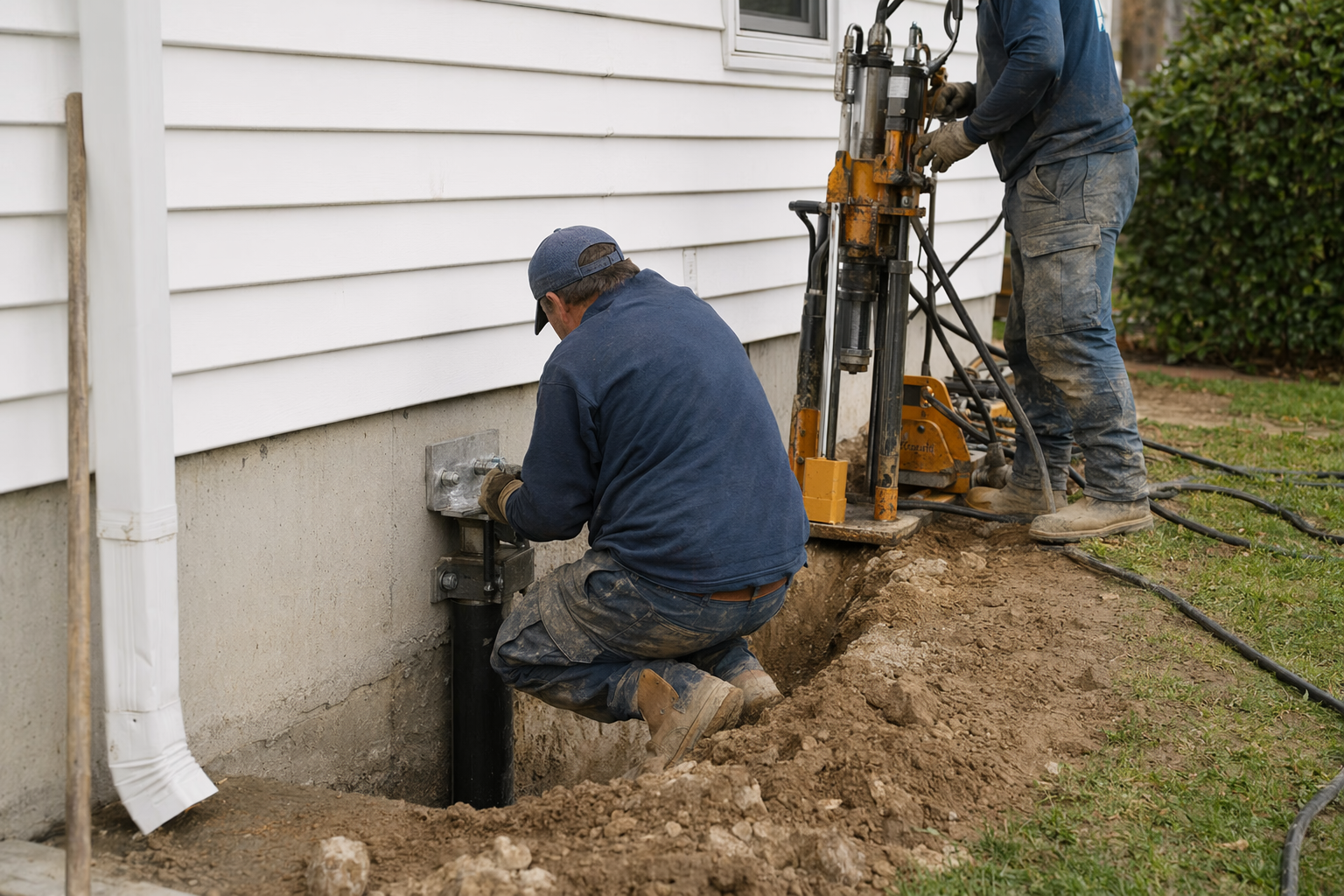
What these systems do, and what they do not do
Both systems are types of deep foundation support. Contractors install steel piers below a footing or grade beam to transfer part of the building load to deeper, more stable soil.
That sounds simple, but the right system is not a one-size-fits-all decision. A sales pitch is not the same as an objective evaluation. Before you hire anyone, strongly consider an independent, licensed structural engineer who does not also sell the repair. A typical engineer report often costs about $400-$1,200. That can save you from buying piers you do not need, or the wrong kind of pier for your house and soil. See what an engineer evaluation should cover.
Also important: piers are not the answer to every crack. Sometimes the real issue is drainage, expansive soil, plumbing leaks, poor grading, or a bowing wall. Sometimes a crack needs monitoring or a smaller repair, not underpinning. Learn more about piering and underpinning.
If you see large new cracks opening fast, a wall actively moving, or signs of possible collapse, leave the area and contact a licensed structural engineer or your local building department right away. BedrockBearing is a free matching service. We do not inspect, design repairs, or give engineering advice.
Push piers vs helical piers at a glance
Here is the honest homeowner version.
- Push piers
- Steel tubes are hydraulically driven downward.
- They use the weight of the house as resistance during installation.
- Often used on heavier structures.
- Best when installers can reach a competent bearing layer deep enough to support the load.
- Sometimes chosen when the goal includes a chance to lift settled areas, though lift is never guaranteed.
- Helical piers
- Steel shafts with helix plates are screwed into the ground.
- They do not rely on the building weight in the same way push piers do.
- Often useful for lighter structures, additions, porches, stoops, and some interior or limited-access work.
- Capacity is tied to installation torque and soil conditions.
- They can be a good fit where engineers want a more predictable installation method for certain soils and loads.
What matters most in the real world
- Building weight: A heavier house may suit push piers better in some cases. Lighter structures often point people toward helicals.
- Soil profile: Fill, clay, loose soils, shallow refusal, and depth to bearing all matter.
- Access: Tight side yards, interior work, landscaping, and nearby utilities affect method choice.
- Goal of repair: Stabilize only, or stabilize and attempt lift.
- Engineer design: Number of piers, spacing, bracket type, and target loads should come from the actual conditions, not from a canned package.
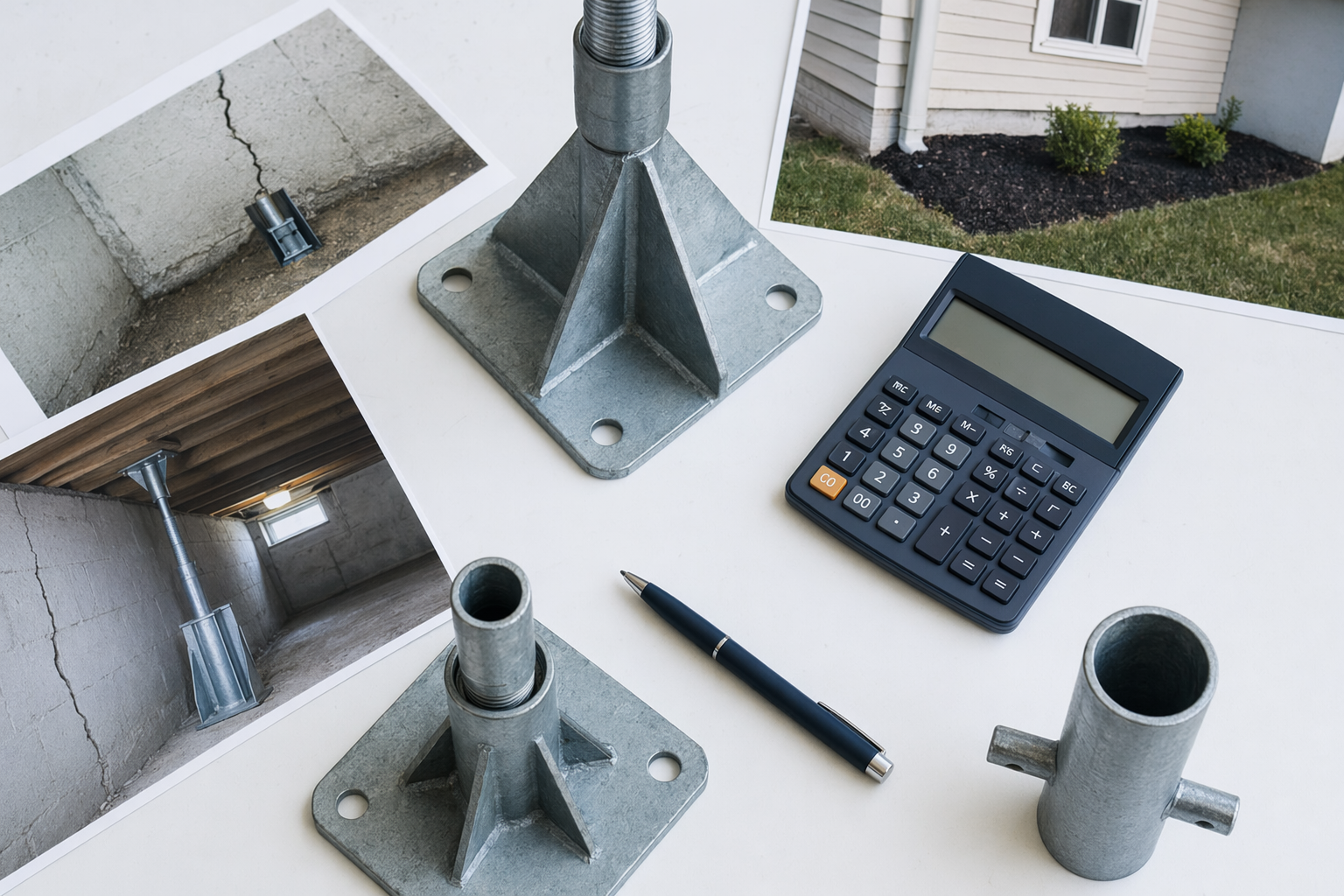
Typical installed pricing is often in the range of $1,200-$3,000 per pier, and many jobs need around 8-12 piers, putting a lot of projects in the $10,000-$30,000+ range. Those are estimates, not quotes. Real price depends on the cause, the soil and site conditions, access, the method required, and the area. For broader ranges, see foundation repair costs.
When push piers may make more sense
Push piers are commonly discussed when a contractor expects the structure itself to provide enough downward force to drive the pier sections to a suitable bearing layer.
They may be worth discussing with an engineer when:
- The home is substantial and heavy enough for the system to develop installation resistance.
- Settlement appears along an exterior wall where bracket access is practical.
- The repair goal is to stabilize the footing and possibly try a controlled lift.
- Soil conditions suggest the installer can reach a competent layer at a workable depth.
Possible upsides:
- Common on residential settlement repairs.
- Can be effective on heavier homes.
- Often familiar to foundation contractors and engineers.
Things to watch closely:
- If the house is too light, the system may not perform the way a salesperson suggests.
- Refusal during installation does not always mean ideal bearing in every soil profile.
- A promise that your home will return perfectly level is a red flag. Some lift may happen. Sometimes only stabilization is appropriate to avoid damage.
Ask for the scope in writing: number of piers, locations, bracket type, whether lift is attempted, what crack repair is or is not included, permit responsibility, and cleanup.
When helical piers may make more sense
Helical piers are often discussed when installers need a system that can be mechanically advanced into the ground without depending mainly on the building weight.
They may be worth discussing with an engineer when:
- The structure is lighter, such as an addition, porch, garage slab edge, or chimney support condition.
- Access is limited and equipment choice matters.
- Soil conditions make a screwed-in system more practical.
- The engineer wants capacity correlated with installation torque and design assumptions.
Possible upsides:
- Can be useful across a wide range of structure types.
- Often a strong option for lighter loads or new support points.
- May be installed in situations where push piers are less suitable.
Things to watch closely:
- Helical performance still depends on actual soil conditions and proper design.
- More piers is not automatically better. The layout should match the load path.
- If drainage, runoff, or expansive clay caused the movement, piers alone may not solve the whole problem. Related work such as foundation waterproofing or grading corrections may still matter.
Homeowners also confuse settlement with wall failure. If a basement wall is bowing or sliding inward, the issue may call for a different system such as bowing wall stabilization, not just piers.
How to choose without getting sold the wrong job
Use this simple process.
- Start with symptoms, not a repair method. Note what you actually see: sticking doors, sloped floors, stair-step cracks, drywall cracks, gaps at trim, wall movement, water entry. If you are not sure what counts as serious, review foundation warning signs.
- Get an independent engineer first. This is the strongest protection against overselling.
- Compare at least two written estimates. The contractor should explain why push piers or helical piers fit the engineer's findings.
- Verify license and insurance yourself. Do not rely on a verbal promise.
- Check permits and code requirements. Follow local rules.
- Do not pay a large deposit without clear paperwork. Scope, price, warranty terms, exclusions, and change-order terms should be in writing.
- Hold final payment until the contracted work is completed.
BedrockBearing can help you compare local licensed and insured foundation repair pros at no cost to you. You describe what you are seeing. We help you get matched. Then you compare estimates, you choose who to hire, and you stay in control. Start here: Get matched or learn how to vet a foundation contractor.
Push piers and helical piers can both work, but the right one depends on your house, your soil, and the real cause of movement. Get an independent licensed structural engineer first, then compare written estimates from licensed and insured contractors before you decide.