Do I Need a Permit for Foundation Repair?
Often, yes. Many foundation repairs need a permit, especially when the work changes structure, adds piers, rebuilds walls, or affects drainage. Rules are local, so the safest move is to verify requirements with your city or county building department before work starts.

The short answer
Many foundation repairs do require a permit. But not every job does. The rule depends on your city or county, the kind of repair, and how much of the structure is being changed.
In general, permits are more likely when the work:
- changes or supports the structure of the house
- installs piers, piles, anchors, beams, or wall braces
- replaces part of a foundation wall or footing
- changes grading, drainage, or waterproofing in a way covered by local code
- involves excavation near property lines, utilities, or public sidewalks
Permits may be less likely for some limited repairs, such as certain small crack injections or spot patching. But do not assume a small job is exempt. Local rules vary a lot.
If a contractor says, "You don't need a permit" or "We do this all the time, don't worry about it," slow down. Ask which department said that, and ask for it in writing.
Before you hire anyone, BedrockBearing strongly recommends getting an evaluation from an independent, licensed structural engineer who does not also sell the repair. An engineer can help define what problem needs to be fixed. Then you can compare contractor bids more safely. Read more about that here: independent structural engineer evaluation.
When permits are commonly required
Here are the situations where permits are commonly required in many US areas. This is not legal advice, and local code controls.
1. Piering and underpinning
If a contractor wants to install steel push piers, helical piers, or another underpinning system, a permit is often required because the work supports the home's load and changes how the structure bears on the soil. These jobs are usually significant. Typical pricing is often about $1,200-$3,000 per pier, and many homes need 8-12 piers, so total costs can reach $10,000-$30,000+ depending on cause, soil, access, method, and area. Learn the basics here: piering and underpinning.
2. Bowing or leaning wall stabilization
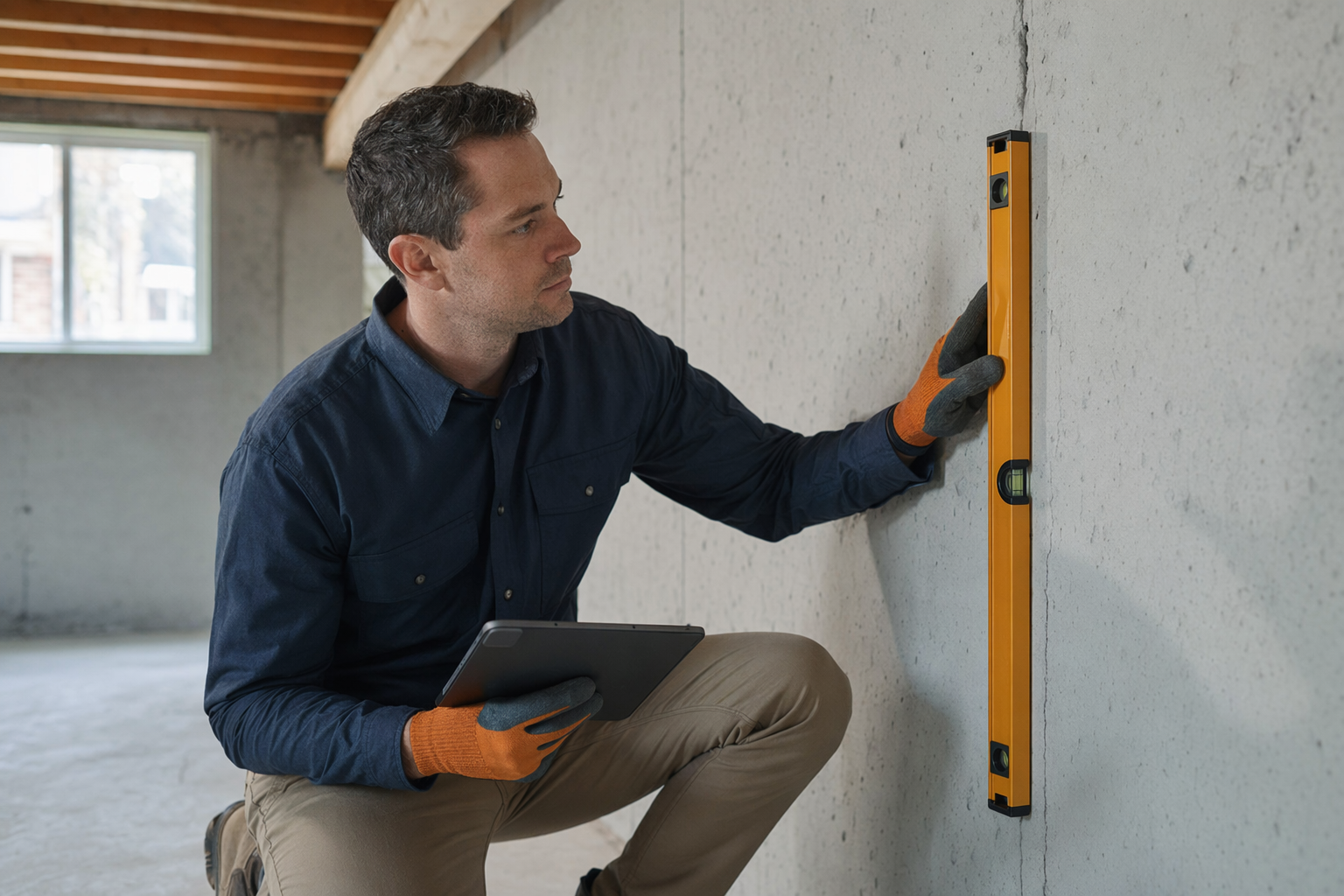
If a basement or crawl space wall is bowing, leaning, or sliding inward, permits are often required for carbon fiber straps, wall anchors, steel beams, partial rebuilds, or similar work. These are structural repairs, and they can involve safety issues.
3. Rebuilding foundation sections
If footings, stem walls, block walls, or concrete walls are being removed and replaced in whole or in part, expect permit questions.
4. Major drainage or waterproofing work
Interior drains, sump systems, exterior excavation, and some waterproofing systems may require permits in some places, especially if they affect discharge, electrical work, or public drainage.
5. Work tied to other structural changes
If the repair happens with additions, major remodels, floor-framing repairs, or retaining wall work, permit requirements become more likely.
If you are seeing serious warning signs such as a wall actively moving, large new cracks opening, doors suddenly jamming with obvious movement, or signs of possible collapse, leave the area and contact a licensed structural engineer or your local building department right away. You can also review common warning signs here: foundation warning signs.
What can affect the permit decision
Even for similar-looking problems, one house may need a permit and another may not. Local officials often look at the full scope, not just one symptom.
Things that commonly affect the answer:
- Type of repair. Epoxy crack injection is different from installing 10 piers.
- Extent of damage. A hairline cosmetic crack is different from a cracked wall that is rotating or settling.
- House type. Slab-on-grade, basement, crawl space, hillside homes, and older masonry homes can be treated differently.
- Soil and site conditions. Expansive clay, fill soils, poor drainage, slope, and high water table can change the scope.
- Drainage and utility conflicts. Excavation near gas, sewer, water, or electric lines may trigger more review.
- Local rules. City rules can differ from county rules. Historic districts, flood zones, and coastal areas may add requirements.
This is one reason to be careful with one-size-fits-all sales pitches. Two homes on the same street can need different solutions.
A few cost examples help show the difference in scope:
- crack injection is often around $300-$2,500
- slabjacking or foam lifting for a typical area is often $600-$3,500
- bowing-wall stabilization often runs $4,000-$15,000+
- basement waterproofing or drainage often runs $2,000-$12,000
- an independent structural engineer report often costs $400-$1,200
Those are typical ranges and estimates, not quotes. Real price depends on the cause, soil and site conditions, access, method required, and your area.
How to protect yourself before work starts
Permits matter, but they are only one part of protecting yourself. Homeowners get burned when they skip the engineer, trust verbal promises, or pay too much up front.
Use this checklist:
- Get an independent engineer first for significant movement or structural repair. Choose a licensed structural engineer who does not also sell the repair.
- Ask the building department directly whether the proposed scope needs a permit. Give them the address and the exact work description.
- Make the contractor put the scope in writing. The paper should say what they will do, what materials they will use, and whether permits are included.
- Verify the contractor's license and insurance yourself. Do not rely only on a business card or truck logo.
- Ask who is responsible for permits and inspections. Get that answer in writing.
- Do not sign a vague contract. If the proposal says only "stabilize foundation" or "repair settlement," ask for details.
- Do not pay based on pressure. Final payment should wait until the work is completed as agreed and any required inspections are finished.
If you need help comparing licensed, insured companies, BedrockBearing can match you for free with local pros. You stay in control. You compare estimates. You choose who to hire. Start here: get matched.
What to do next
If you think your home may need foundation work, keep it simple.
- Take photos of cracks, sticking doors, sloped floors, water entry, and any changes over time.
- Write down what you are seeing, when it started, and whether it is getting worse.
- Get an independent engineer evaluation if the issue looks structural, recurring, or expensive.
- Ask each contractor the same questions about scope, permits, timeline, warranty, cleanup, and inspections.
- Compare written estimates, not just price. The cheapest bid is not always the right scope.
- Follow local permits and code. If the work needs approval, make sure that happens before major work begins.
If you are talking with repair companies, it also helps to know how to screen them. This guide can help: how to vet a foundation contractor.
BedrockBearing is a free matching service. We do not inspect, design, or repair foundations. We help homeowners understand the issue, ask better questions, and connect with licensed, insured pros who serve their area.
Many foundation repairs do need a permit, especially structural work like piers, wall stabilization, rebuilding sections, or major drainage changes. Do not guess. Ask your local building department, get an independent licensed structural engineer for bigger problems, verify the contractor's license and insurance yourself, and get the full scope, permit responsibility, and price in writing before you pay.