Expansive Clay Soil and Your Foundation
Expansive clay soil can move a foundation because it swells when wet and shrinks when dry. That movement can be minor or serious, so it is smart to take the signs seriously and get an **independent, licensed structural engineer** to evaluate the cause before you hire any repair company.
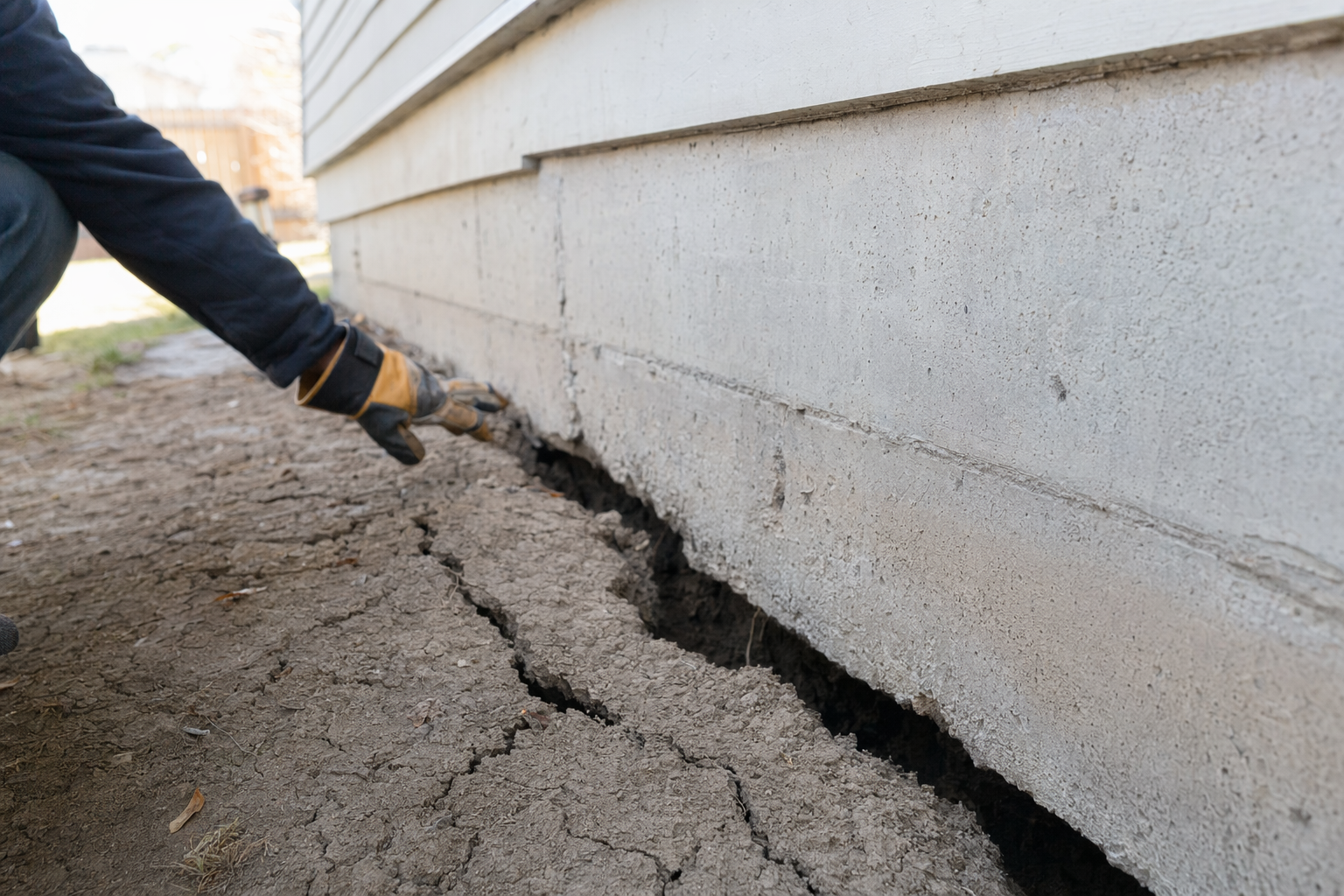
What expansive clay soil does to a house
Clay soil is not always a problem. The issue is movement. Some clay soils take in water, swell, and push up. Then in dry weather they shrink and pull away. That wet-dry cycle can make parts of a foundation rise, drop, or move unevenly.
A house does not have to slide downhill to have a soil problem. Even small repeated movement can stress concrete, brick, drywall, floors, doors, and plumbing lines.
Common things homeowners notice:
- Cracks in drywall that keep coming back after patching
- Doors or windows that suddenly stick or will not latch right
- Cracks in brick, block, or interior finishes
- Uneven floors or a floor that feels like it slopes more than before
- Gaps where walls meet ceilings, trim, or cabinets
- Cracks in a slab floor or garage floor
- Water collecting near the house after rain, then very dry gaps in soil later
Expansive clay problems often get worse when moisture around the home is uneven. One side stays wet from bad drainage, a leaking line, or heavy watering. Another side gets very dry from sun or tree roots. That difference can create uneven support under the foundation.
If you are not sure whether what you see is cosmetic or structural, start with warning signs and compare them to foundation warning signs.
The short answer: yes, expansive clay can damage a foundation
Yes. Expansive clay can crack, lift, or settle parts of a foundation. It can also bow or crack basement walls if the soil around the wall expands and adds pressure.
But here is the honest part: not every crack means major repair. Some cracks are minor. Some movement can be managed by drainage and moisture control. Other homes need underpinning, wall stabilization, or waterproofing. The right fix depends on:
- The real cause of movement
- The soil and site conditions
- Whether the home has a slab, crawl space, or basement
- How much movement has already happened
- Access around the house
- Local labor, permit, and code requirements
That is why BedrockBearing does not diagnose the problem. We are a free matching service. We help you understand what may be happening and get connected with licensed, insured foundation repair pros. But before you hire any contractor, strongly consider paying for an evaluation by an independent, licensed structural engineer who does not also sell the repair. A typical engineer report often runs about $400-$1,200. That step can save you from paying for work you do not need.
If a wall is actively moving, large new cracks are opening fast, or there are signs of possible collapse, leave the area and contact a licensed structural engineer or your local building department right away.
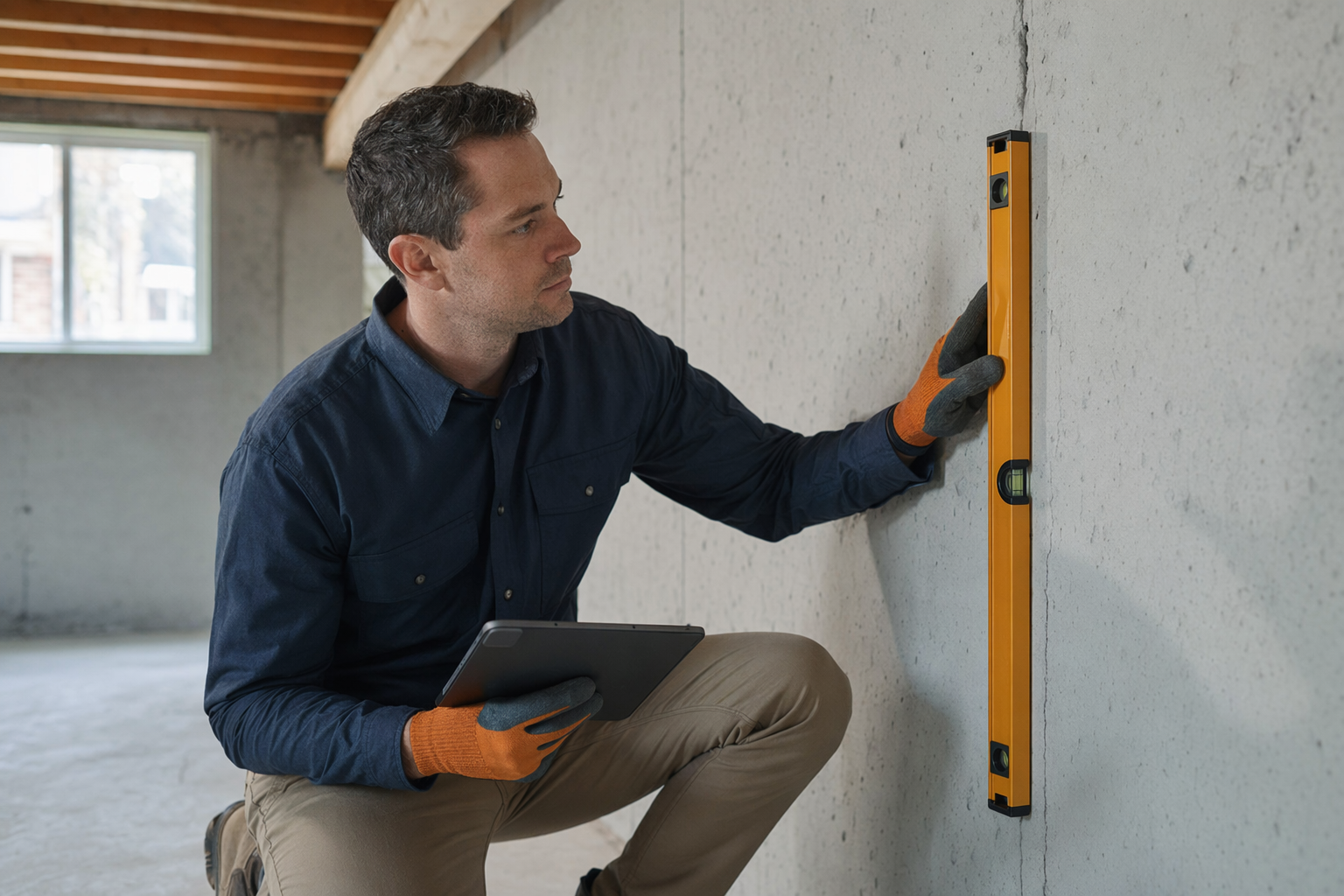
How clay-related foundation problems usually show up
Expansive clay usually harms foundations through moisture change and differential movement.
1. Soil gets wetter and swells
Roof runoff, poor grading, clogged gutters, leaking supply or drain lines, sprinkler overuse, and low spots near the house can all add water. Swollen clay can heave a slab or push on a basement wall.
2. Soil gets drier and shrinks
Long dry periods, hot weather, and nearby trees or large shrubs can pull moisture from clay. The soil can shrink away from the foundation, leaving parts of it less supported.
3. One area moves more than another
That uneven movement is what often creates the visible symptoms. You may see one corner settle, one room slope, or one wall crack more than the rest.
A few related repairs homeowners hear about:
- Crack repair: If the issue is a limited concrete crack, injection may be roughly $300-$2,500 for a typical situation. See foundation crack repair.
- Slab lifting: Slabjacking, mudjacking, or foam lifting for a typical area may run about $600-$3,500.
- Piers / underpinning: Steel push piers or helical piers are often about $1,200-$3,000 per pier, and many homes need 8-12 piers, so jobs can land around $10,000-$30,000+. Learn more about piering and underpinning.
- Bowing wall stabilization: Carbon fiber or beam systems often run about $4,000-$15,000+ depending on wall length, access, and severity.
- Water management: Basement waterproofing or drainage work can be roughly $2,000-$12,000 depending on the system and site conditions.
These are typical ranges, not quotes. The real price depends on the cause, the soil and site conditions, access, the method required, and your area.
What to do next if you think clay soil is affecting your foundation
Here is a practical next-step plan.
1. Write down what you are seeing
Note where cracks are, whether doors stick, when you first noticed it, and whether things change after heavy rain or drought. Photos with dates help.
2. Check water around the house
Look for overflowing gutters, downspouts dumping near the foundation, standing water, erosion, plumbing leaks, or sprinkler patterns that keep one area soaked. Do not assume water is the only issue, but it matters.
3. Get an independent structural engineer evaluation first if you can
This is the safest way to separate real structural need from a sales pitch. Start here: structural engineer evaluation.
4. Then compare licensed, insured contractor estimates
Ask each company to explain the cause they believe is present, the repair method, permit needs, warranty terms, and what is not included. Verify license and insurance yourself. Get scope and price in writing before any deposit.
5. Follow local permits and code
Foundation work is not the place to skip paperwork. Permit and inspection rules vary.
6. Use a matching service if you want help finding pros
BedrockBearing can connect you, at no cost to you, with licensed and insured foundation repair contractors in your area through our free matching service. Participating pros pay a flat fee to be listed and matched. You compare estimates, you choose who to hire, and you hold the final payment until the work is done as agreed.
Also, be careful with simple promises like "we can level everything perfectly" or "every crack means piers." Clay-soil homes need a cause-based plan, not a one-size-fits-all sales script.
How homeowners get burned, and how to protect yourself
Foundation problems are stressful. That is when people are easiest to pressure. A few smart rules can protect you:
- Do not rely on one contractor's opinion alone for a major repair.
- Prefer an engineer who does not sell the repair. That independence matters.
- Verify license and insurance yourself. Do not just trust a logo on a truck or website.
- Read the written scope carefully. Make sure it says exactly what will be done, where, and with what materials or system.
- Ask what happens if hidden conditions are found like soft soils, buried debris, drainage issues, or plumbing leaks.
- Understand what the warranty covers and does not cover.
- Do not hand over full payment up front.
If you want a checklist for comparing companies, use how to vet a foundation contractor.
The main point is simple: expansive clay is real, but the right response is not panic. It is careful documentation, an independent evaluation, and clear written bids from licensed and insured pros.
Expansive clay soil can push or drop parts of a foundation as it gets wet and dry. Some problems are minor, but some are serious, so document what you see, fix obvious drainage issues, get an independent licensed structural engineer to evaluate it, and only then compare written estimates from licensed and insured repair contractors.