First Signs of Foundation Trouble — Where to Start
Small signs can mean nothing. They can also be the first clue that a foundation or structural problem is starting. The goal is not to panic. The goal is to take the right next step before a small issue turns into a bigger one.

The short answer
If you are seeing new cracks, sticking doors, sloping floors, gaps around trim, or a wall that looks like it is leaning or bowing, do not ignore it.
Some movement in homes is normal. Houses expand and shrink with weather, moisture, and age. But changes that are new, getting worse, or showing up in several places at once deserve real attention.
The safest place to start is usually an independent, licensed structural engineer who does not also sell the repair. That matters because an engineer can evaluate the problem without trying to sell you piers, wall straps, drainage, or another fix you may not need. An engineer report often costs about $400-$1,200. That is often money well spent.
If you already know you want to compare local repair companies too, BedrockBearing can help you get matched with licensed and insured foundation repair pros at no cost to you. You compare estimates. You choose who to hire.
If you see an urgent danger sign such as a wall actively moving, a large new crack opening quickly, part of the structure separating, or signs of possible collapse, leave the area and contact a licensed structural engineer or your local building department right away.
What early foundation trouble can look like
Foundation problems do not always start with a dramatic crack in the basement. Often the first signs show up in normal daily annoyances.
Common early signs include:
- Doors or windows that suddenly stick or will not latch
- New cracks above doors, windows, or where walls meet ceilings
- Diagonal cracks in drywall, brick, or masonry
- Gaps between walls and trim, cabinets, counters, or floors
- Floors that feel sloped, bouncy, or uneven
- Cracks in a slab floor or garage floor
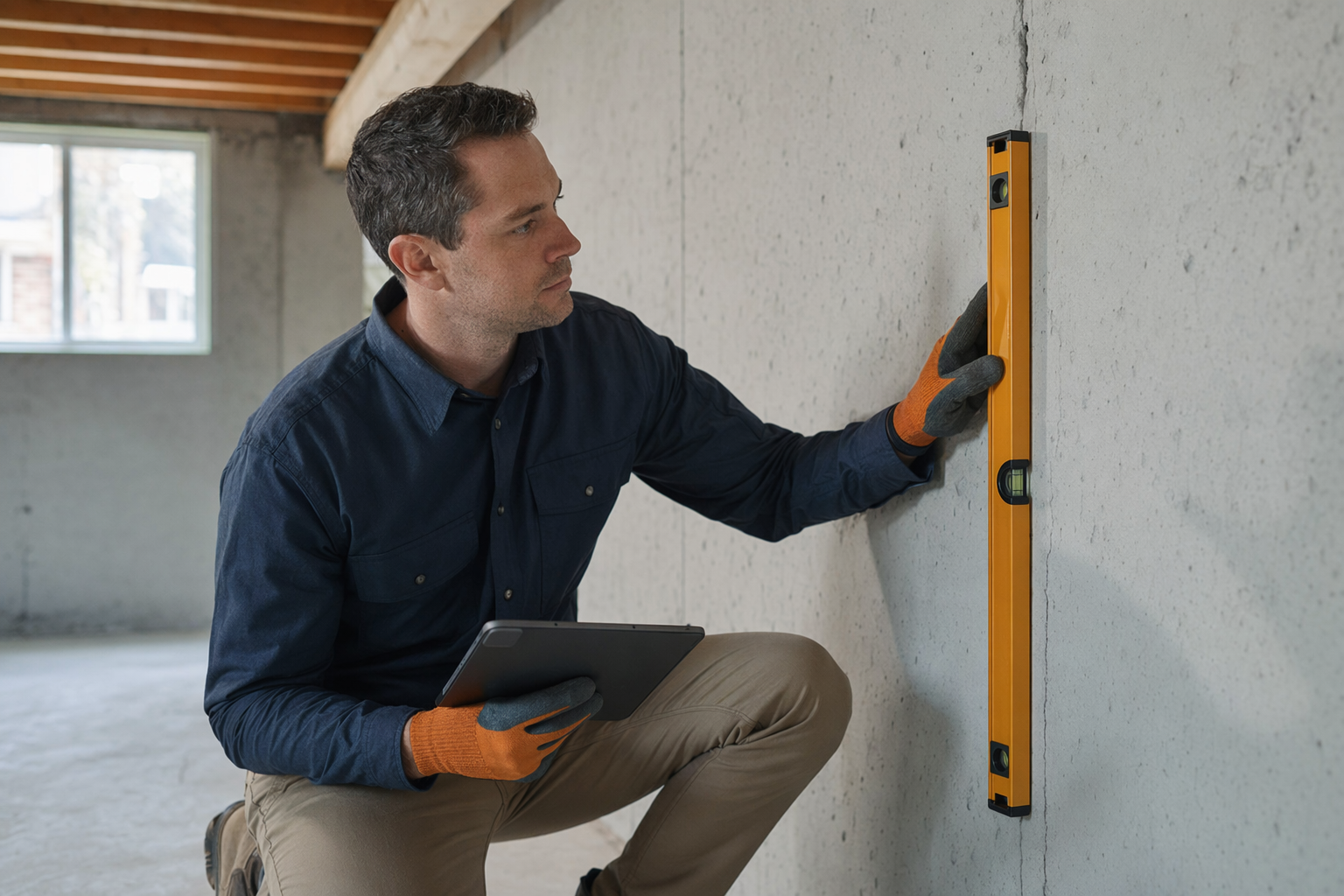
- A basement or crawl space wall that bows, leans, or bulges
- Water entering the basement or crawl space, damp smells, or white mineral stains on walls
- Exterior brick cracks that stair-step through mortar joints
- A chimney or porch pulling away from the house
One sign by itself does not always mean a major foundation failure. For example, a small hairline drywall crack can happen from normal settling or seasonal movement. But if you are seeing several signs together, or if the change is clearly getting worse, that raises the odds that the issue is more than cosmetic.
If you are not sure what counts as serious, review these foundation warning signs.
What the signs may mean — and what they may not
It helps to think in plain terms: the visible sign is not the cause. A crack or sticking door is a symptom. The real cause may be below the house, around the house, or in the wall itself.
Possible causes can include:
- Soil shrink and swell from dry periods and heavy rain
- Poor drainage that leaves water near the foundation
- Leaks from plumbing, gutters, or downspouts
- Settlement from weak or poorly compacted soil
- Hydrostatic pressure pushing on basement walls
- Tree roots changing moisture levels in the soil
- Freeze-thaw cycles in some climates
- Age and normal wear in older homes
That is why homeowners get burned when a contractor jumps straight to a repair method before the cause is clear. A company may recommend piers because that is what they install. Another may push waterproofing. Another may say the crack just needs epoxy. Sometimes one of those is correct. Sometimes none of them is the full answer.
Typical repair ranges can vary a lot:
- Crack injection may run about $300-$2,500
- Slabjacking or foam lifting for a typical area may run about $600-$3,500
- Steel push or helical piers often run about $1,200-$3,000 per pier, and many homes need 8-12 piers, so total jobs often land around $10,000-$30,000+
- Bowing-wall stabilization with carbon fiber or beams may run about $4,000-$15,000+
- Basement waterproofing or drainage systems may run about $2,000-$12,000
Those are typical estimates, not quotes. The real price depends on the cause, the soil and site conditions, access, the method required, and your area. If you want a broader cost overview, start here: foundation repair costs.
The key point: do not let anyone treat the symptom before understanding the cause.
What to do next, step by step
1. Write down what you are seeing. Note where the crack or movement is, when you first noticed it, and whether it seems worse after rain or dry weather.
2. Take clear photos now. Use the same angles later so you can compare changes over time. Put a coin or tape measure near cracks for scale.
3. Check for water issues outside. Look for clogged gutters, short downspouts, soil sloping toward the house, standing water, or sprinkler spray hitting the foundation.
4. Do not hide the problem with cosmetic work. Fresh caulk, patching, or paint can make it harder to judge whether movement is still happening.
5. Get an evaluation from an independent, licensed structural engineer first. This is one of the best ways to protect yourself from overspending. Read why here: structural engineer evaluation.
6. Then compare licensed, insured contractors if repair is needed. Verify the license and insurance yourself. Ask for the scope of work, materials, timeline, warranty terms, and total price in writing before any deposit.
7. Follow local permits and code. Ask who is responsible for permits and inspections. Do not assume.
8. Hold final payment until the agreed work is complete. You compare estimates. You choose who to hire. You control the final payment.
If you want help finding local companies after you have an engineer opinion, BedrockBearing can get you matched with foundation repair pros who say they are licensed and insured. Matching is free to homeowners.
How serious is it right now?
Use a calm, practical test.
Usually worth monitoring and scheduling a professional evaluation soon:
- Small cracks that are not clearly growing
- One sticky interior door during a wet or dry season
- Minor floor unevenness in an older home
- A little dampness with no wall movement
Move faster and take it seriously:
- Cracks that are new and widening
- Multiple doors and windows suddenly sticking
- A wall that looks bowed, leaning, or bulging
- Water pressure signs in the basement, like horizontal cracking
- Exterior separation at porches, chimneys, or steps
- Rapid change after heavy rain, drought, or plumbing leaks
Treat as urgent:
- A wall that is actively moving
- A large new crack opening quickly
- Sagging, crushing, or signs part of the structure may fail
- Any sign that a collapse could be possible
For urgent signs, leave the area and contact a licensed structural engineer or your local building department right away.
For non-urgent but real concerns, the smartest path is still the same: independent engineer first, then compare licensed and insured repair contractors. If you later need a contractor, learn how to vet a foundation contractor.
If you see new cracks, sticking doors, uneven floors, or a bowed basement wall, do not panic but do take it seriously. Take photos, check for drainage or water problems, and get an independent licensed structural engineer to evaluate it before hiring any repair contractor.