Foundation repair methods compared
Not every settling or sinking foundation needs the same fix. The right method depends on the cause, the soil, the structure, access, and whether the goal is lift, support, crack control, or water management.
The short version: these methods solve different problems
Homeowners often hear three terms fast: push piers, helical piers, and slabjacking. They are not interchangeable.
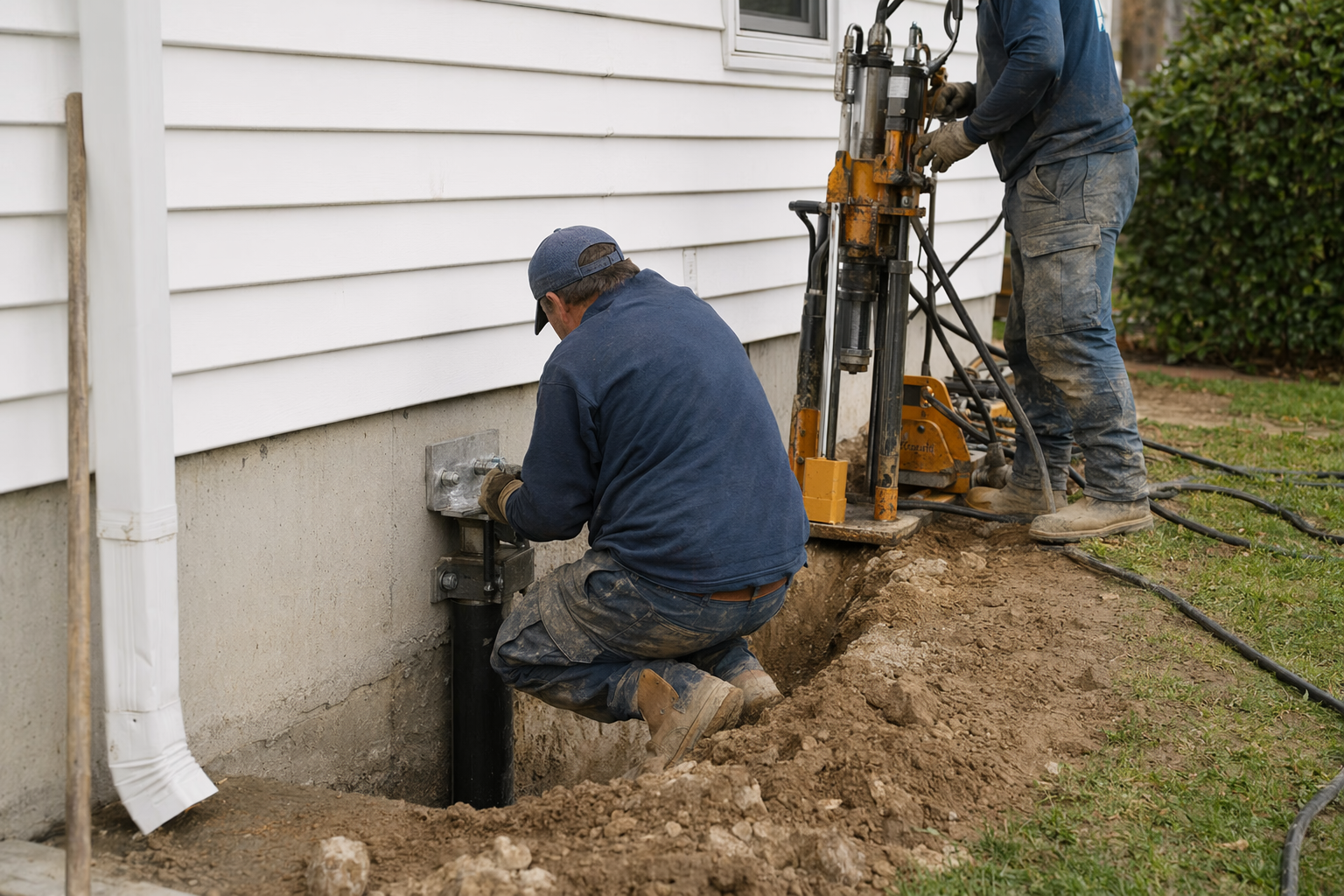
Push piers and helical piers are deep foundation support methods. They are usually used when part of a home has settled because near-surface soil is weak, wet, shrinking, expanding, or poorly compacted. The goal is to transfer load deeper to more stable bearing soil or rock. See piering and underpinning for the basics.
Slabjacking or foam lifting is different. It is usually used to raise and re-level a concrete slab such as a garage floor, driveway, patio, sidewalk, or sometimes a slab-on-grade floor area where the slab itself has dropped because of voids or soil loss. It does not replace deep support when a load-bearing foundation needs underpinning.
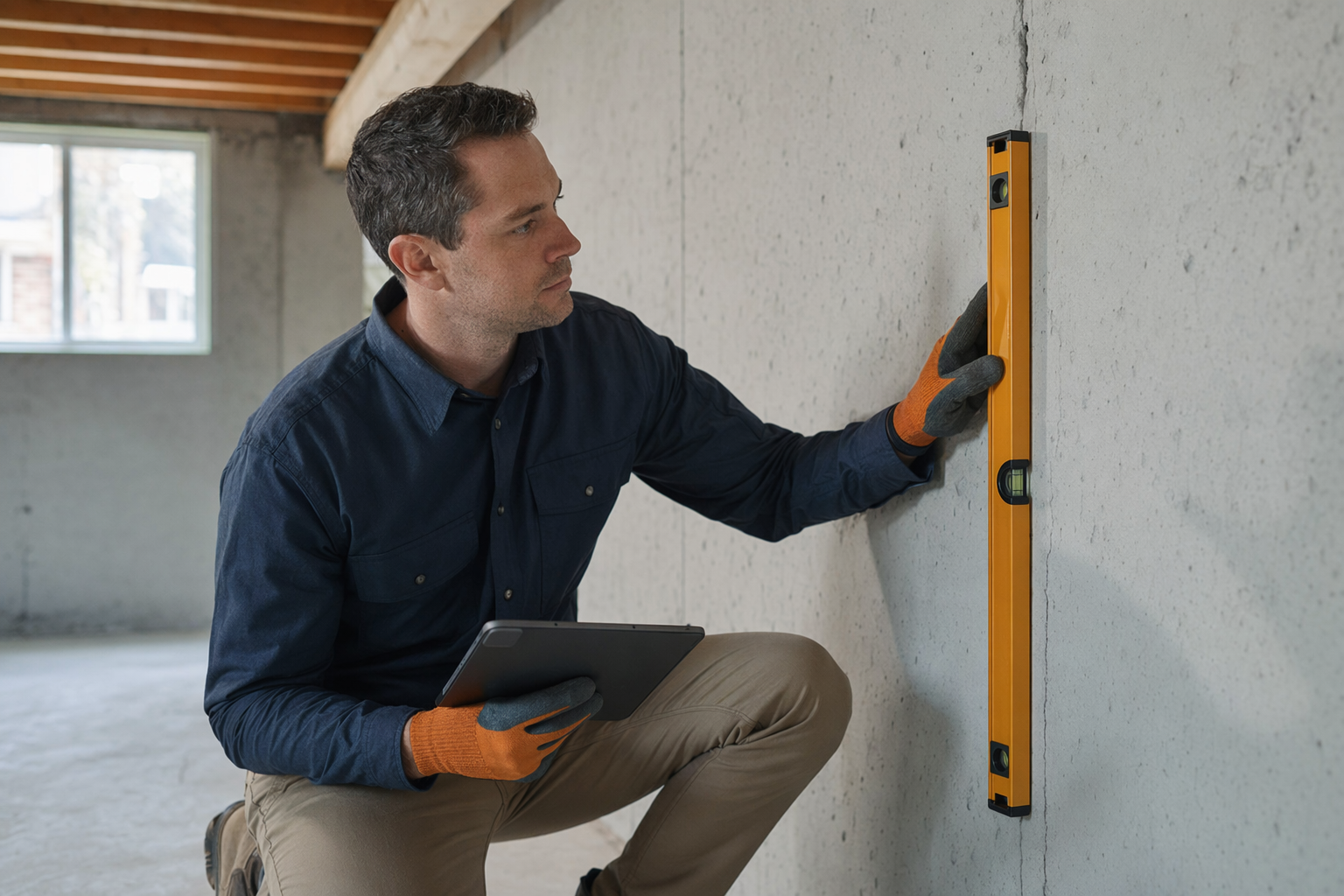
A big mistake is letting a contractor jump straight to a repair method before the cause is clear. Strongly consider an evaluation by an independent, licensed structural engineer first, especially for settlement, bowing walls, repeated cracking, or sticking doors and windows. An engineer who does not also sell the repair can tell you what problem you actually have and whether you need repair now, monitoring, drainage work, crack repair, wall stabilization, or underpinning.
Push piers: when they fit, how they work, and what to watch for
Push piers, sometimes called resistance piers, are driven downward using the weight of the house to push steel sections into the ground until they reach suitable bearing resistance. They are commonly used under heavier structures where enough building weight exists to drive the pier.
Often a fit when:
- A footing or foundation wall has settled and needs deep support
- The structure is heavy enough to develop pier resistance
- Access for equipment is limited but excavation at the footing is possible
- The goal is to stabilize, and sometimes partially lift, a settled area
Typical homeowner pros:
- Proven method for many settlement cases
- Can often be installed in targeted areas instead of under the whole house
- May allow some lift if conditions permit
Limits and cautions:
- Not ideal in every soil profile
- The amount of lift is never guaranteed
- If water, drainage, plumbing leaks, or expansive soil caused the movement, those issues may also need correction
- A low pier count can make a cheap proposal look attractive, but it may not match the actual load paths
Typical cost: about $1,200-$3,000 per pier, with many residential jobs needing 8-12 piers, so total projects often fall around $10,000-$30,000+. That is a typical range, not a quote. Real price depends on the cause, soil and site conditions, depth to bearing, access, method, and local market.
Before hiring anyone, ask why push piers are recommended instead of helical piers or another approach, and ask how the installer determined the proposed locations and count. Then compare that answer to an independent engineer's recommendation.
Helical piers: where they shine and how they differ
Helical piers are steel shafts with helix plates that screw into the soil. They do not rely on the building's weight to advance the pier. Because of that, they can be useful in conditions where push piers are less practical.
Helical piers are often considered when:
1. The structure is lighter, such as a porch, addition, garage apron, or some smaller sections of a home
2. Soil conditions and design loads support a helical approach
3. The installer needs more control during installation in certain applications
4. New construction support or retrofit support is needed
Why homeowners hear they are 'better': sometimes a salesperson prefers the system their company installs. In truth, better depends on the job. Helical piers can be an excellent solution, but not every settling house needs them.
Questions to ask:
- Why is a helical system recommended for this structure and soil?
- Is the goal stabilization only, or lift too?
- What other work is needed, if any, such as drainage correction, grading, gutter discharge changes, or crack repair?
- Is the recommendation consistent with an independent engineer's report?
Typical cost: again, often about $1,200-$3,000 per pier for residential work, with many jobs landing in the $10,000-$30,000+ range depending on pier count and conditions. The true price depends on the cause, loads, depth, soil, access, and area.
If you are comparing proposals, do not focus only on total price. Compare scope, pier count, where they go, what problem they are solving, permit needs, and warranty terms. For help preparing those questions, see how to vet a foundation contractor.
Slabjacking or foam lifting: useful, but not for every foundation problem
Slabjacking, mudjacking, or polyurethane foam lifting can raise sunken concrete by filling voids or re-supporting a slab from below. It is commonly used on:
- Sidewalks
- Patios
- Driveways
- Garage slabs
- Some slab-on-grade interior floor areas
Typical cost: around $600-$3,500 for a typical area. This is only a range. Real cost depends on area size, amount of lift, access, void size, material used, and local pricing.
This method can be cost-effective when the slab itself has dropped but the home does not need deep underpinning. It can also reduce trip hazards and improve drainage around flatwork.
But homeowners get burned when slabjacking is sold as a cure for a deeper structural problem. If a footing, load-bearing wall, or main foundation element is settling because soils are failing at depth, lifting the slab surface alone may not solve the real issue.
Also remember: cracks and water often travel together. A settled slab may also need drainage correction or foundation crack repair if water intrusion is part of the problem. If basement or crawlspace moisture is involved, waterproofing or drainage work may matter too, but it should be tied to the actual cause, not sold as an automatic add-on.
How to decide what you actually need
Start with the symptoms, not the sales pitch.
Take these warning signs seriously:
- New or widening cracks in foundation walls, brick, drywall, or floors
- Doors and windows that suddenly stick
- Sloping or uneven floors
- Gaps at trim, cabinets, or exterior joints
- Bowing basement walls
- Water intrusion, standing water, or persistent dampness
If a wall is actively moving, a large new crack is opening quickly, or you see signs of imminent collapse, leave the area and contact a licensed structural engineer or your local building department right away.
For non-urgent problems, a smart path is:
1. Document what you see with photos and dates.
2. Read basic warning signs so you know what to ask. See foundation warning signs.
3. Get an independent, licensed structural engineer to evaluate the issue before you hire a repair company. A typical engineer report often costs about $400-$1,200.
4. Then compare written estimates from licensed and insured contractors.
5. Verify the license and insurance yourself. Do not rely only on what is printed on a flyer or website.
6. Get the scope, materials, pier count if applicable, permit responsibility, cleanup, and total price in writing before any deposit.
7. Follow local permits and building code.
That process protects you from overpaying for work you do not need and from under-fixing a serious issue.
Common mistakes homeowners make when comparing methods
1. Choosing the cheapest bid without comparing scope
A low number may mean fewer piers, no drainage correction, no crack sealing, or no permit handling.
2. Skipping the independent engineer
This is one of the most expensive mistakes. A contractor may be honest, but the safest approach is still an engineer who does not profit from the repair choice. Learn more about a structural engineer evaluation.
3. Believing any method can fully 'put the house back like new'
Some homes can be lifted somewhat. Some can only be stabilized. Cosmetic cracks may still need separate repair.
4. Ignoring water and drainage
Gutters, downspouts, grading, plumbing leaks, and poor site drainage can keep feeding movement. If basement seepage is part of the problem, targeted foundation waterproofing may also be part of the plan.
5. Not verifying license, insurance, and paperwork
Always verify. Get the full scope and price in writing. Keep final payment until the agreed work is complete.
If you want help finding local companies to compare, BedrockBearing can help you get matched with licensed, insured foundation repair pros at no cost to you. We are a free matching service. We do not inspect, design repairs, or do the work. You compare estimates. You choose who to hire. You hold the final payment.
Push piers, helical piers, and slabjacking do different jobs. First, take serious warning signs seriously. Then get an independent licensed structural engineer to evaluate the problem, compare written estimates from licensed and insured contractors, verify the paperwork yourself, and only pay for the repair method that matches the real cause.