Bowing & leaning wall stabilization
A bowing or leaning foundation wall is not something to ignore. Some walls can be stabilized before they fail, but the right fix depends on how far the wall has moved, what is pushing on it, and whether water and soil pressure are part of the problem.
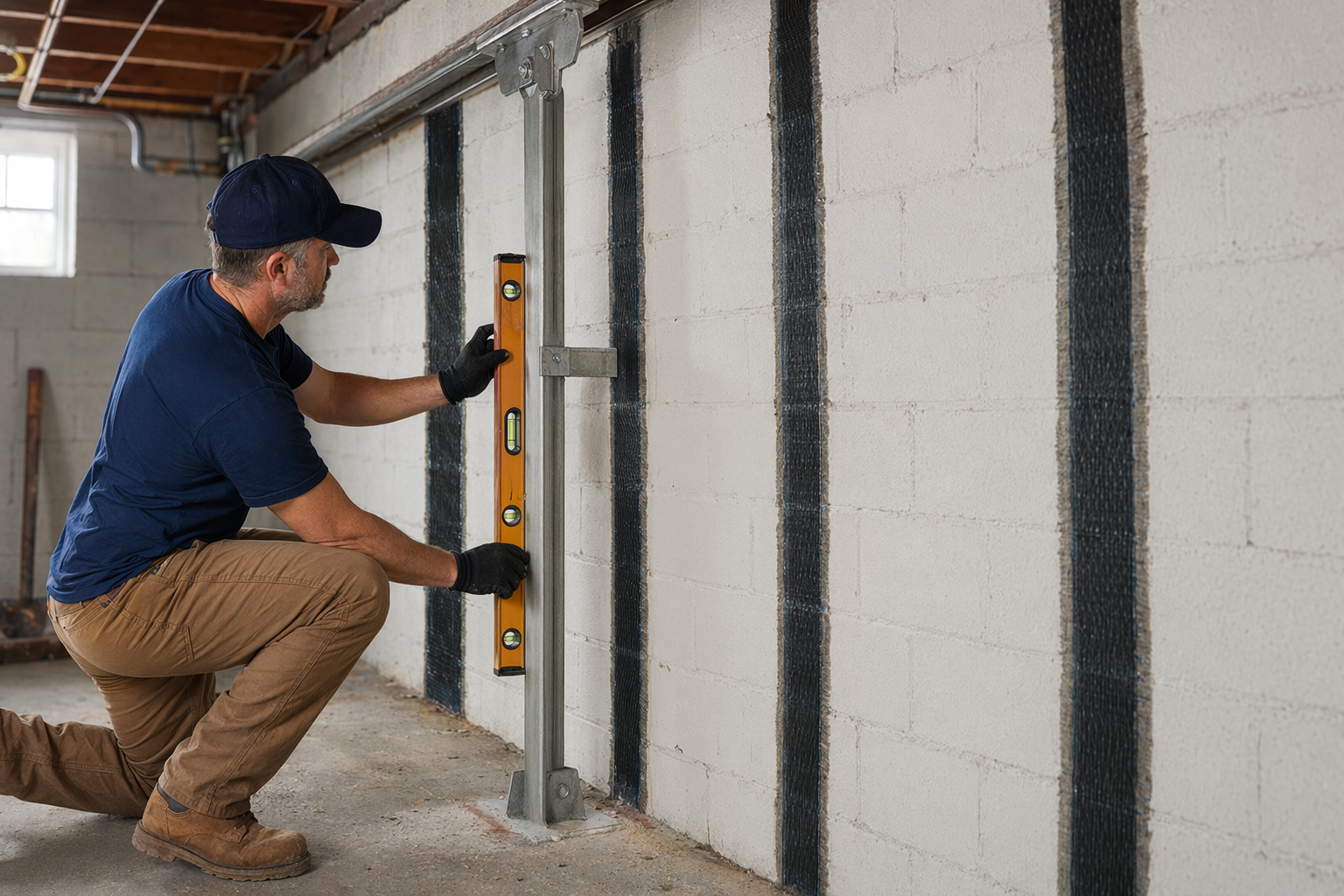
What a bowing or leaning wall usually means
A wall that curves inward, tilts, or shows horizontal cracking is often reacting to outside soil pressure. Wet soil expands. Poor drainage adds weight. Freeze-thaw cycles can make the pressure worse. In many homes, the problem shows up in a basement or crawl space block wall first.
Common signs include:
- A wall that looks bulged, not straight
- Horizontal cracks, often near the middle of the wall
- Stair-step cracks in block or mortar joints
- Water seepage, damp spots, or white chalky residue
- Doors or windows above the area starting to stick
- Gaps where the wall meets floor framing
Not every cracked wall needs the same repair. Some walls mainly need stabilization so they do not move more. Others may need drainage work, reinforcement, partial rebuilding, or deeper foundation support. That is why we strongly recommend starting with an independent, licensed structural engineer who does not also sell the repair. An engineer can evaluate the movement and help you avoid paying for work you may not need. Read more about that here: structural engineer evaluation.
Important safety note: if a wall is actively moving, a large new crack is opening quickly, masonry is breaking loose, or you see signs of possible collapse, leave the area and contact a licensed structural engineer or your local building department right away.
How wall stabilization works
Wall stabilization means adding a system that helps the wall resist more inward movement. The goal is usually to stop or slow movement, not promise that every wall will return fully to its original position.
Common methods include:
1. Carbon fiber straps
- Thin, strong strips bonded to the wall
- Often used when the wall has bowed but movement is limited
- Usually needs a sound wall surface and proper top/bottom anchoring
- Lower-profile than steel, but not right for every case
2. Steel I-beams or wall braces
- Vertical steel members installed against the wall
- Can provide stronger visible reinforcement for more significant bowing
- Sometimes paired with anchors depending on the design and site
3. Wall anchors or tieback systems
- Connect the wall to more stable soil farther away from the house
- Can sometimes allow gradual straightening over time
- Need enough yard access and suitable soil conditions
4. Drainage and waterproofing measures
- May reduce future pressure from water-saturated soil
- Can include exterior grading changes, downspout extensions, drains, or interior/exterior waterproofing
- Often important when moisture is a major cause. Learn more: foundation waterproofing
5. Rebuilding or more extensive structural work
- In severe cases, stabilization alone may not be enough
- A badly displaced or deteriorated wall may need partial or full replacement
The right method depends on the cause, the amount of movement, the wall type, access around the home, and local soil conditions. BedrockBearing does not inspect or design repairs. We are a free matching service that helps you understand the issue and connect with licensed, insured pros after you get an engineer's opinion.
Typical cost range
For many homeowners, the first question is cost. The honest answer is that bowing wall repairs vary a lot.
A typical range for bowing-wall stabilization with carbon fiber or steel beams is about $4,000 to $15,000+. Some smaller jobs land below the high end of that range. More severe walls, long walls, anchor systems, excavation, drainage corrections, or rebuild work can go well beyond it.
Other related costs that sometimes come up:
- Independent structural engineer report: about $400-$1,200
- Basement waterproofing or drainage work: about $2,000-$12,000
- Crack repair or injection for certain cracks: about $300-$2,500. See foundation crack repair
- If wall movement is tied to broader settlement, deeper support such as piers may be discussed, often $1,200-$3,000 per pier with many jobs needing multiple piers
These are typical estimates, not quotes or guarantees. The real price depends on:
- What is actually causing the wall to move
- Soil and water conditions on your site
- How far the wall has bowed or leaned
- Whether drainage fixes are also needed
- Access inside and outside the home
- The repair method required
- Permit and code requirements in your area
If you want a clearer sense of price ranges before talking to contractors, see costs. But use ranges only as a starting point. The safest way to compare is engineer first, then multiple written estimates for the same scope.
How long it takes and what the job feels like
Many stabilization jobs are not long projects, but the timeline depends on the method.
For a straightforward interior reinforcement job, on-site work may take 1-3 days. Anchor systems, excavation, drainage work, or more complex structural repairs can take several days to a few weeks. Permits and scheduling can add time before work starts.
What homeowners often notice during the process:
- Workers may need clear access along the basement wall
- Stored items usually need to be moved away from the work area
- Some systems are visible after installation, especially steel beams
- There may be drilling, dust, adhesive cure time, or minor concrete work
- Waterproofing or exterior drainage work can disturb landscaping
Ask the contractor to explain:
1. What parts of the wall will remain visible after the repair
2. Whether the repair is meant to stabilize only or also attempt straightening
3. What maintenance, if any, is needed later
4. Whether permits are required and who is responsible for them
Get all of that in writing before any deposit. Also verify that the contractor is licensed and insured yourself, not just by taking a verbal promise. For help comparing companies, see how to vet a foundation contractor.
Pros, limits, and where people get burned
Wall stabilization can be the right move, but it has limits.
Potential benefits
- Helps reduce the risk of further inward movement
- May cost less than rebuilding a wall
- Some methods are less invasive than major excavation
- Can address a real structural concern before it gets worse
Real limits
- Not every wall can be safely saved with straps or braces alone
- Stabilized does not always mean fully straightened
- If water pressure and drainage are not addressed, the problem can keep stressing the wall
- Cosmetic patching is not the same thing as structural stabilization
Where homeowners get burned:
- A salesperson pushes the one system they sell without explaining alternatives
- No one addresses drainage, gutters, grading, or hydrostatic pressure
- The homeowner gets only one bid and no engineer opinion
- The contract is vague about materials, spacing, warranty terms, permits, or cleanup
- The contractor is not properly licensed or insured
This is why we keep repeating one point: start with an independent, licensed structural engineer. The engineer evaluates. Then you compare repair options from licensed, insured contractors. You choose who to hire. You hold final payment until the agreed work is done.
Questions to ask before you hire anyone
Use these questions to slow the process down and get clear answers.
- What is causing the wall movement? Soil pressure, drainage, poor grading, expansive soil, frost, settlement, or a combination?
- Did an independent structural engineer evaluate it? If not, why not?
- Is this bid for stabilization, straightening, drainage correction, or all three?
- Why is this repair method appropriate for this wall?
- What happens if the wall has moved more than expected once work begins?
- Will you pull permits if required, and will the work follow local code?
- Are you licensed and insured in my area? Can you provide proof so I can verify it?
- What exactly is included in the written scope and price? Materials, spacing, excavation, crack sealing, drainage work, cleanup, and patching?
- What warranty is offered, by whom, and on what terms?
- Will this repair affect future finishing, framing, or waterproofing work in the basement?
If you are just starting and want help finding companies to compare, you can use our free service here: get matched. Participating pros pay a flat fee to be included. The matching is free to homeowners.
The safest path: engineer first, then compare estimates
If you remember one thing from this page, make it this: do not let the first contractor who visits your house define the problem and sell the fix without an independent engineer's input.
A practical path looks like this:
1. Document what you see
- Take dated photos of cracks, bulges, leaks, and any changes over time
- Note whether doors stick, floors slope, or cracks are growing
2. Watch for urgent warning signs
- If the wall is moving now, chunks are falling, or collapse seems possible, leave the area and contact a licensed structural engineer or local building department immediately
- Review common red flags here: foundation warning signs
3. Get an independent engineer evaluation
- Prefer someone who does not also sell repair work
- Ask for a written report if possible
4. Compare multiple written estimates
- Give each contractor the same engineer findings when available
- Compare scope, materials, permits, timeline, and total price
5. Verify and decide carefully
- Check license and insurance yourself
- Do not rely on a handshake or verbal promises
- Keep the written scope and hold final payment until the agreed work is complete
BedrockBearing is here to help you understand the situation and connect with licensed, insured foundation repair pros. We do not inspect, engineer, or perform the repair. We help you take the next step with clearer information and better questions.
A bowing or leaning wall can be serious. Do not ignore it. If the wall seems to be moving now or looks unsafe, leave the area and call a licensed structural engineer or your local building department. Otherwise, get an independent engineer report first, then compare written estimates from licensed, insured contractors, verify their credentials yourself, and do not pay based only on a sales pitch.