Slabjacking & concrete leveling
Slabjacking can raise sunken concrete by filling voids under a slab. It can be a practical repair in the right situation, but it is **not** the answer for every settling or foundation problem.
What slabjacking is good for
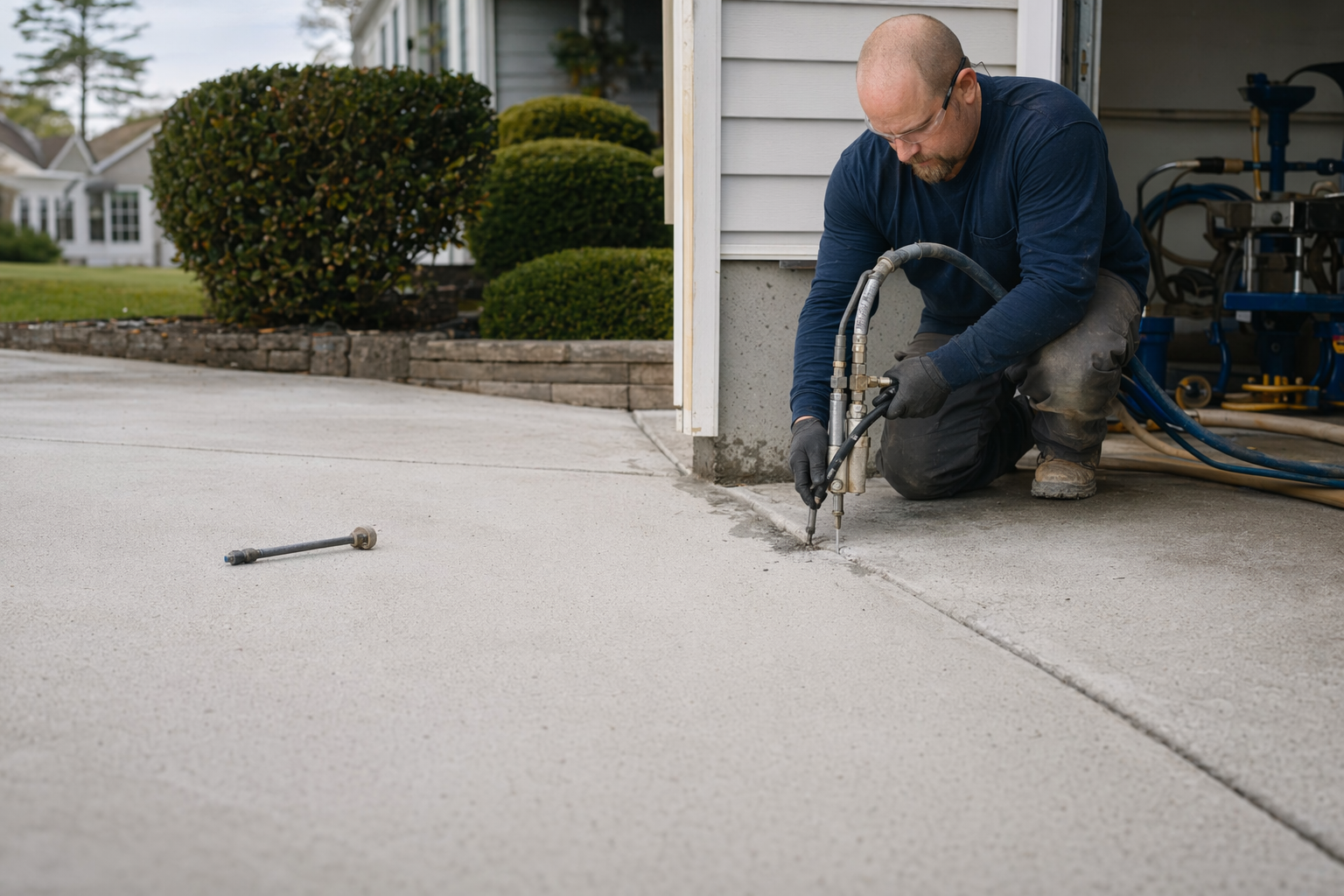
Slabjacking, sometimes called mudjacking or foam lifting, is a way to lift and support concrete that has settled. The goal is to bring the slab closer to level and reduce trip hazards, drainage problems, or uneven floors.
It is most often used for:
- sunken sidewalks, driveways, patios, and garage floors
- some interior slabs-on-grade where the slab has dropped but is still mostly intact
- concrete that settled because soil washed out, compacted poorly, or shrank
It is not a cure-all for every foundation issue. If the real problem is active structural movement, expansive soil, poor drainage, a failing retaining condition, or footing settlement, lifting the slab alone may not solve it.
That is why we strongly recommend an independent, licensed structural engineer before hiring a repair company, especially if the slab movement is inside the home or you also see wall cracks, sticking doors, sloping floors, or repeated movement. An engineer who does not also sell the repair can help you understand whether leveling is enough or whether deeper support is needed. See structural engineer evaluation for what to expect.
If you are just starting to compare repair methods, our costs guide can help you see where slabjacking fits.
How slabjacking works
The basic idea is simple: material is injected under the concrete to fill empty space and lift the slab.
- The contractor drills small holes through the slab.
- A pump injects either a cement-based slurry or high-density polyurethane foam below the concrete.
- The pressure fills voids and can raise the slab in controlled increments.
- The holes are patched after the lift.
There are two common approaches:
- Mudjacking / slurry lifting: uses a heavier cement-based mix. This has been around a long time and can work well in many exterior areas.
- Foam lifting: uses expanding polyurethane foam. It is lighter, can cure quickly, and is often used where weight matters or a faster return to service is helpful.
Neither method is automatically better in every case. The right method depends on the slab thickness, access, soil and moisture conditions, the amount of settlement, and whether the slab is part of a larger structural problem.
A careful contractor should also look at the cause of the settlement. If water is washing soil away, gutters discharge at the foundation, downspouts are short, or grading slopes toward the house, the sinking can come back. If water is part of the problem, look into foundation waterproofing as part of the overall fix.
Typical cost range
For a typical area, slabjacking or concrete leveling often runs about $600-$3,500. That is a typical range, not a quote or guarantee.
Real price depends on:
- the cause of the settlement
- how much lifting is needed
- slab size and thickness
- whether the slab is cracked or broken
- soil and site conditions
- access for equipment
- the material used
- your local labor and permit environment
Here is the honest part many homeowners need to hear: low price does not always mean good value. If the company only talks about lifting the slab but does not explain why it settled, you may be paying for a cosmetic reset that does not last.
In some homes, a settled slab is a sign that the support system below needs more than filling voids. If a footing or foundation edge is dropping, deeper support like piering and underpinning may be considered instead. Typical steel push or helical piers often run about $1,200-$3,000 per pier, and many jobs need 8-12 piers or more, so a larger structural repair can land around $10,000-$30,000+.
An independent structural engineer report often costs about $400-$1,200. Many homeowners try to skip that step, but it can protect you from buying the wrong repair or more work than you need.
When it makes sense, and when it does not
Slabjacking can be a smart option when:
- the slab is accessible
- the concrete is still in fair condition
- settlement is moderate, not extreme
- the problem is mainly voids or minor soil settlement
- you want a faster and less disruptive repair than full replacement
It may not be the best choice when:
- the slab is badly broken or crumbling
- there is ongoing water intrusion or erosion that has not been fixed
- a footing or load-bearing foundation element is failing
- movement is active and worsening
- interior distress suggests a bigger structural issue
- the wall system is also moving, bowing, or cracking
If you also see wall distress, take that seriously. Bowing basement walls, horizontal cracking, or inward movement can be a separate structural problem that may need bowing wall stabilization rather than slab lifting alone.
For warning signs to watch, read foundation warning signs. If a wall is actively moving, large new cracks are opening, or there are signs of imminent collapse, leave the area and contact a licensed structural engineer or your local building department right away.
Timeline, disruption, and what to expect
One reason people consider slabjacking is speed. Many smaller jobs are completed in a few hours, and some surfaces can be used again the same day or soon after, depending on the material used and site conditions.
What homeowners should expect:
- small drilled holes in the slab that are patched afterward
- equipment noise during pumping
- some dust or mess around the work area
- no miracle promise of perfectly level results in every case
A good contractor should explain:
1. how much lift is realistic
2. whether there is risk of cracking during lifting
3. what caused the settlement
4. what drainage or site corrections are also recommended
5. whether permits are required locally
Concrete leveling is often less disruptive and less expensive than tearing out and replacing a slab. But replacement may still be the better choice if the slab is too damaged, too thin, or too unstable to lift well.
Always hire licensed and insured contractors, verify the license and insurance yourself, and get the scope and price in writing before any deposit. Follow local permit and code requirements.
Pros, cons, and where homeowners get burned
Pros
- usually faster than full slab replacement
- often lower cost than replacement for a typical area
- can reduce trip hazards and improve drainage
- less demolition and haul-off
Cons
- does not always fix the underlying cause
- not every slab can be lifted safely or evenly
- severely damaged concrete may still need replacement
- future movement can happen if soil or water problems continue
Where people get burned is not usually the pumping itself. It is the sales process. A homeowner sees a low spot. The company sells a fast lift. Nobody explains why the slab moved. Six months or two years later, the problem returns.
Protect yourself:
- start with an independent, licensed structural engineer for home-related or possibly structural movement
- compare more than one written estimate
- ask each contractor what evidence supports their method
- ask what happens if the slab cannot be brought fully level
- ask whether they are fixing the cause or only the symptom
- verify license and insurance yourself
If you want help comparing options, BedrockBearing can match you with licensed and insured pros. The matching service is free to homeowners. You compare estimates, you choose who to hire, and you hold the final payment.
Questions to ask before you sign
Use these questions when you talk to an engineer or contractor:
- What do you think caused the slab to settle?
- Is this mainly a slab problem, or could it involve the footing or foundation?
- Should an independent structural engineer evaluate this before repair?
- Why are you recommending mudjacking, foam lifting, replacement, or another method?
- What level of improvement is realistic?
- Could lifting cause additional cracking?
- What drainage, grading, gutter, or soil corrections should be done too?
- Are you licensed and insured, and can I verify that myself?
- Will permits be needed here?
- Can you put the full scope, material, price, and any limitations in writing before I pay a deposit?
If the answers are vague, rushed, or high-pressure, slow down. Read our guide on how to vet a foundation contractor.
One more thing: cracks in slabs can mean different things. Some are minor. Some suggest movement that needs more attention. If crack repair is part of the discussion, learn how that differs from leveling at foundation crack repair.
If concrete has sunk, slabjacking may help, usually around $600-$3,500 for a typical area, but it is not right for every problem. Get an independent licensed structural engineer first for anything that may be structural, then compare written estimates from licensed and insured contractors and make sure someone explains the cause, not just the lift.