A Settling Foundation Stabilized With Piers
This is an **anonymized, illustrative** story based on a common foundation problem. It is not an inspection or engineering opinion. The point is to show how a homeowner can slow down, get an independent engineer first, and compare repair options without getting pushed into the wrong job.
The situation: floors sloped, doors stuck, and cracks kept coming back
The homeowner noticed a few things over about a year:
- A bedroom door started rubbing at the top corner.
- A crack opened above one window and came back after patching.
- Part of the floor felt slightly out of level.
- Outside, the brick veneer showed a stair-step crack near one corner.
None of that automatically proves a major structural failure. Houses move for different reasons. Some movement is minor and stable. Some movement keeps progressing because the soil under part of the home is no longer supporting the load evenly.
In this example, the warning signs pointed to possible differential settlement at one side of the house. That can be serious. It can also be expensive if the wrong repair is sold. That is why the homeowner did not start by signing with the first repair company.
Instead, they paid for an independent, licensed structural engineer who did not sell foundation work. That separate evaluation is one of the best ways to protect yourself. A typical engineer report often runs about $400-$1,200, depending on the home and area. Read more about why that step matters here: independent structural engineer evaluation.
Important: if you ever see a wall actively moving, a large new crack opening quickly, or signs of possible collapse, leave the area and contact a licensed structural engineer or your local building department right away. Foundation problems can be a safety risk.
What the engineer found and why piers were recommended
The engineer did not promise a cosmetic fix. The goal was to identify the likely cause and the area that needed support.
In this story, the report found that one section of the home had likely settled more than the rest. The likely contributors were:
- Soil movement near the perimeter.
- Concentrated movement at one corner and along one load-bearing wall.
- Damage patterns that matched settlement more than simple drywall shrinkage.
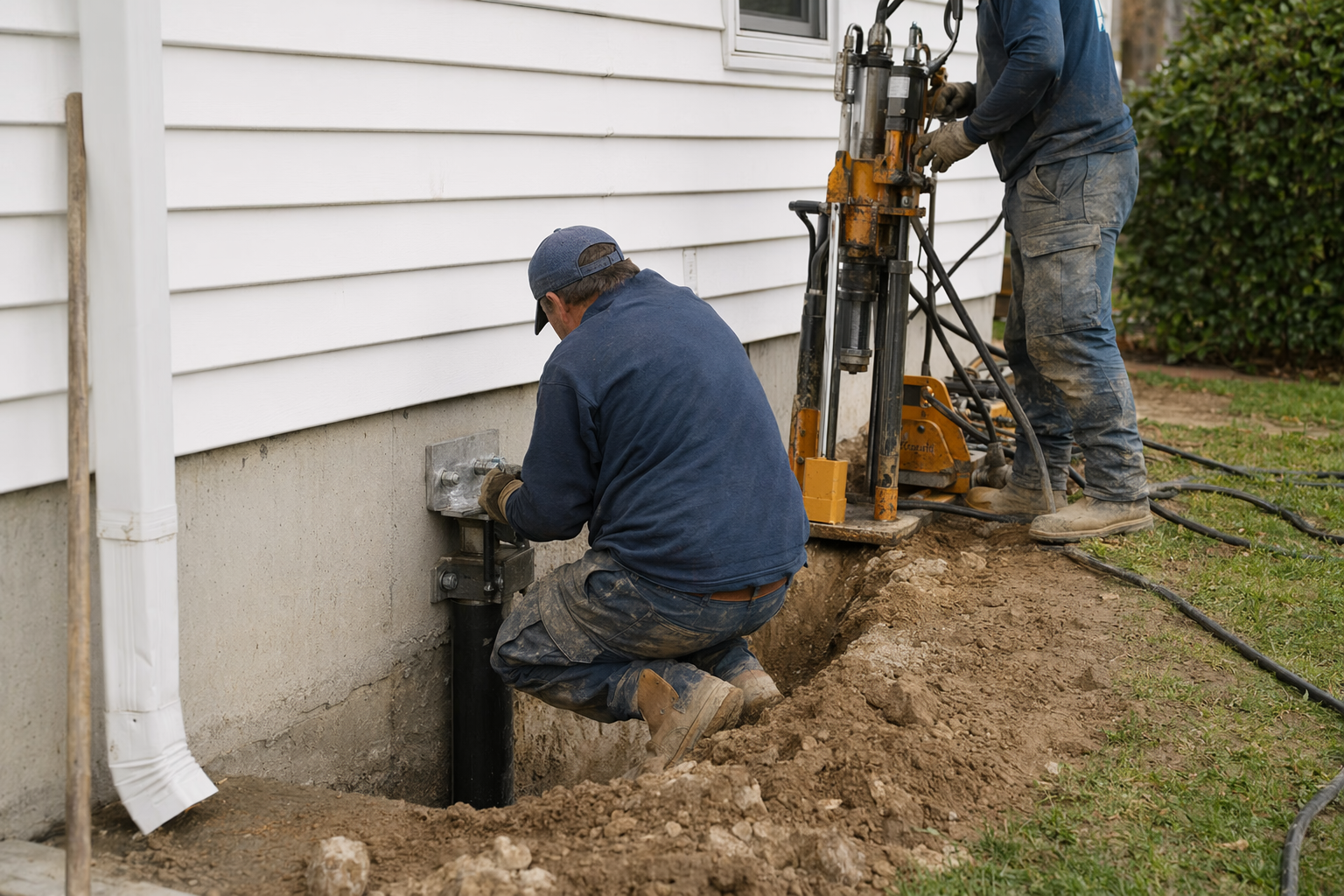
The engineer's recommendation was targeted stabilization using steel piers installed at the affected section of foundation. Piers are commonly used when the problem is deeper than a surface crack and the load needs to be transferred to more stable bearing conditions below.
That does not mean every settling house needs piers. Some homes need drainage correction first. Some need crack repair. Some need wall stabilization. Some need monitoring before any major work. That is exactly why homeowners should not treat a contractor's sales pitch as the final diagnosis.
If you are trying to understand this repair category, see piering and underpinning.
Typical pricing for steel push piers or helical piers is often around $1,200-$3,000 per pier, and many jobs need 8-12 piers, putting a lot of projects in the $10,000-$30,000+ range. Those are estimates, not quotes. The real price depends on the cause, soil and site conditions, access, the method required, and the local area.
How the homeowner compared bids without getting burned
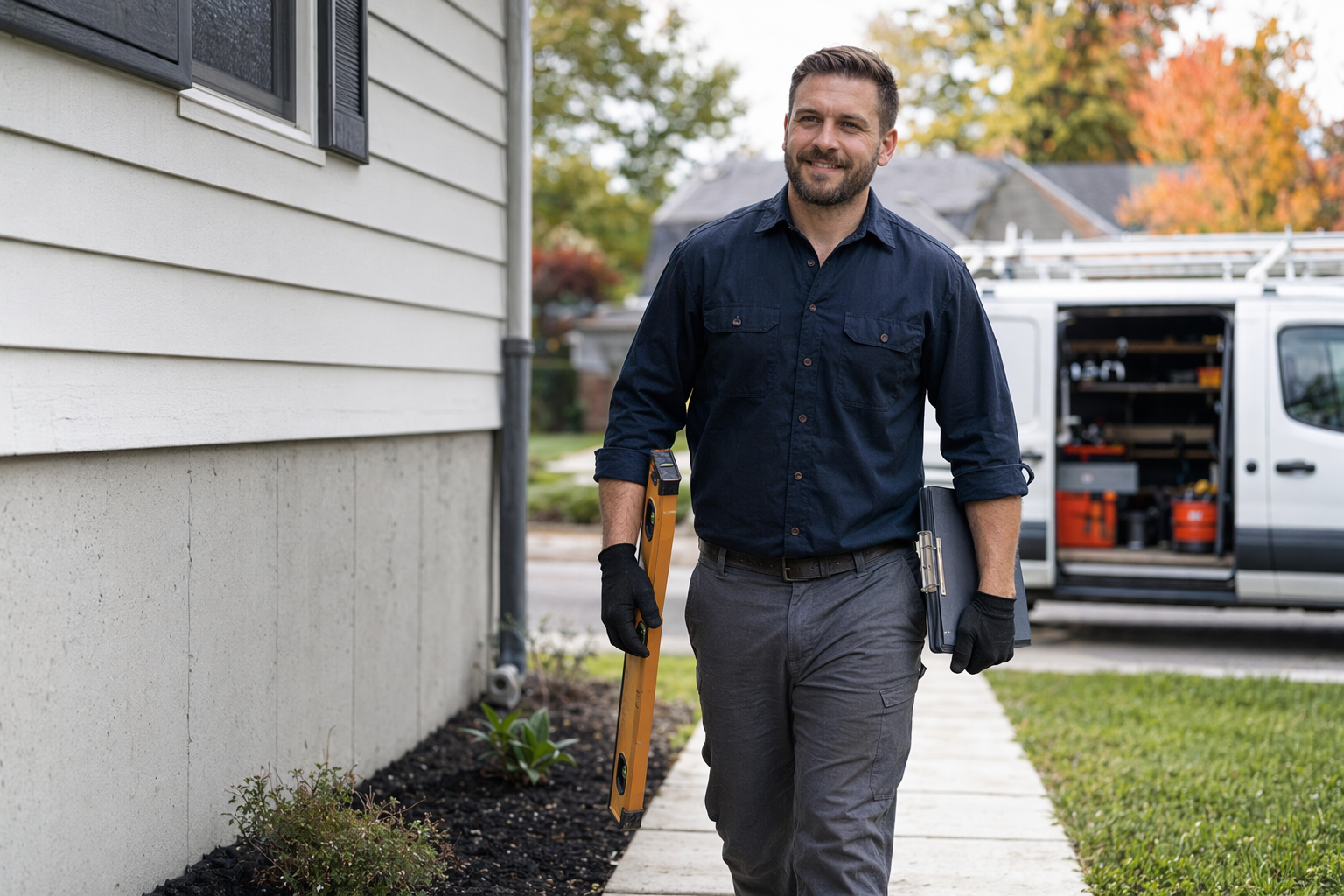
After getting the engineer report, the homeowner used it as the starting document when talking to contractors. That changed the conversation in a useful way.
Instead of asking, "What do you think I need?" they asked contractors to price the engineer's recommended scope and explain any differences.
They compared contractors on a few plain, practical points:
- License and insurance. They asked for proof and verified it themselves.
- Scope in writing. Number of piers, where they would go, access needs, cleanup, and whether lift was attempted.
- Permits and code. They asked who would handle required permits and inspections.
- Payment terms. They avoided large vague deposits and wanted milestones in writing.
- Warranty language. They read the limits, not just the headline.
Two bids were close. One was much higher and included extra work the engineer had not recommended. Another was lower but vague on layout and permit responsibility. The homeowner chose neither of those. They picked a licensed, insured contractor whose written scope most closely matched the engineer's report.
That is the pattern worth copying: engineer evaluates, you compare estimates, you choose who to hire. For a practical checklist, see how to vet a foundation contractor.
BedrockBearing can help you get matched with licensed, insured foundation repair pros at no cost, but you should still verify license, insurance, scope, and permits yourself.
What the repair involved and what changed after
The work in this example was not magic, and it did not make an older house brand new. It was a structural stabilization job.
The contractor installed a series of piers along the settled section of foundation. After installation, the crew performed a controlled lift within the limits the structure would safely tolerate. In many real jobs, some movement can be improved, but not every crack closes and not every floor becomes perfectly level.
In this story, the outcome was realistic:
- The affected area was stabilized.
- Some doors operated better after the lift.
- A few interior cracks became smaller.
- Cosmetic repairs were still needed afterward.
- The homeowner was told to monitor the house over time.
That is an honest result. Structural repair and cosmetic repair are not the same thing.
The final contract amount landed in a typical range for a moderate pier job, but the exact number is less useful than the lesson: pricing depends heavily on the number of piers, depth needed, site access, and local conditions. If water was part of the cause, the homeowner may also need drainage or waterproofing work. Typical basement waterproofing or drainage projects often run about $2,000-$12,000. You can compare broader repair categories on our foundation repair cost guide.
The takeaway for a worried homeowner
If you are seeing cracks, sticking doors, sloped floors, or separation around windows, do not panic. But do not ignore it either.
A smart, safer process looks like this:
- Document what you see with photos and dates.
- Take serious warning signs seriously. If movement appears active or dangerous, leave the area and contact a licensed structural engineer or your local building department.
- Hire an independent, licensed structural engineer before agreeing to a major repair sale.
- Get multiple estimates from licensed, insured contractors.
- Verify license and insurance yourself.
- Get the scope, price, permit responsibility, and payment terms in writing before any deposit.
- Hold final payment until the contracted work is completed as agreed.
This case study is only an example. Your home may need a different solution. The useful habit is not "piers fix everything." The useful habit is slow down, get an independent engineer, and compare written bids against that report.
If your house seems to be settling, do not guess and do not let a sales pitch be the diagnosis. Get an independent licensed structural engineer first, then compare written estimates from licensed and insured contractors, verify permits and insurance yourself, and only pay for the work you understand.