How One Homeowner Avoided a Bad Foundation Contractor
This is an anonymized, illustrative story based on a common situation. It shows how a homeowner slowed down, got an independent structural engineer, and avoided paying for work they may not have needed.
The situation: cracks, sticking doors, and a scary sales pitch
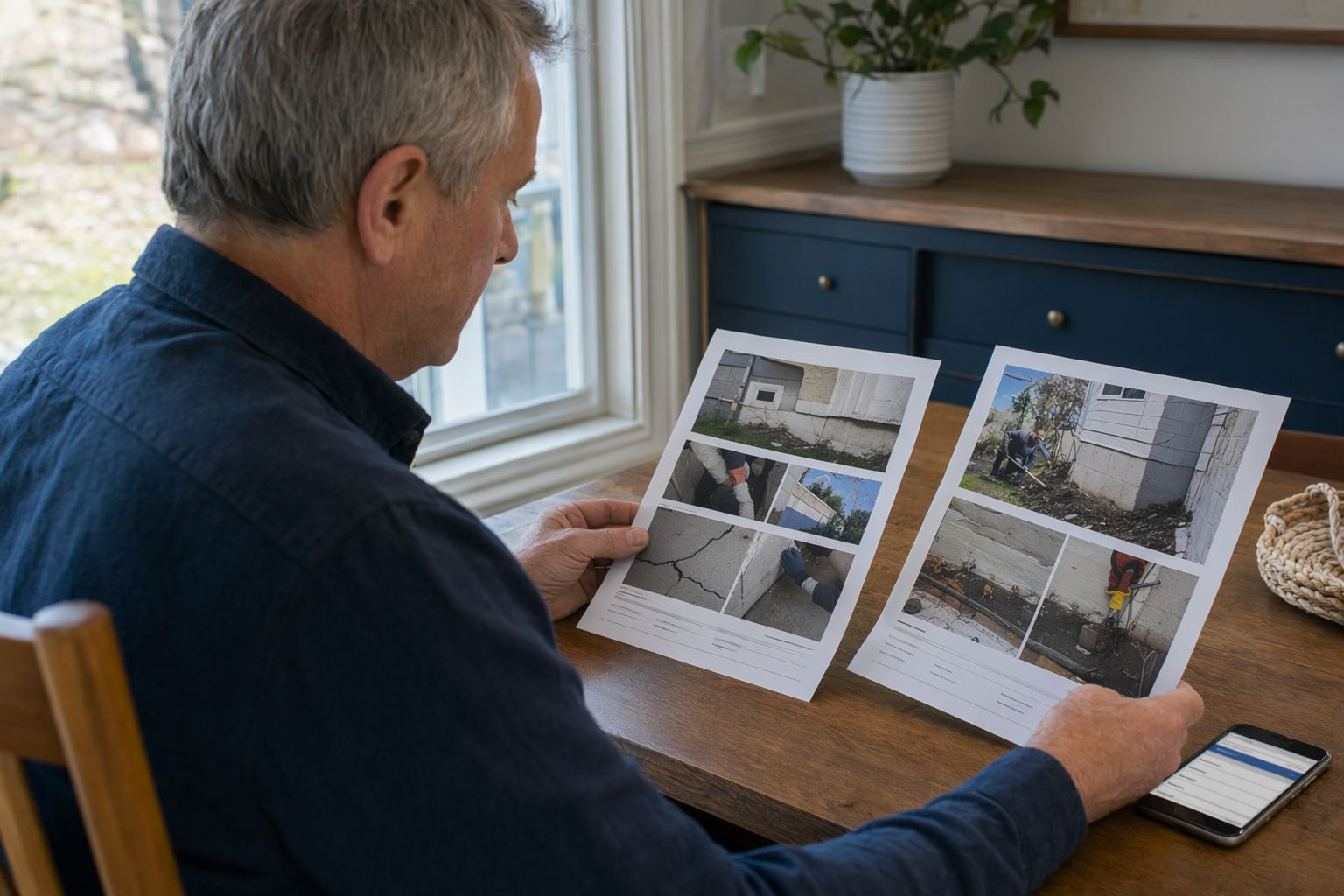
A homeowner noticed a few troubling signs in an older house: a diagonal crack above a door, one bedroom door that started sticking after heavy rain, and a small gap where the baseboard no longer sat flat against the floor. In the basement, they also saw a hairline crack in the wall and some damp spots after storms.
Like many people, they did what most homeowners do first. They searched online, filled out a form, and spoke with a repair company.
The first contractor looked for about 20 minutes, took a few photos, and recommended a large piering job right away. The proposal called for 10 steel piers plus crack repair and waterproofing. The price was in the range many homeowners see for that kind of work: roughly $10,000 to $30,000+ for piers alone, depending on how many are needed, access, soil, the method used, and local conditions. The salesperson warned that if the owner waited, the house could get worse.
That kind of issue can be serious. Foundation movement is not something to ignore. But a fast, expensive recommendation is also a reason to slow down. BedrockBearing does not inspect or design repairs, but this is exactly where we urge people to get an independent, licensed structural engineer first, especially before signing a major contract. See why that matters.
What the homeowner did differently
Instead of signing that day, the homeowner took a step back and did four smart things:
- Documented what they were seeing. They took clear photos of cracks, measured the width, and wrote down when doors started sticking.
- Checked whether the signs were urgent. Nothing appeared to be actively collapsing or rapidly moving. If a wall is actively shifting, large new cracks are opening, or there are signs of imminent collapse, leave the area and contact a licensed structural engineer or your local building department right away.
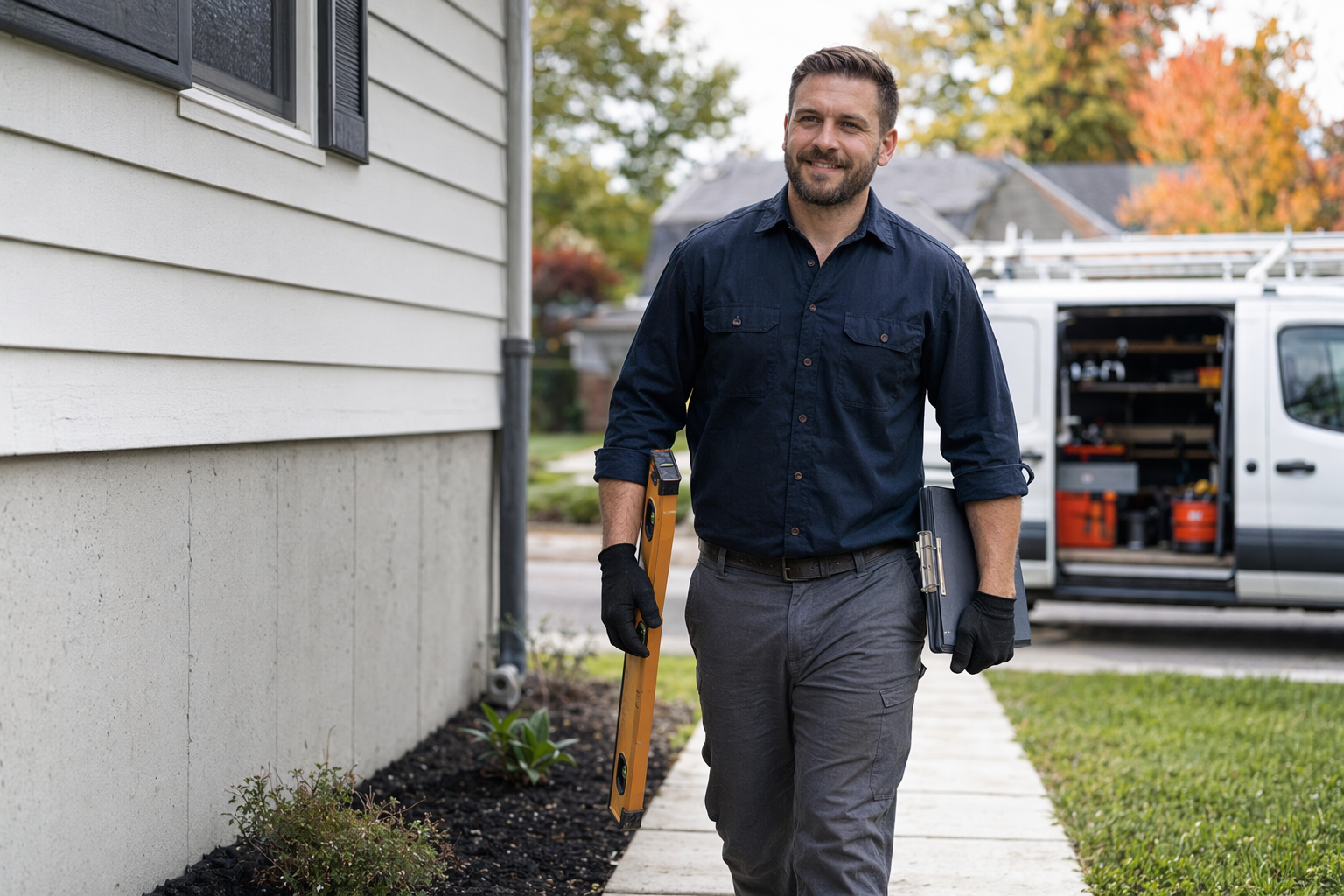
- Hired an independent structural engineer. The engineer did not sell repairs. The report cost a typical $400 to $1,200, depending on the area and scope.
- Waited for a written engineer report before comparing contractors.
That engineer found something important: the house did have movement, but the pattern did not support the full piering plan that had been pitched. The report suggested that poor drainage and seasonal moisture changes were likely contributing to the symptoms. The engineer recommended improving exterior drainage first, monitoring certain cracks, and getting targeted repair estimates only for the affected area if movement continued.
In plain terms, the house needed attention, but not necessarily the biggest job on the menu.
The bids looked very different after the engineer report
Once the homeowner had the engineer's findings, they asked for new estimates based on that scope.
The options became much clearer:
- One contractor still pushed a much larger job than the engineer recommended.
- Another contractor proposed a smaller, targeted plan that matched the report more closely.
- A third suggested drainage improvements and crack sealing first, with follow-up monitoring.
That changed the conversation completely. Instead of asking, "Who can start tomorrow?" the homeowner could ask:
- Does your scope match the engineer's report?
- What exactly is included in writing?
- Will permits be pulled if required locally?
- Are you licensed and insured, and can I verify that myself?
- What happens if conditions on site differ from the proposal?
The homeowner learned an expensive lesson without paying for it the hard way: some foundation problems do call for piers, wall stabilization, or drainage work, but the right method depends on the cause, not the fear level of the sales talk.
Typical costs vary a lot. For example:
- Crack injection may run about $300 to $2,500.
- Slabjacking or foam lifting for a typical area may run about $600 to $3,500.
- Steel push or helical piers are often about $1,200 to $3,000 per pier, with many jobs needing 8 to 12 piers.
- Waterproofing or drainage work often lands around $2,000 to $12,000.
These are estimates, not quotes. Real pricing depends on the cause, soil and site conditions, access, method, and the local market. If you want a fuller breakdown, see foundation repair costs.
The outcome: less work, better paperwork, more control
In this illustrative case, the homeowner did not move forward with the first large proposal. They hired a licensed and insured contractor whose written scope matched the independent engineer's recommendations more closely.
The final plan was smaller and more focused. It included drainage corrections, crack repair in one area, and monitoring rather than immediate full-house piering. The homeowner also made sure the contract spelled out scope, price, cleanup, and permit responsibility before paying a deposit.
Most important, they kept control:
- The engineer evaluated.
- The homeowner compared estimates.
- The homeowner chose who to hire.
- The homeowner held final payment until the agreed work was complete.
This does not mean every big foundation proposal is wrong. Some homes truly need major stabilization. Bowing walls, ongoing settlement, water pressure, and poor soils can require serious work. But it does mean you should be careful with any contractor who jumps straight to the biggest repair without independent evaluation first.
If you are seeing cracks, sticking doors, sloping floors, wall movement, or basement moisture, read the warning signs at foundation warning signs and, when you are ready, get matched with licensed, insured pros to compare. Matching is free to homeowners.
If a contractor quickly pushes a big foundation job, slow down. Take photos, take warning signs seriously, and get an independent licensed structural engineer before you hire anyone. Then compare written estimates from licensed and insured contractors and choose the one that matches the real problem, not the scariest sales pitch.