Are Foundation Cracks Serious? How to Tell
Some foundation cracks are minor. Some are a sign of movement, water pressure, or settlement that can get worse. The key is to look at the crack pattern, size, location, and whether it is changing.
The short answer
Yes, foundation cracks can be serious. But not every crack means your house is failing.
Small hairline cracks can happen as concrete cures and shrinks. Older homes can also show small cracks that have been stable for years. On the other hand, cracks that are getting wider, letting in water, or showing up with other symptoms can mean the foundation is moving.
What matters most is not just the crack itself. It is the whole pattern:
- Where the crack is
- How wide it is
- Whether it is vertical, diagonal, horizontal, or stair-step
- Whether nearby walls or floors are also moving
- Whether doors and windows started sticking at the same time
- Whether water is entering through the crack
If you are seeing a crack and you are not sure what it means, start by reading the warning signs and then get a real evaluation. BedrockBearing is a free matching service. We help you connect with licensed, insured foundation repair pros, but we strongly recommend an independent, licensed structural engineer first, especially before agreeing to major work. See foundation warning signs and how to arrange a structural engineer evaluation.
Which cracks are more concerning
Some crack types deserve more attention than others.
Usually less concerning
- Very thin hairline cracks in poured concrete
- Small vertical cracks that do not change over time
- Old cracks with no water entry, no widening, and no other movement symptoms
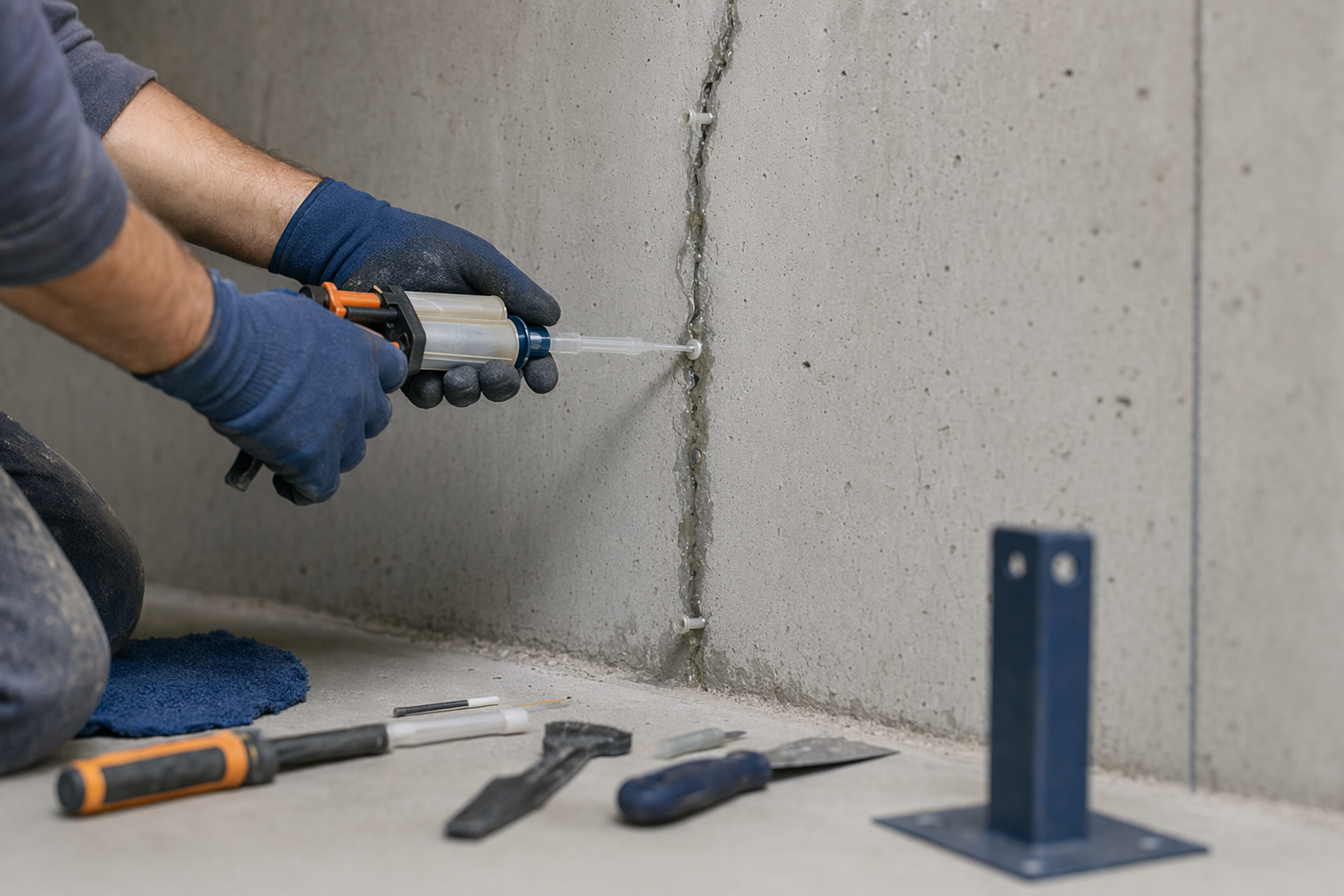
These can still need sealing if they leak. For example, a minor non-moving crack may sometimes be addressed with foundation crack repair. But sealing a crack does not fix active settlement or wall movement if that is the real cause.
More concerning
- Horizontal cracks in basement or retaining walls
- Stair-step cracks in block or brick foundation walls
- Diagonal cracks that are wider at one end
- Cracks wider than about 1/8 inch, especially if they appear new or are growing
- Cracks that leak water, show dampness, or have white mineral staining
- Multiple cracks in the same area, especially with bowing walls or sloping floors
These patterns can point to soil pressure, settlement, expansive soils, poor drainage, frost effects, or footing movement.
Take urgent signs seriously. If a wall is actively moving, a large new crack is opening quickly, you see part of a wall bulging inward, or there are signs of possible collapse, leave the area and contact a licensed structural engineer or your local building department right away. BedrockBearing does not inspect, engineer, or repair foundations. We help homeowners understand the issue and get matched with licensed, insured contractors if repair is needed.
How to look at a crack without guessing
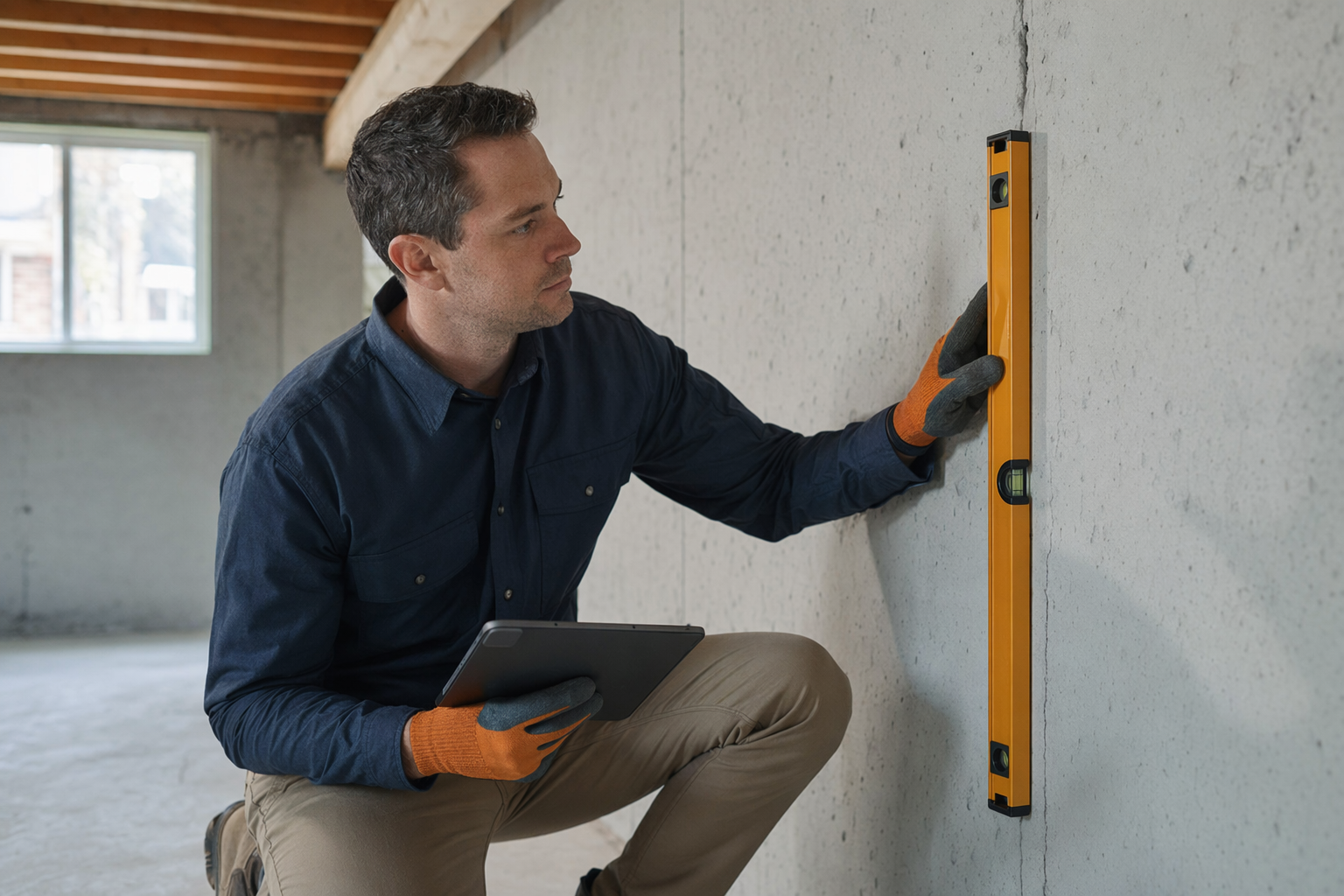
You do not need to diagnose the structure yourself. But you can make useful observations before you talk to an engineer or contractor.
1. Measure the width
Use a coin, ruler, or crack gauge if you have one. Note the widest point.
2. Look at the direction
Vertical, diagonal, stair-step, and horizontal cracks often suggest different causes.
3. Check for displacement
Run your finger across the crack. Is one side pushed in or out compared with the other?
4. Look for related symptoms
Check for sticking doors, uneven floors, drywall cracks above openings, gaps at trim, or windows that suddenly do not close right.
5. Watch for water
Water stains, damp spots, mold smell, efflorescence, or active seepage matter.
6. See if it is changing
Mark the ends lightly with pencil and write the date. Take clear photos from the same angle every few weeks.
7. Check the outside too
Look for poor drainage, downspouts dumping near the house, negative grading, standing water, or tree roots near the foundation.
Homeowners get burned when someone treats the symptom only. A crack might need injection. Or the real issue might be settlement, hydrostatic pressure, or drainage outside. That is why an independent structural engineer is so important before major repair work. The engineer evaluates. Then you compare estimates. Then you choose who to hire.
Common causes and the repairs people are often sold
Foundation cracks do not all come from the same problem. The right fix depends on the cause, the soil and site conditions, access, the method required, and your area.
Common causes
- Normal concrete shrinkage
- Settlement from weak or changing soil
- Expansive clay soils that swell and shrink
- Water pressure against basement walls
- Poor drainage or gutters dumping near the house
- Freeze-thaw cycles
- Tree roots changing soil moisture
Common repair categories and typical ranges
These are estimates, not quotes.
- Crack injection for a leaking or non-structural crack: about $300-$2,500
- Slabjacking, mudjacking, or foam lifting for a typical area: about $600-$3,500
- Steel push or helical piers: about $1,200-$3,000 per pier, with many jobs needing 8-12 piers, so total jobs often land around $10,000-$30,000+. Learn more about piering and underpinning.
- Bowing-wall stabilization with carbon fiber or beams: about $4,000-$15,000+
- Basement waterproofing or drainage work: about $2,000-$12,000
- Independent structural engineer report: about $400-$1,200
Be careful with one-size-fits-all sales pitches. A wall crack caused by water pressure may need drainage and wall stabilization. A settled corner may need piers. A small stable crack may only need monitoring or sealing. The honest answer depends on the evidence, not the sales script.
What to do next
If you found a crack and you are worried, here is the calm, smart order of operations.
1. Document what you see
Take photos. Measure the crack. Write down where it is and whether you see water, sticking doors, sloped floors, or wall movement.
2. Reduce obvious water problems
Make sure gutters are clear, downspouts discharge away from the home, and water is not pooling near the foundation. Do not assume this solves the structural issue, but it can help prevent more damage.
3. Get an independent, licensed structural engineer evaluation
This is one of the best ways to avoid paying for work you do not need. Choose an engineer who does not also sell the repair.
4. Then compare licensed, insured contractors
If repair is recommended, get written scopes and pricing from contractors. Verify the license and insurance yourself. Ask what permits are required and make sure the work follows local code.
5. Do not hand over a deposit without paperwork
Get the scope, method, materials, warranty terms, and total price in writing before any deposit. Hold final payment until the agreed work is complete.
BedrockBearing is free for homeowners. We do not inspect, design repairs, or perform the work. We help you describe what you are seeing and get matched with licensed, insured pros so you can compare options. If you want help now, use get matched after you line up an engineer, or review how to vet a foundation contractor.
A foundation crack is not always an emergency, but you should not ignore it. Take photos, measure it, watch for water or movement, fix obvious drainage issues, and get an independent licensed structural engineer to evaluate it before hiring any repair contractor.