Basement Waterproofing Options and Costs
Water in the basement is common, but the fix depends on why the water is getting in. Some homes need simple drainage work. Others have foundation cracks, wall movement, or outside grading problems that need a different plan.
The short answer
Basement waterproofing is not one single repair. It can mean sealing a crack, improving drainage, adding an interior drain and sump pump, fixing outside grading, or dealing with a bowing wall or settlement problem first.
Typical waterproofing and drainage work often runs about $2,000-$12,000. A single crack injection may be roughly $300-$2,500. If water is tied to settlement, piering can be much more, often $10,000-$30,000+ depending on how many piers are needed. Real cost depends on the cause, the soil and site conditions, access, the method required, and your area.
One of the biggest mistakes homeowners make is hiring the first waterproofing salesperson who says, "You need the full system." Sometimes that is true. Sometimes it is not. Before you hire a contractor, strongly consider an evaluation by an independent, licensed structural engineer who does not also sell the repair. An engineer report often costs about $400-$1,200 and can protect you from paying for work you do not need.
If you want help understanding the problem and comparing local options, BedrockBearing can match you for free with licensed, insured pros through Get matched and you can review more typical costs.
What basement waterproofing can include
The right fix starts with the source of the water. A wet basement can come from more than one problem at the same time.
Common options include:
- Crack repair: If water is coming through a specific wall crack, injection with epoxy or polyurethane may help. Learn more about foundation crack repair. Typical range: $300-$2,500.
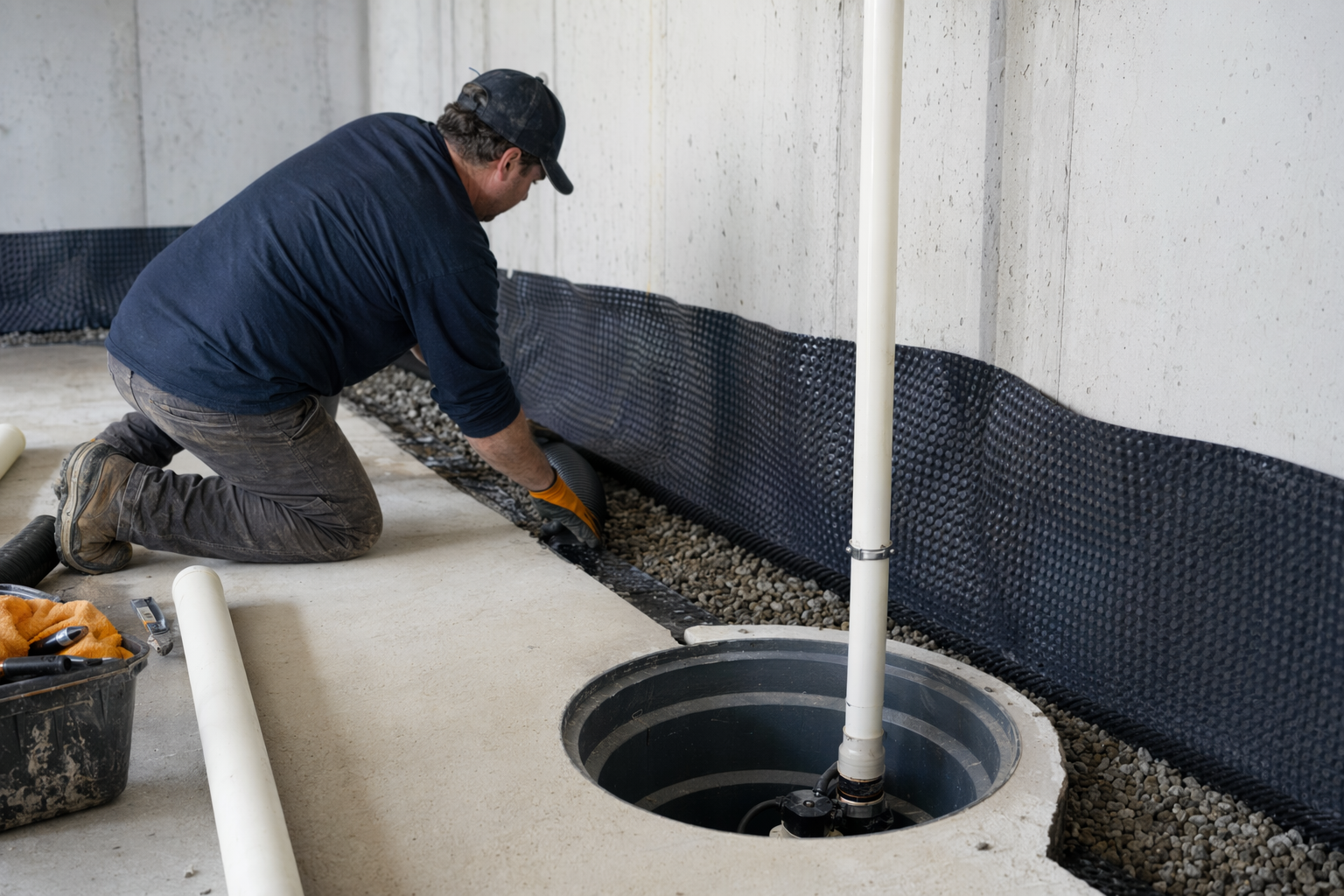
- Interior drainage system: A trench along the inside perimeter can collect water and direct it to a sump pump. This is common when hydrostatic pressure pushes water in at the wall-floor joint.
- Sump pump installation or replacement: Often part of an interior drainage system. Battery backup may be worth considering in storm-prone areas.
- Exterior drainage and grading corrections: Sometimes the cheapest effective fix is outside. Downspout extensions, grading away from the house, and drainage improvements can reduce how much water reaches the foundation.
- Exterior waterproofing membrane: In some cases, excavation outside the foundation is needed to seal the wall and improve drainage at the exterior side.
- Bowing-wall stabilization: If the wall is moving inward, waterproofing alone is not enough. The structure may need stabilization first with carbon fiber, wall anchors, or beams. See bowing wall stabilization. Typical range: $4,000-$15,000+.
Important: Waterproofing does not fix every structural problem. If you see stair-step cracks, sloping floors, doors that suddenly stick, or walls pushing inward, water may be only part of the story.
If a wall is actively moving, if large new cracks are opening, or if there are signs of possible collapse, leave the area and contact a licensed structural engineer or your local building department right away.
How to tell which kind of fix you may need
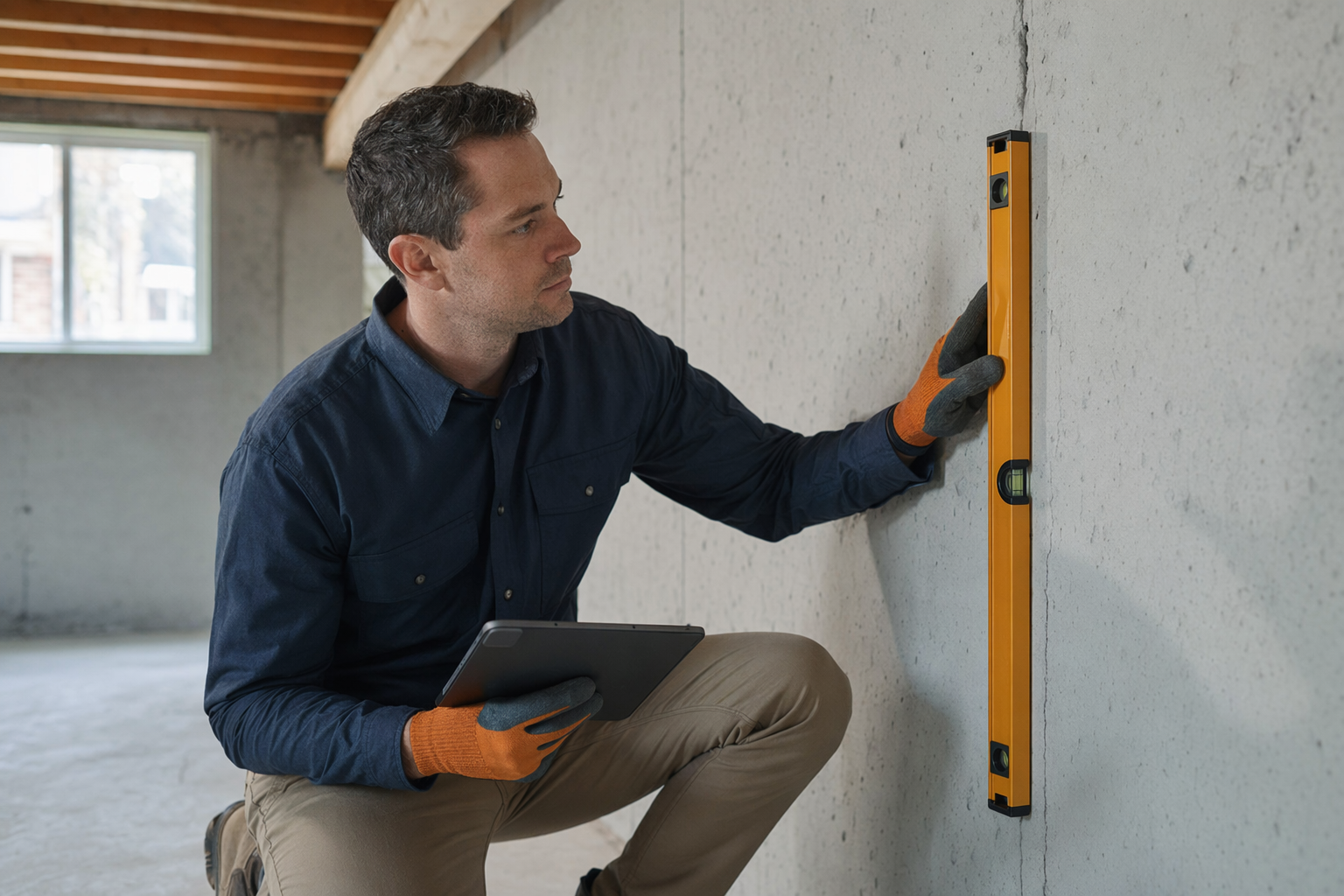
You do not need to diagnose the house yourself, but you can look at what you are seeing.
1. One wet crack, one small area of leakage
This may point to a local crack repair. If the wall is otherwise straight and there is no sign of settlement, a targeted fix may be enough.
2. Water where the wall meets the floor
This often suggests water pressure under or around the basement slab. Interior drainage and a sump system are common solutions.
3. Damp walls, musty smell, repeated seepage after rain
The home may have an outside water management problem, an inside drainage issue, or both.
4. White chalky residue, peeling paint, or mildew
These signs tell you moisture is present, but they do not prove the cause. A fresh coat of sealer may hide the symptom without solving the water path.
5. Horizontal cracks, inward bowing, or wall rotation
This is more serious. Waterproofing alone is not the answer if the wall is under soil pressure and moving. Read the warning signs at foundation warning signs.
6. Water plus sinking or uneven floors
That can point to settlement or support issues. In those cases, repairs such as piering and underpinning may be discussed, but the right method depends on an actual evaluation.
A calm rule of thumb: If the problem looks structural, get an independent engineer first. If it looks like a water-management problem, still be careful about oversold systems. Many basements need a modest fix, not the biggest package on the menu.
Typical costs and what changes the price
Here are typical ranges, not quotes or guarantees:
- Crack injection: about $300-$2,500
- Basement waterproofing or drainage work: about $2,000-$12,000
- Slabjacking or foam lifting for a typical area: about $600-$3,500
- Bowing-wall stabilization: about $4,000-$15,000+
- Steel push or helical piers: about $1,200-$3,000 per pier, with many jobs needing 8-12 piers for a total often around $10,000-$30,000+
- Independent structural engineer report: about $400-$1,200
What makes one basement cost more than another:
- Cause of the water: crack, wall-floor seepage, exterior drainage failure, hydrostatic pressure, settlement, or a mix
- How much area is affected: one crack is different from a full-perimeter drainage system
- Soil and site conditions: expansive clay, poor drainage, heavy rain exposure, slope, and groundwater matter
- Access: finished basements, tight side yards, patios, porches, and landscaping can raise labor costs
- Pump and electrical needs: a sump pit, discharge line, dedicated outlet, or battery backup add cost
- Wall condition: if the wall is cracked or bowing, structural work can come before water-control work
- Local market and code: permits, inspection requirements, and labor rates vary by area
Be careful with very low bids and very high-pressure sales. A low number may leave out important work. A high number may bundle in work you may not need. Get the scope and price in writing before any deposit.
What to do next so you do not get burned
Use this process to protect yourself:
- Document what you see. Note where the water appears, when it happens, and whether cracks or wall movement are getting worse.
- Take warning signs seriously. If there is active movement, large new cracks, or any sign of imminent collapse, leave the area and contact a licensed structural engineer or local building department right away.
- Strongly consider an independent engineer evaluation first. This is especially important if you see wall cracks, bowing, settlement signs, or repeated water intrusion. Start here: structural engineer evaluation guide.
- Compare more than one licensed, insured contractor. Verify the license and insurance yourself. Do not rely only on a business card or promise.
- Ask each company the same questions. What is the exact source they believe is causing the water? What work is included? What permits are required? What maintenance does the system need?
- Read the scope carefully. Make sure it says where the water will be managed, what materials will be used, who handles debris and clean-up, and whether electrical or discharge line work is included.
- Hold the final payment until the work is completed as agreed. You compare estimates. You choose who to hire. You hold the final payment.
BedrockBearing does not inspect, engineer, or repair foundations. We are a free matching service that helps homeowners understand the issue and connect with licensed, insured local pros. If you want to compare options, get matched.
A few honest truths about waterproofing
- Paint-on sealers are rarely a full solution when water pressure is pushing moisture through the wall or slab. They may hide the problem for a while.
- A dry basement after one rain does not prove the root cause was fixed. Ask how the proposed repair addresses the actual water path.
- Not every wet basement needs exterior excavation. Not every wet basement needs a full interior system either.
- Water can be the symptom of a bigger structural issue. If the wall is moving, stabilization may matter more than sealing.
- The best contractor is not always the one with the longest proposal. The best plan is the one that matches the cause.
That is why an independent, licensed structural engineer can be so valuable on anything beyond a simple, isolated leak. An engineer who does not sell the repair has less reason to oversell the job.
When you are ready to compare companies, use a careful checklist and verify everything yourself. BedrockBearing can help you start the process without charging you a fee.
If your basement is wet, do not assume you need the biggest system. Find the cause first, take cracks or moving walls seriously, strongly consider an independent licensed structural engineer, then compare written estimates from licensed and insured contractors before you decide.