Crawl Space vs Slab vs Basement Foundations
These three foundation types support a house in different ways, and they tend to fail in different ways too. The right next step is usually not guessing the repair. It is understanding what you are seeing, then getting an **independent, licensed structural engineer** to evaluate it before any contractor sells a fix.
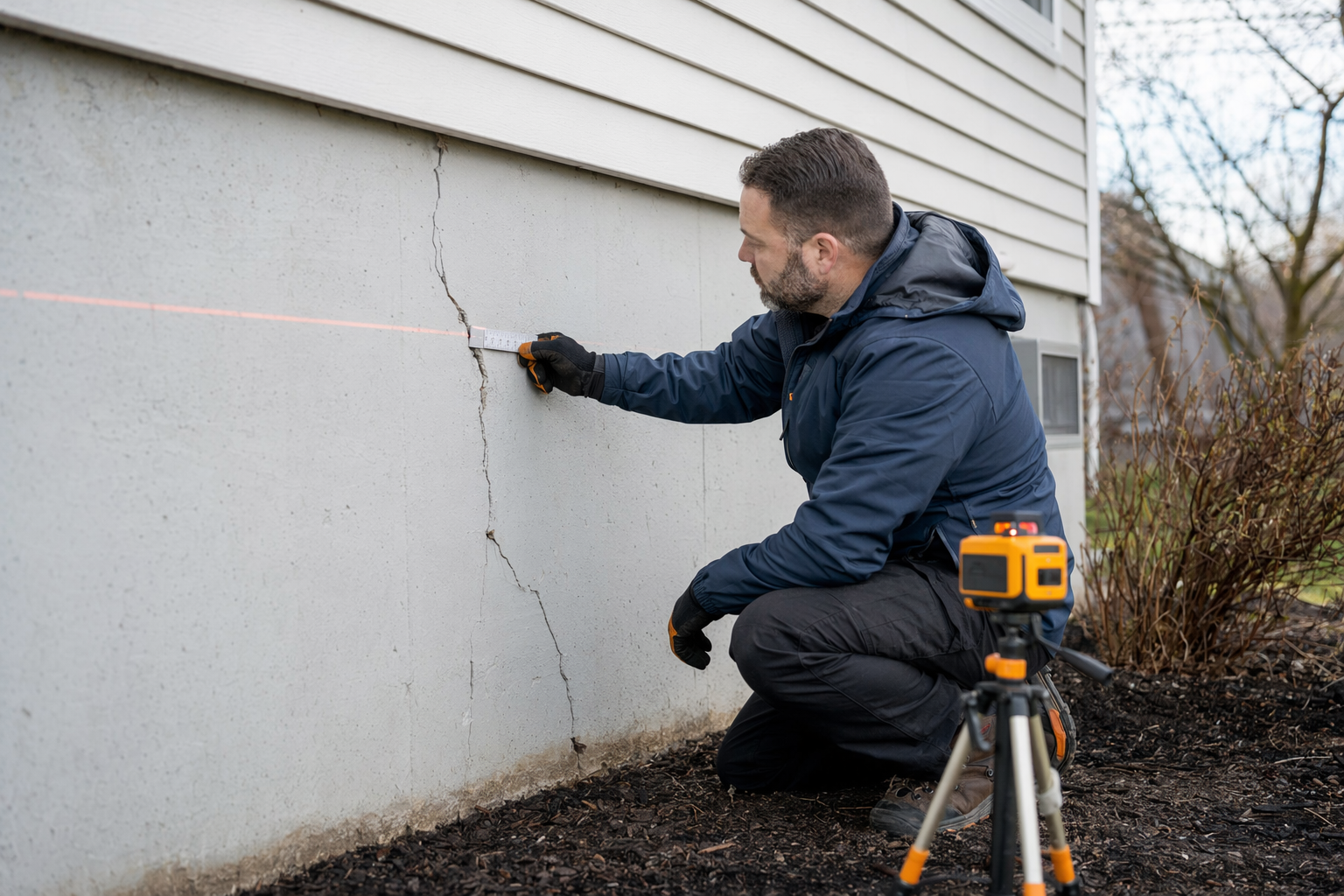
The short answer
A slab foundation is a concrete floor poured close to the ground. A crawl space foundation raises the house above the ground and leaves a short space underneath. A basement foundation creates a full lower level with taller walls below grade.
None is automatically "best" in every place. Soil, drainage, climate, site slope, and how the home was built matter a lot. A well-built slab can perform fine for decades. So can a crawl space or basement. But each type has its own common trouble spots.
- Slab: often shows problems as floor cracks, doors sticking, tile cracking, or one side of the house settling.
- Crawl space: often shows problems as sagging floors, moisture, wood rot, moldy smells, or shifting piers and supports.
- Basement: often shows problems as wall cracks, bowing walls, water intrusion, dampness, and movement from soil pressure.
If you are seeing new cracks, sloping floors, water, or a wall that looks out of line, take it seriously. If a wall is actively moving, large new cracks are opening quickly, or anything looks close to collapse, leave the area and contact a licensed structural engineer or your local building department right away.
For a broader list of signs, see foundation warning signs.
How each foundation type works and what usually goes wrong
## Slab foundations
A slab is a thick concrete pad, often with deeper thickened areas or grade beams around edges and under load points. Because the house sits directly on the slab, movement in the soil can transfer straight into the floors and walls above.
Common slab issues:
- Settlement or heave from shrinking, expanding, or poorly compacted soil
- Cracks in the slab or finish flooring
- Plumbing leaks under the slab that add moisture and can change soil conditions
- Drainage problems that keep water near the foundation
Typical repair methods can include crack repair, drainage work, or lifting settled sections with slabjacking or foam. Typical ranges are about $300-$2,500 for crack injection in some situations and $600-$3,500 for slabjacking or foam in a typical area. Bigger settlement jobs can cost much more if underpinning is needed. Learn more at foundation crack repair.
## Crawl space foundations
A crawl space usually has perimeter foundation walls and interior supports, with floor framing above. This design gives access to plumbing, wiring, and structure under the house. But it also creates a space where moisture can collect if drainage, vents, insulation, or vapor control are poor.
Common crawl space issues:
- Moisture and standing water
- Wood rot, fungal growth, and insect damage
- Sagging beams or joists
- Settlement at piers, columns, or perimeter walls
- Uneven floors and bouncy spots
Repairs may involve drainage, vapor barriers, support adjustments, beam reinforcement, or underpinning where actual foundation settlement exists. Waterproofing and drainage work often runs around $2,000-$12,000 depending on the system and site conditions.
## Basement foundations
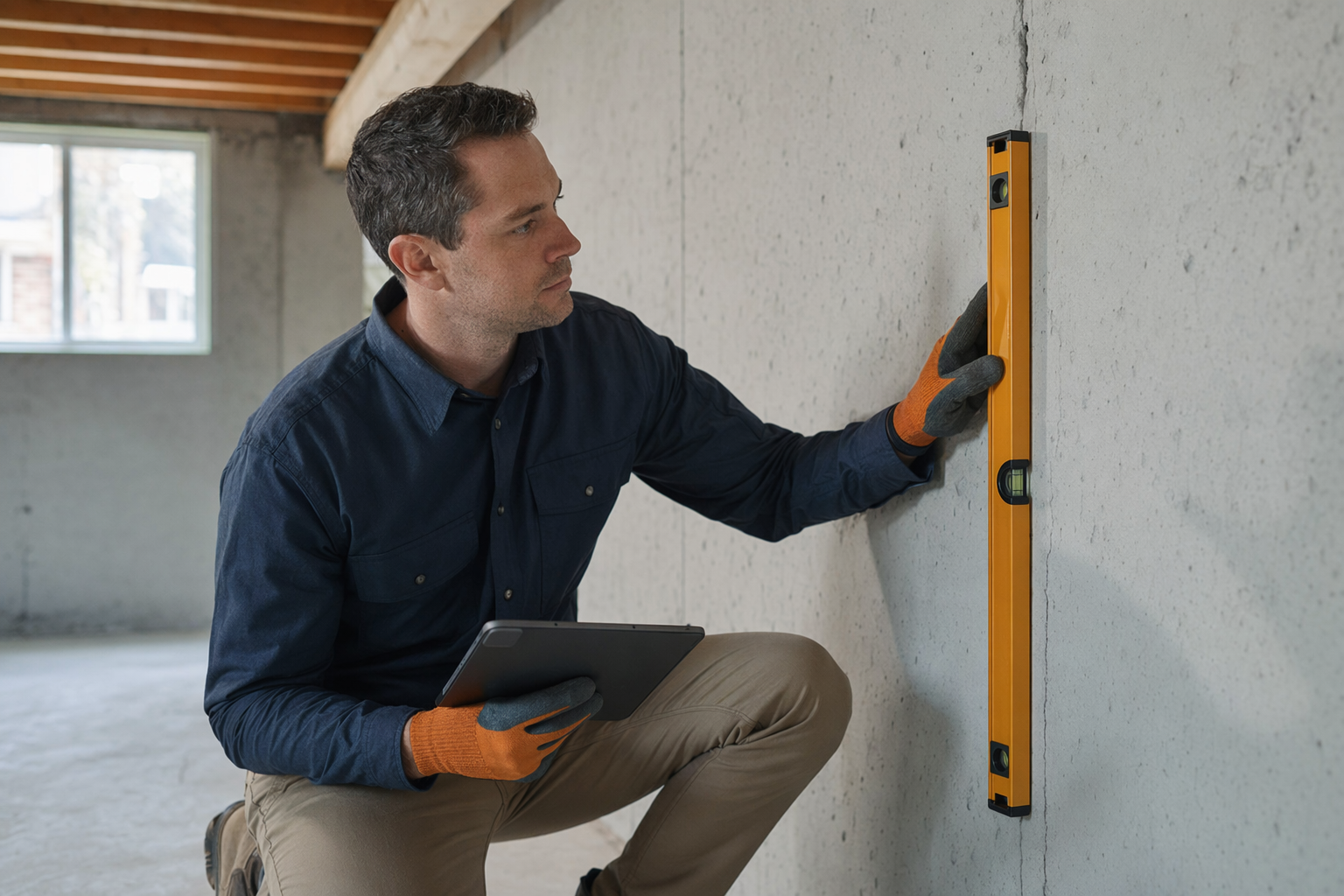
A basement has full-height walls that hold back soil outside. That means these walls deal with both vertical house loads and lateral pressure from soil and water. When drainage is poor or expansive soil is present, basement walls can crack, lean, or bow inward.
Common basement issues:
- Horizontal, stair-step, or vertical wall cracks
- Bowing or leaning walls
- Water intrusion through walls or floor joints
- Efflorescence, damp smells, and mold conditions
- Settlement at corners or along one wall
Typical repairs may include drainage improvements, waterproofing, crack repair, or wall stabilization. Bowing-wall stabilization with carbon fiber or steel beams often falls around $4,000-$15,000+. If settlement is the real cause, piers may be proposed instead. More on this at bowing wall stabilization.
Which foundation is more expensive to repair?
There is no honest one-line answer. The foundation type matters less than the cause and severity of movement. Two houses can both have slabs, and one may need a modest crack repair while the other needs major underpinning.
What usually drives cost:
1. Cause of the problem: settlement, expansive soil, hydrostatic pressure, poor drainage, rotted supports, plumbing leaks, or construction defects
2. Soil and site conditions: clay soils, fill soils, slope, groundwater, and poor surface drainage can raise complexity
3. Access: tight crawl spaces, finished basements, patios, porches, and landscaping can add labor
4. Repair method: cosmetic crack filling is very different from structural underpinning
5. How much of the house is affected: one corner vs a long wall or multiple areas
6. Your local market: labor, permit, and engineering costs vary by area
Typical ranges homeowners often see:
- Crack injection or similar limited crack repair: $300-$2,500
- Slabjacking, mudjacking, or foam lifting for a typical area: $600-$3,500
- Steel push piers or helical piers: roughly $1,200-$3,000 per pier, with many jobs needing 8-12 piers, so often $10,000-$30,000+
- Bowing wall stabilization: $4,000-$15,000+
- Basement waterproofing or drainage: $2,000-$12,000
- Independent structural engineer report: often $400-$1,200
These are typical estimates, not quotes or guarantees. Real price depends on the actual cause, the soil and site conditions, access, the method required, and your area. If a contractor gives you a big number before explaining the cause clearly, slow down. Cost pages can help you frame the range, but they are not a substitute for an independent evaluation. See foundation repair costs and strongly consider an independent structural engineer evaluation.
What to do next if you are worried
If you are a homeowner trying to compare crawl space, slab, and basement problems, this is the safest path:
1. Write down what you are seeing
Note where cracks are, whether doors stick, whether floors slope, and whether water shows up after rain. Take clear photos with dates.
2. Treat urgent signs as urgent
If a wall is actively moving, large new cracks are opening, columns are slipping, or part of the structure looks unstable, leave the area and contact a licensed structural engineer or your local building department right away.
3. Get an independent engineer first
This is the step many people skip, and it is where people get sold work they may not need. Hire an independent, licensed structural engineer who does not also sell the repair. That separation matters.
4. Then compare contractors
Once you know the likely cause and scope, compare licensed, insured contractors. Verify the license and insurance yourself. Get the repair scope, materials, warranty terms, permit responsibility, and total price in writing before any deposit.
5. Follow permits and local code
Foundation and structural work often requires permits or inspections. Do not assume someone else is handling that unless it is written down.
BedrockBearing is a free matching service. We do not inspect, design repairs, or perform the work. We help you describe what you are seeing and get matched with licensed, insured foundation repair pros so you can compare options. You can start here: get matched.
How to choose carefully and avoid being oversold
Foundation fear makes people rush. That is understandable. It is also how expensive mistakes happen.
A few rules can protect you:
- Do not rely on one sales inspection. A contractor may be experienced, but if they also sell the repair, there is a built-in conflict. Start with an independent engineer when the issue may be structural.
- Ask what evidence supports the diagnosis. Why this repair and not a drainage fix, plumbing fix, or monitoring plan?
- Match the method to the problem. Piers solve some settlement problems. They do not solve every crack. Waterproofing helps water issues. It does not automatically fix structural movement.
- Verify license and insurance yourself. Do not just accept a logo on a truck or a PDF someone emails you.
- Read the scope line by line. Number of piers, depth assumptions, what happens if refusal depth changes, interior vs exterior access, cleanup, patching, permit responsibility, and payment schedule should all be clear.
- Hold final payment until the job is completed as agreed.
If you want help organizing contractor questions, use how to vet a foundation contractor. The key idea is simple: an engineer evaluates, you compare estimates, you choose who to hire, and you hold the final payment.
Slab, crawl space, and basement foundations all can have problems, but the right response depends on the real cause, not just the foundation type. If you see cracks, sloping floors, water, or a wall moving, document it, treat urgent signs seriously, get an independent licensed structural engineer first, then compare written estimates from licensed and insured contractors.