French Drains and Sump Pumps Explained
If water is getting into a basement or crawl space, a French drain or sump pump may help control it. But these systems **manage water**. They do not automatically fix the cause of movement, cracking, or settlement in a foundation.
The short answer: what these systems actually do
A French drain is a drainage system that collects water and moves it away. A sump pump is a pump that removes collected water from a pit and pushes it outside.
In plain terms:
- A French drain helps intercept and redirect water.
- A sump pump helps remove water that has already collected.
- Together, they are often part of a basement or crawl-space water-control system.
What they do not do by themselves:
- They do not prove why water is entering.
- They do not fix a wall that is bowing, leaning, or actively cracking.
- They do not lift a settled foundation back into place.
- They do not replace an evaluation when there are structural warning signs.
If you are seeing water stains, damp walls, musty smells, puddles after rain, or a wet basement floor, drainage may be part of the answer. If you are also seeing stair-step cracks, large new cracks, doors sticking, sloping floors, or inward wall movement, take that seriously and read the warning signs first: foundation warning signs.
For any sign that the problem may be structural, strongly consider an evaluation by an independent, licensed structural engineer before hiring a repair contractor. An engineer who does not also sell the repair can help you understand whether the real problem is drainage, settlement, wall pressure, or a combination.
How a French drain works, and where it is used
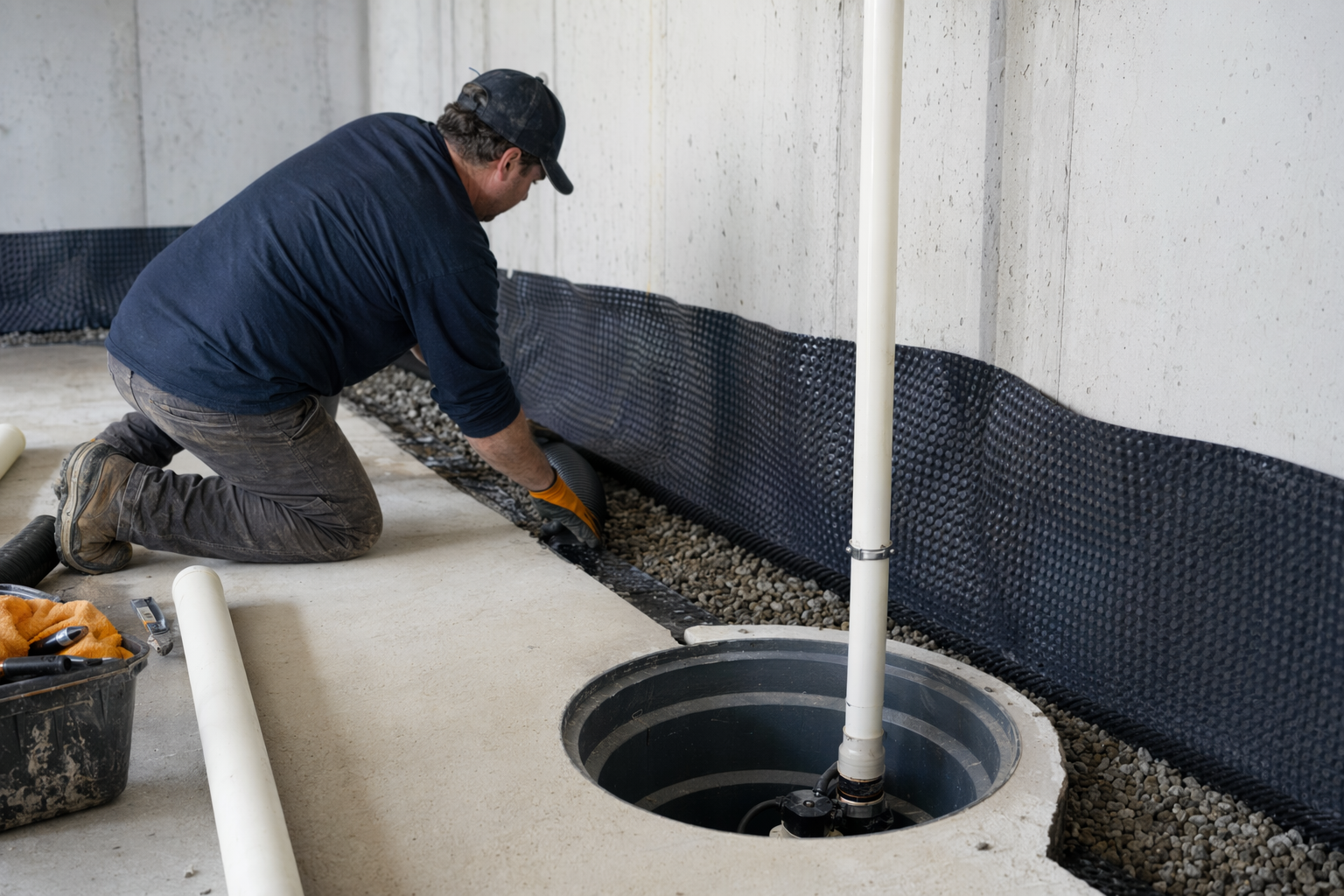
A French drain usually means a trench with gravel and a perforated pipe that collects water and gives it a path to flow away. The exact layout depends on the house, lot, soil, and where the water is coming from.
Common setups include:
- Exterior French drain: Installed around part of the outside of the home to catch groundwater before it presses against the foundation.
- Interior perimeter drain: Installed along the inside edge of a basement floor to collect seepage and send it to a sump pit.
- Yard or surface drain: Used to move roof runoff or pooling surface water away from the home.
Why homeowners install one:
- Water enters at the wall-floor joint after heavy rain.
- Hydrostatic pressure is forcing moisture through basement walls or slab edges.
- Poor grading or runoff causes water to sit near the house.
- A crawl space or basement stays damp and smells musty.
A French drain can be effective, but the details matter. The pipe still needs a place to discharge. Gutters and downspouts still matter. Yard slope still matters. In some homes, the best result comes from a combination of grading changes, gutter extensions, crack sealing, and interior or exterior drainage.
Typical waterproofing and drainage work often falls in the $2,000-$12,000 range, but that is only a rough estimate. Real price depends on the cause, the soil and site conditions, access, the method required, and the area. You can learn more about typical ranges here: foundation waterproofing and costs.
How a sump pump works, and when it helps
A sump pump sits in a pit, usually at the lowest point of a basement drainage system. When water in the pit rises, the pump turns on and discharges the water outside through a pipe.
A sump pump is useful when:
1. Water collects under or around the basement slab.
2. An interior drain system needs a way to remove that water.
3. The property has recurring seepage during storms or snowmelt.
4. The lot, soil, or water table makes passive drainage alone unreliable.
Important limits to understand:
- A sump pump needs power unless there is a battery backup or water-powered backup.
- If the discharge line freezes, clogs, or sends water too close to the house, the system may not help much.
- A pump can reduce water intrusion, but it does not fix structural damage that already exists.
If the basement has a crack that leaks, a contractor may suggest crack injection. Typical crack injection work is often around $300-$2,500 depending on crack type, access, and number of cracks. But not every crack should simply be sealed and forgotten. If cracks are widening, offset, or part of broader movement, get an independent structural engineer's opinion first. You can read more at foundation crack repair.
A careful homeowner asks practical questions:
- Where will the discharge water go?
- Is there a backup pump or alarm?
- Who will maintain the system?
- Is water control being used to avoid talking about a possible structural issue?
That last question matters. Sometimes a wet basement is mostly a drainage problem. Sometimes it is drainage plus wall pressure, settlement, or expansive soil. Those are different problems, and they should not be sold as the same thing.
When drainage is not enough
Water and structure are connected, but they are not identical. A company may recommend a drain or pump because water is visible. That may be part of the answer. It may also be incomplete.
Take a step back if you notice any of these:
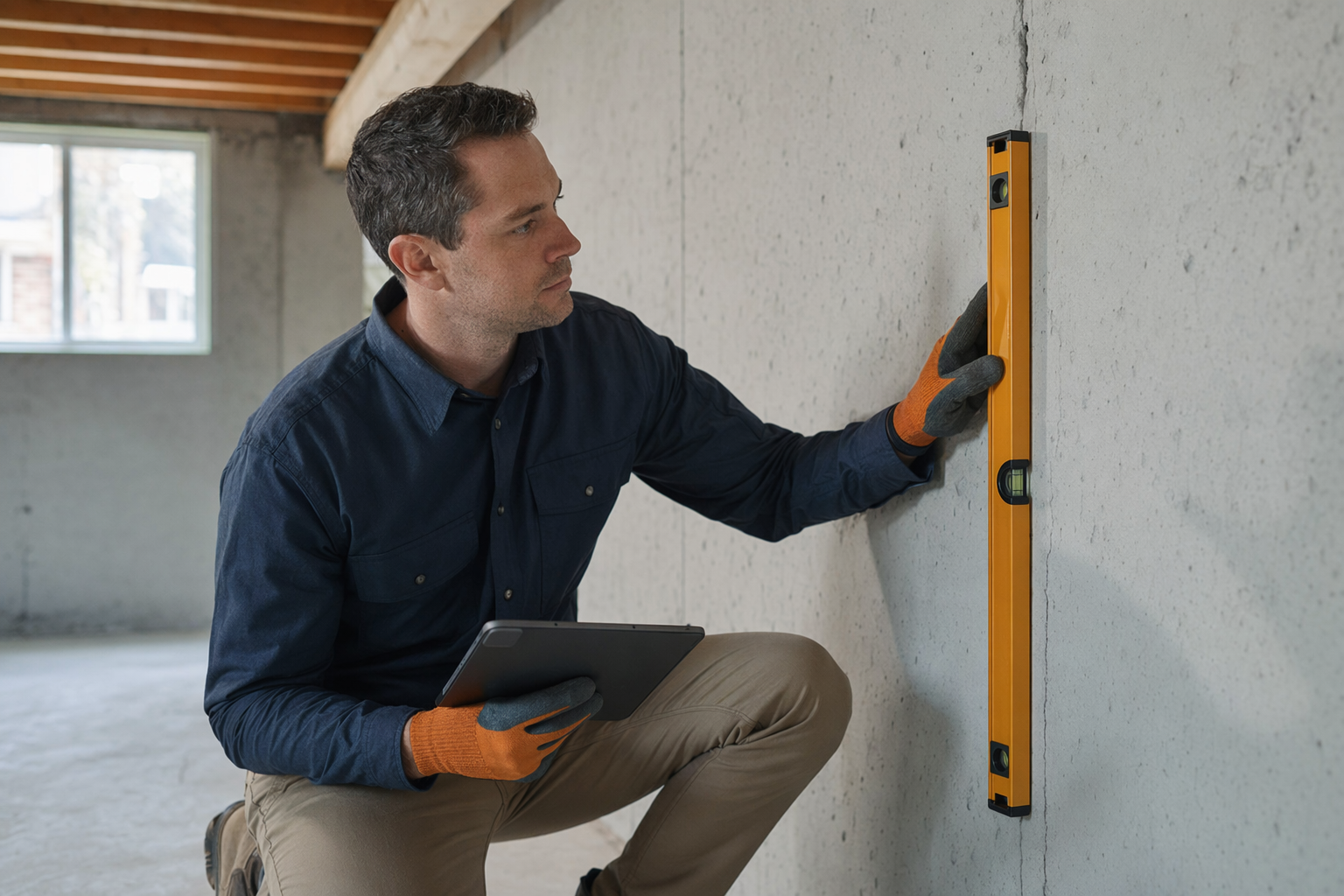
- Basement wall bowing inward
- Horizontal cracks in a block or poured-concrete wall
- Large new cracks opening fast
- Floors becoming uneven
- Doors and windows suddenly sticking in several rooms
- Gaps growing between walls, trim, floors, or ceilings
If a wall is actively moving, if large new cracks are opening, or if there are signs of imminent collapse, leave the area and contact a licensed structural engineer or your local building department right away.
For non-urgent but real concerns, strongly and repeatedly, the safest path is this: hire an independent, licensed structural engineer before you hire a contractor. A written engineer report often costs around $400-$1,200 as a typical range. That can save you from buying work you do not need, or from missing work you do need.
If the issue is wall movement, drainage alone may not be enough. Stabilization can involve carbon fiber straps or wall beams, with typical ranges often around $4,000-$15,000+ depending on wall length, access, severity, and method. If the issue is settlement, underpinning with steel push piers or helical piers can run about $1,200-$3,000 per pier, and many jobs need 8-12 piers or more, often totaling $10,000-$30,000+. Those are estimates, not quotes. Real cost depends on cause, soil and site conditions, access, method, and area.
Related reading if those issues sound familiar:
- structural engineer evaluation
- bowing wall stabilization
- piering and underpinning
What to do next if you have water in the basement
You do not need to guess, and you do not need to agree to the first sales pitch.
1. Write down what you are seeing.
Note when the water appears, where it enters, whether it happens only after rain, and whether there are cracks, wall movement, or sticking doors.
2. Take clear photos.
Wide shots and close-ups help. Keep dates if the issue is changing over time.
3. Start with safety and seriousness.
If there are urgent structural signs, leave the area and call a licensed structural engineer or local building department right away.
4. Get an independent structural engineer if there may be movement.
This is one of the best ways to protect yourself from being sold the wrong job.
5. Then compare licensed, insured contractors.
Verify the license and insurance yourself. Get the scope, materials, discharge plan, warranty terms, permit responsibility, and total price in writing before any deposit. Follow local permits and building code.
6. Ask whether the plan treats the cause, not only the symptom.
A pump may remove water. A drain may relieve pressure. But grading, gutters, crack repair, or structural stabilization may still be needed.
BedrockBearing is a free matching service. We help homeowners explain what they are seeing and connect with licensed, insured foundation and waterproofing pros. We do not inspect, repair, design fixes, or give engineering advice. You compare estimates, you choose who to hire, and you hold the final payment. If you want help taking the next step, start here: get matched and use this checklist when comparing companies: how to vet a foundation contractor.
French drains and sump pumps can help control basement water, but they do not automatically fix a foundation problem. If you see water only, compare licensed, insured contractors. If you also see cracks or movement, get an independent structural engineer first, then compare written estimates.