Hairline Cracks vs Structural Cracks
Not every crack means your house is failing. But some cracks do point to movement that needs a closer look, and a few signs should be treated as urgent.
The short answer
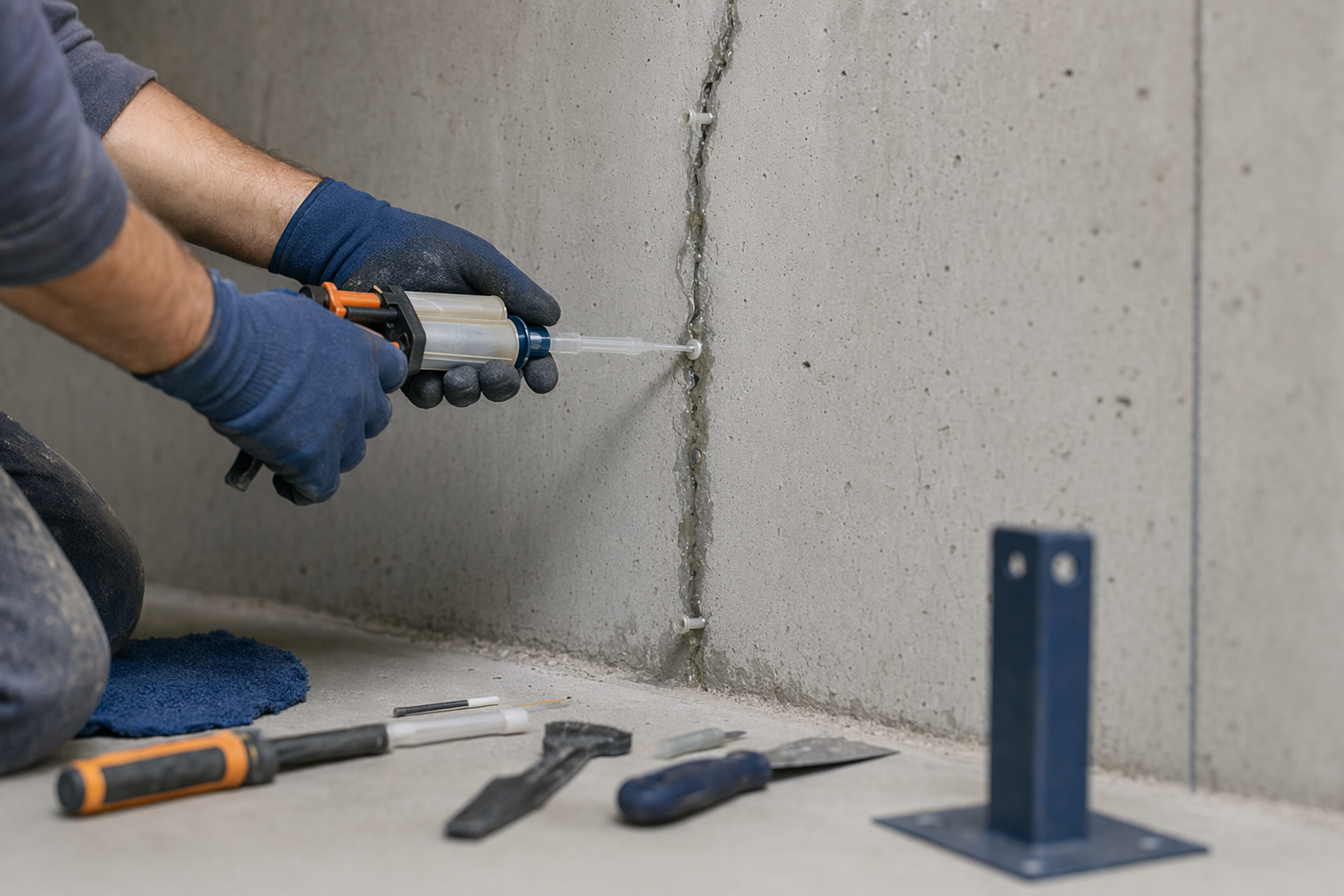
Hairline cracks are usually very narrow, often about the width of a thin pencil line or less. Many happen from normal concrete shrinkage as it cures, minor seasonal movement, or small settling over time. A hairline crack that stays the same size and does not come with sticking doors, sloping floors, or wall movement is often less serious.
Structural cracks are cracks that suggest part of the home may be moving, rotating, or carrying load in a way it should not. These cracks tend to be wider, longer, growing, repeated in the same area, or paired with other symptoms. The crack itself is not the whole story. Pattern, location, width, change over time, and other movement signs matter more than one photo alone.
A few examples:
- A thin, old shrinkage crack in a basement slab may be mostly cosmetic.
- A stair-step crack in a block wall that is widening, leaking, or bowing may point to lateral soil pressure and possible structural movement.
- A diagonal crack above a door or window, plus doors that suddenly stop latching, may mean the framing or foundation has shifted.
If you are unsure, the safest next step is an independent, licensed structural engineer who does not also sell the repair. That evaluation can help you separate a small maintenance issue from a real structural problem and avoid paying for work you may not need. See what an engineer evaluation should include.
How to tell the difference
Homeowners often focus only on crack width. Width matters, but it is only one clue. Look at the whole pattern.
Here are signs a crack is more likely to be minor:
- Very thin hairline width
- No change over months
- No offset, bulging, or bowing along the crack
- Located in plaster, drywall, or concrete surface with no matching movement elsewhere
- No water intrusion, no sticking doors, no floor slope nearby
Here are signs a crack deserves more concern:
- It is getting wider, longer, or new cracks are appearing nearby
- The two sides are no longer flush and one side has shifted
- The crack is diagonal, stair-step, horizontal, or runs through masonry units and mortar joints
- The wall is bowing, leaning, or separating
- You also notice sticking windows, doors out of square, sloped floors, or gaps at trim
- Water is entering through the crack or the area stays damp
Location matters too:
1. Basement or crawl space walls
Horizontal cracks, stair-step cracks in block, and inward bowing are more concerning than a thin vertical shrinkage crack. Horizontal cracking can be linked to outside soil pressure.
2. Foundation slabs
Many slabs develop small shrinkage cracks. But significant vertical displacement, wide opening, or cracks that keep returning after patching can point to soil movement or settlement.
3. Drywall and interior finishes
A tiny paint or drywall crack alone may be cosmetic. But repeated diagonal cracks at doors and windows, especially with sticking doors, can signal movement below.
4. Brick veneer
Stair-step cracks in brick can come from movement in the wall, foundation settlement, or sometimes a localized issue over an opening. The pattern needs a qualified review.
If you are seeing several of these warning signs together, read common foundation warning signs.
Common crack patterns and what they can mean
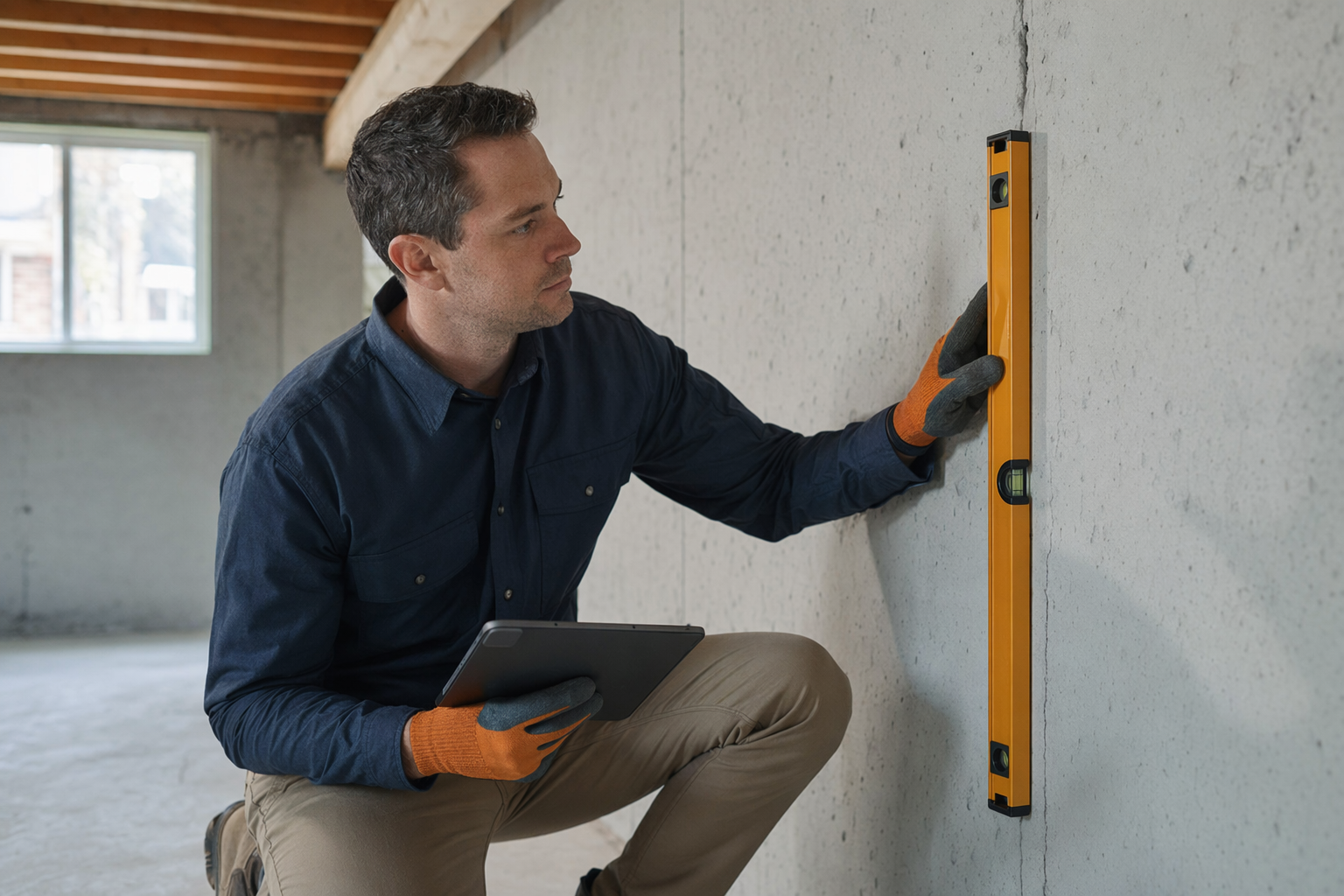
No online guide can diagnose your house. But these patterns can help you know what questions to ask.
Vertical hairline crack in poured concrete wall
This can happen from normal shrinkage. If it stays narrow and stable, it may not be structural. It can still let in water, so moisture control may be part of the fix.
Diagonal crack from the corner of a door or window
This can happen when part of the structure settles unevenly or framing shifts. One crack is not proof by itself, but it is more meaningful if a door also rubs or will not latch.
Stair-step crack in block or brick
This pattern often follows mortar joints. It can be related to settlement, differential movement, or lateral pressure. If it is widening or the wall is moving inward, take it seriously.
Horizontal crack in a basement wall
This is one of the patterns homeowners should not ignore. It may mean the wall is under pressure from soil and water outside. If the wall is bowing or bulging, stabilization may be needed. Learn about bowing wall stabilization options.
Crack with one side higher than the other
Offset or displacement often matters more than width. This can suggest real movement in the slab or foundation element.
Repeatedly patched crack that comes back
If a crack keeps returning, the cause may still be active. Cosmetic patching alone may not solve the problem.
Repair depends on the cause. A simple non-structural wall crack might be sealed or injected, with typical ranges around $300-$2,500 for some crack injection jobs. If the real issue is settlement, drainage, or wall pressure, the needed work can be much more involved. Real cost depends on the cause, the soil and site conditions, access, the method required, and the area. You can review broader foundation repair cost ranges.
When to take cracks seriously right now
Most cracks are not an emergency. Some are.
Leave the area and contact a licensed structural engineer or your local building department right away if you see:
- A wall that is actively moving, leaning, or bulging more
- Large new cracks opening quickly
- Sounds of cracking or popping along with visible movement
- Sagging, partial collapse, or signs that part of the structure may fail
For non-urgent but concerning signs, do this:
- Take clear photos with dates
- Measure the width if you can and note the location
- Check whether doors, windows, and floors have changed recently
- Watch for water entry, damp soil, or poor drainage outside
- Do not assume the cheapest patch is the right fix
A common way people get burned is hiring a repair seller first and treating that first sales visit like a diagnosis. An independent structural engineer report often costs about $400-$1,200, and it can save far more by identifying what actually needs repair, what does not, and what should be monitored. Then you can compare contractor estimates against that scope instead of guessing.
What to do next without getting sold the wrong repair
Use this simple process:
1. Document what you see
Write down where the cracks are, when you first noticed them, and whether they seem to be changing. Photos help.
2. Separate urgent from non-urgent
If there is active movement or possible collapse, leave the area and call a licensed structural engineer or local building department right away.
3. Get an independent engineer evaluation first
Choose a licensed structural engineer who does not also sell the repair. That independence matters.
4. Then compare repair options
Depending on the cause, options may include crack repair, drainage improvements, wall stabilization, or underpinning. For example, slab lifting by mudjacking or foam may run about $600-$3,500 for a typical area. Steel push or helical piers are often about $1,200-$3,000 per pier, and many jobs need 8-12 piers, so some projects land around $10,000-$30,000+. Basement waterproofing or drainage work may fall around $2,000-$12,000. These are typical estimates, not quotes, and real price depends on the cause, the soil and site conditions, access, the method required, and the area.
5. Hire carefully
Only hire licensed and insured contractors. Verify the license and insurance yourself. Get the scope and price in writing before any deposit. Follow local permits and building code. Use this checklist to vet a foundation contractor.
6. Use free matching if you want help finding pros
BedrockBearing is a free matching service for homeowners. We help you describe what you are seeing and get connected with licensed, insured foundation repair pros in your area. You compare estimates, you choose who to hire, and you hold the final payment. Start here: Get matched.
A tiny stable crack is often less serious, but a growing crack, a horizontal or stair-step crack, or a crack with bowing, sticking doors, or floor slope needs attention. If there is active movement or possible collapse, leave the area and call a licensed structural engineer or local building department right away. Otherwise, get an independent structural engineer first, then compare written estimates from licensed and insured contractors.