How Much Does Foundation Repair Cost?
Foundation repair can cost a few hundred dollars or many thousands. The real price depends on the cause of the problem, the soil and site conditions, access, the repair method, and your area.
The short answer: typical cost ranges
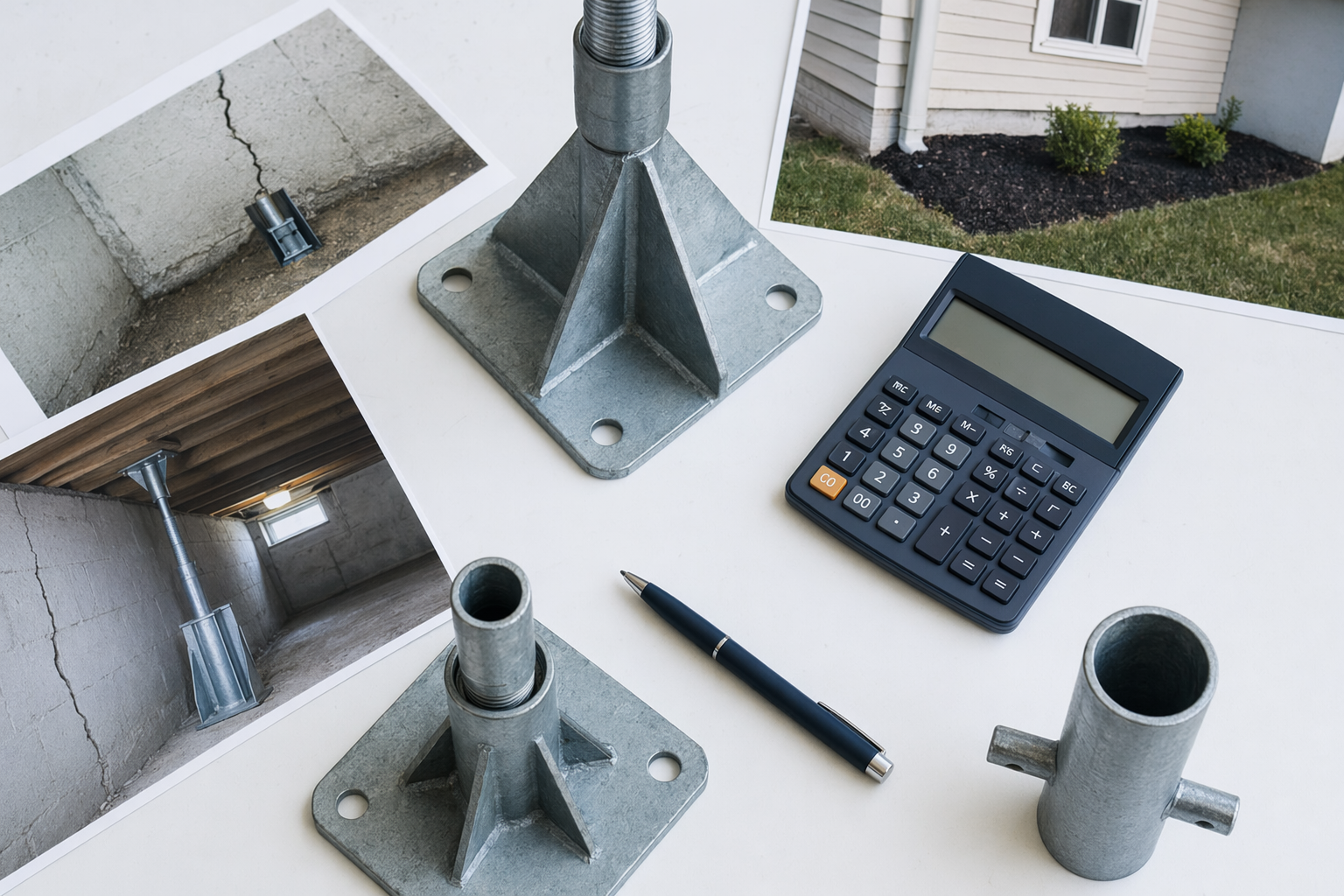
There is no one-size-fits-all price for foundation repair. A small crack may be a limited repair. A settling house that needs piers can be a major project. These are typical US ranges, not quotes or guarantees:
- Crack injection: about $300-$2,500 for a typical repair area
- Slabjacking, mudjacking, or foam lifting: about $600-$3,500 for a typical area
- Steel push piers or helical piers: about $1,200-$3,000 per pier, with many jobs needing 8-12 piers, so total jobs often land around $10,000-$30,000+
- Bowing wall stabilization with carbon fiber straps or steel beams: about $4,000-$15,000+
- Basement waterproofing or drainage work: about $2,000-$12,000
- An independent structural engineer report often costs about $400-$1,200
Those ranges can move up or down based on what is actually wrong. A crack by itself is not the same as ongoing settlement. Water entry is not the same as a wall moving inward. If you want a better sense of repair categories, see our cost guide and service pages for foundation crack repair or piering and underpinning.
One important truth: the cheapest bid is not always the least expensive outcome. If the wrong repair is sold, you can pay once for the bad fix and again for the real fix later.
What makes foundation repair cost more or less
Two homes with similar cracks can have very different prices. The main cost drivers are usually these:
1. The real cause of the problem
Settlement, expansive clay, poor drainage, hydrostatic pressure, tree roots, fill soil, plumbing leaks, and poor grading can all lead to different repair plans.
2. The repair method required
Filling a non-structural crack is usually far less than stabilizing a footing with piers. Waterproofing may help with water, but it does not replace structural stabilization if the foundation is moving.
3. How severe and how widespread the damage is
One isolated issue costs less than movement affecting several walls, interior floors, doors, and windows.
4. Soil and site conditions
Clay soils, poor bearing conditions, high groundwater, slopes, and difficult access can all raise labor and equipment costs.
5. Access to the work area
Tight crawlspaces, finished basements, landscaping, porches, driveways, and attached patios can complicate the work.
6. Permits, engineering, and local code
Some jobs require plans, permits, inspections, or more documentation. Rules vary by city and county.
7. Your local market
Labor rates, material costs, and permit fees differ by area.
That is why an online number is only a starting point. The real price depends on cause, site, method, access, and location.
Also, not every crack or uneven floor means a major repair is needed. But do take warning signs seriously. If a wall is actively moving, a large new crack is opening fast, or there are signs of possible collapse, leave the area and contact a licensed structural engineer or your local building department right away. For less urgent signs, review common warning signs.
Common repairs and what homeowners often miss
Homeowners often get burned when they hear a repair name and assume it solves the whole problem. It may not.
Crack repair
Crack injection can help seal some cracks and may slow water intrusion in the right situation. Typical range: $300-$2,500. But sealing a crack does not stop settlement if the foundation is still moving.
Slab lifting
Mudjacking, slabjacking, or polyurethane foam can raise some settled concrete areas. Typical range: $600-$3,500 for a typical area. This is often used for slabs, walkways, porches, or garage floors. It is not automatically the answer for a house with deeper support problems.
Piers and underpinning
Push piers or helical piers are used to transfer load deeper when a foundation is settling. Typical range: $1,200-$3,000 per pier, and many jobs need 8-12 piers, often putting totals around $10,000-$30,000+. This is one of the biggest-ticket categories, so it is also where overselling can happen.
Bowing wall stabilization
Carbon fiber straps or steel beams can help stabilize some basement walls. Typical range: $4,000-$15,000+. But if a wall has advanced movement, rotation, or major soil pressure issues, the right solution may be more involved than straps alone. Learn more about bowing wall stabilization.
Waterproofing and drainage
Interior drains, sump systems, exterior drainage, grading corrections, and related work often range around $2,000-$12,000. This can be necessary if water is part of the problem. But drainage work alone will not reverse serious structural movement already in progress.
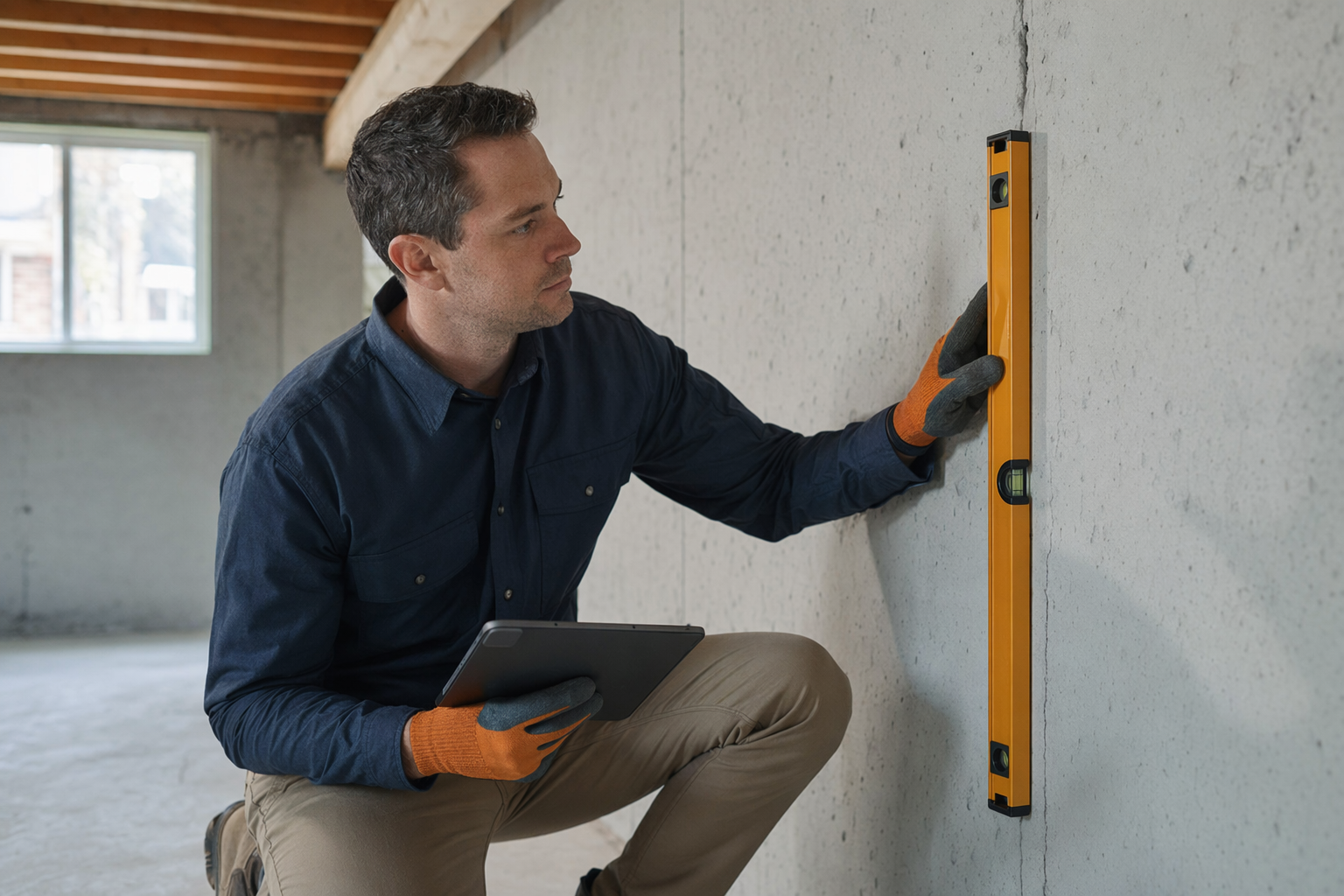
The key point is simple: the same symptom can have different causes. That is why BedrockBearing strongly recommends an evaluation by an independent, licensed structural engineer before you hire a repair contractor. An engineer who does not also sell the repair is less likely to push work you do not need.
How to compare estimates without getting sold the wrong job
Before you sign anything, slow down and compare the scope, not just the price.
- Start with an independent engineer. A licensed structural engineer report often costs $400-$1,200. That fee can save you far more if it helps you avoid an unnecessary $15,000-$30,000 job. Read why this matters in our engineer evaluation guide.
- Get at least 2-3 written estimates from licensed and insured contractors. Verify the license and insurance yourself.
- Compare the proposed scope line by line. How many piers? Which locations? What depth assumptions? What prep and cleanup are included? What is excluded?
- Ask what problem the repair is meant to solve. Settlement? Water entry? Wall movement? Surface drainage? If they cannot explain that clearly, be careful.
- Ask whether permits are required and who is responsible for getting them. Follow local permits and building code.
- Get the total price and payment terms in writing before any deposit. Never rely on a verbal promise.
- Do not let urgency be used as a sales tool. Real safety risks exist, but many homeowners are pressured with same-day discounts and oversized scopes.
A good estimate should be understandable. A homeowner should be able to answer: what is being done, where, why, for how much, and under what conditions.
If you want help finding companies to quote the work, BedrockBearing is a free matching service for homeowners. We help you describe what you are seeing and connect with participating licensed and insured pros. You compare estimates and choose who to hire. You can get matched here.
What to do next
If you are worried about a foundation problem, use this order:
- Look for patterns, not just one symptom. Note cracks, sticking doors, sloping floors, water entry, gaps at trim, or basement wall movement.
- Take photos and dates. This helps you notice whether the condition is stable or changing.
- Treat urgent signs as urgent. If a wall is actively moving, a large new crack is opening, or there are signs of imminent collapse, leave the area and contact a licensed structural engineer or your local building department right away.
- For non-urgent issues, get an independent structural engineer evaluation first. This is the safest way to know whether you need monitoring, drainage changes, a limited repair, or a major stabilization plan.
- Then get written estimates from licensed and insured contractors for the engineer's recommended scope, and verify credentials yourself.
BedrockBearing does not inspect foundations, design repairs, perform work, or give engineering advice. We are a free multilingual matching service that helps homeowners, including new immigrants and non-native-English speakers, understand the next step and connect with participating pros. You stay in control: the engineer evaluates, you compare estimates, you choose who to hire, and you hold the final payment.
For help choosing carefully, see how to vet a foundation contractor.
Foundation repair might cost a few hundred dollars or over $30,000, depending on what is wrong and what method is really needed. Get an independent licensed structural engineer first, then compare written estimates from licensed and insured contractors, verify credentials yourself, and do not rush into the first big bid.