Push Piers vs Helical Piers — Which Is Right?
Push piers and helical piers can both help support a settling foundation, but they are not interchangeable in every home. The right choice depends on the structure, the soil, access, and what an **independent, licensed structural engineer** says is actually needed.
Short answer: neither system is automatically “better”
Homeowners often hear a sales pitch that one pier system is always best. That is not how sound foundation work should be decided.
Both push piers and helical piers are types of deep foundation support used to transfer load to more stable soil or bearing layers below weak surface soils. Either one may be appropriate. Either one may also be the wrong choice.
What matters most is:
- Why the foundation is moving
- What the soil and site conditions are
- How heavy the structure is
- Whether access and installation limits favor one method
- What an independent engineer recommends
Before you sign with any repair contractor, strongly consider paying for an evaluation from an independent, licensed structural engineer who does not also sell the repair. That report often costs about $400-$1,200. It can protect you from buying piers you do not need, or from getting the wrong type of pier for the problem. Read more about that here: structural engineer evaluation.
If you are seeing major new movement, doors suddenly jamming, widening cracks, or leaning walls, take those signs seriously. For urgent signs such as a wall actively moving, large new cracks opening fast, or signs of possible collapse, leave the area and contact a licensed structural engineer or your local building department right away.
How push piers and helical piers differ
Both systems are commonly grouped under piering and underpinning, but they work differently.
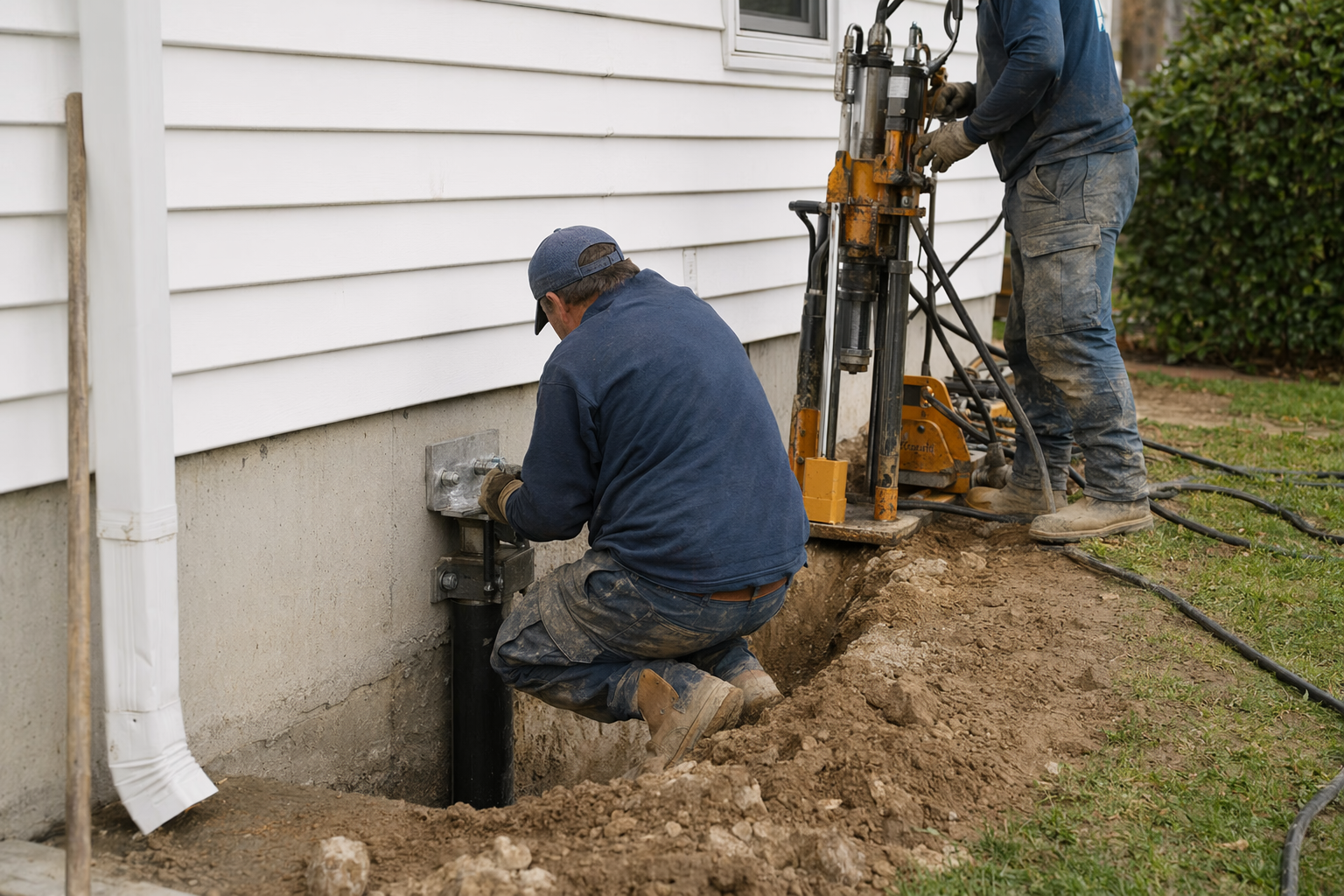
Push piers
- Steel sections are hydraulically driven downward using the weight of the house as resistance.
- They are often used on heavier structures where enough building load exists to push the pier down to suitable bearing.
- Installation usually depends on the structure being heavy enough to advance the pier.
- They are often discussed when a foundation has already settled and may need stabilization, and sometimes possible lift.
Helical piers
- Steel shafts with helical plates are screwed into the ground.
- They do not rely in the same way on the building weight for installation.
- They may be useful where loads are lighter, where engineers want a more controlled installation approach, or where site conditions favor screw-in piers.
- They are also used for some new construction and additions, not just repairs.
A few important truths:
- Neither system fixes every cause of movement. If drainage, expansive soil, poor grading, plumbing leaks, tree roots, or water pressure are part of the problem, those issues may also need to be addressed.
- Not every crack means you need piers. Some cracks are cosmetic. Some are from shrinkage. Some suggest settlement. Some suggest lateral pressure or water intrusion. See foundation warning signs if you are trying to sort out what you are seeing.
- Lift is never guaranteed. Contractors may be able to stabilize and sometimes recover part of the settlement, but the actual result depends on the house, the damage, and risk of causing more cracking during lift.
If a salesperson says one product is always best, or says you must sign today, slow down.
When one system may make more sense than the other
A homeowner cannot choose pier type by marketing alone. The decision should be based on conditions at your property.
Push piers may be considered when:
- The structure is heavy enough to provide reaction force for installation
- Settlement is the main issue
- Access and equipment needs fit the site
- The engineer or qualified designer believes suitable bearing can be reached this way
Helical piers may be considered when:
- The structure or section being supported is lighter
- An addition, porch, or smaller wall needs support
- Soil and access conditions favor screw-in installation
- Engineers want torque-related installation data as part of the design approach
But there are limits and tradeoffs with both.
Questions that matter more than the sales brochure:
- What evidence shows the foundation movement is active?
- Is the issue vertical settlement, lateral pressure, rotation, or something else?
- Has water management been checked?
- What is known about the local soil?
- How many piers are needed, and why that spacing?
- Is the goal stabilization only, or possible lift?
- What damage may remain even after the foundation is stabilized?
Typical pricing is usually discussed per pier. A common rough range is about $1,200-$3,000 per pier, and many jobs need 8-12 piers, putting many projects around $10,000-$30,000+. Those are only typical estimates, not quotes. Real price depends on the cause, the soil and site conditions, access, the method required, and your area. Related repairs can add cost too.
If someone recommends piers, ask what other work is also needed. For example:
- Crack repair may add roughly $300-$2,500 depending on the crack and method. See foundation crack repair.
- Waterproofing or drainage improvements may run about $2,000-$12,000 if water is contributing to the problem.
- Bowing wall work is a different issue and may involve carbon fiber or beams, often around $4,000-$15,000+, not piers alone.
How to compare bids without getting burned
This is where many homeowners lose money. They talk to one contractor, hear technical words, and feel forced to trust a system they do not understand.
Use this checklist:
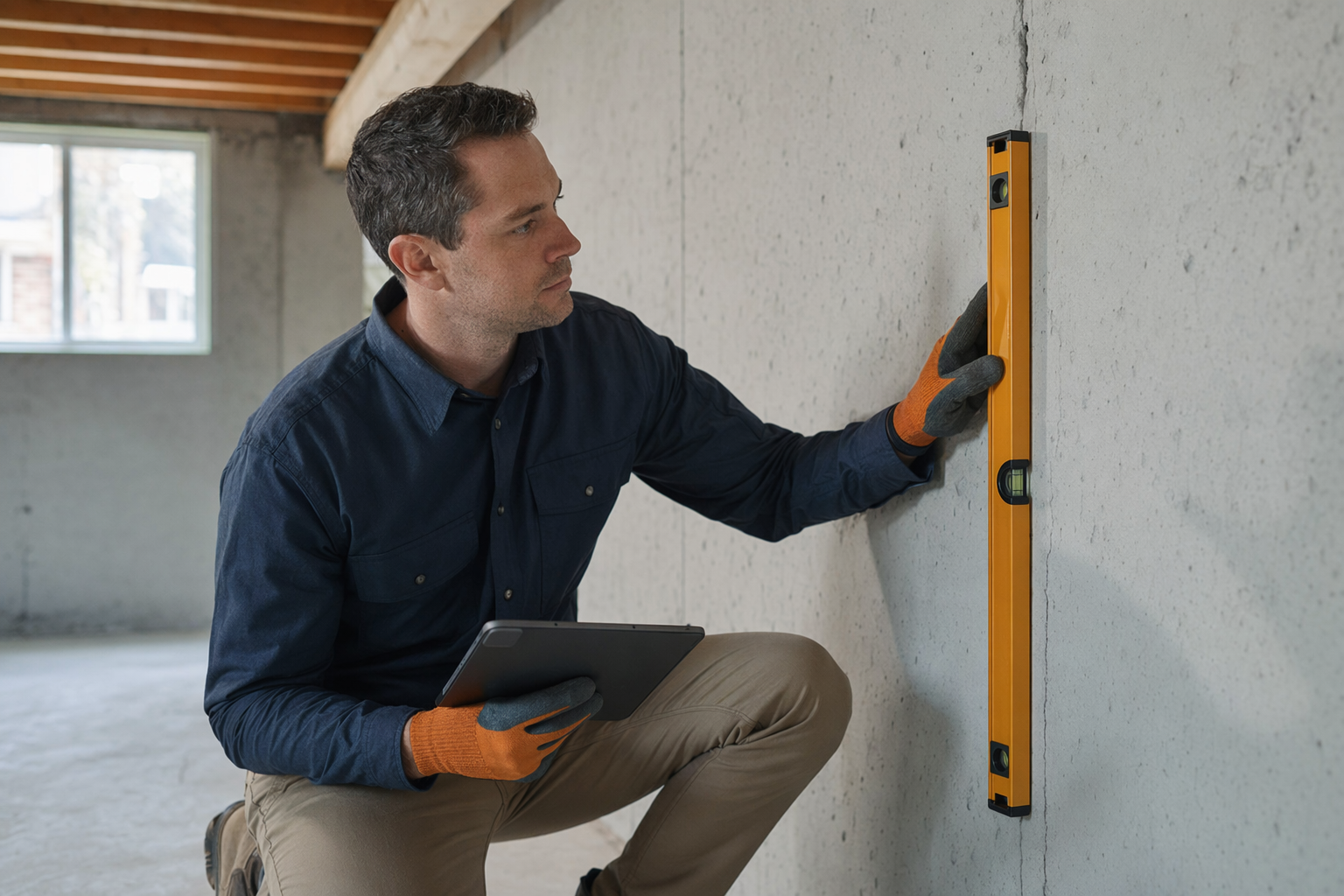
- Get an independent engineer’s opinion first if you can. Especially for major movement, big repair costs, or disagreement between contractors.
- Get at least two written estimates. Three is often better.
- Ask why this pier type was chosen over the other type. The answer should mention structure load, soil, access, and design logic.
- Ask how many piers are included and why. Do not accept a vague answer.
- Ask what is and is not included. Permits, excavation, crack repair, cleanup, re-leveling attempts, patching, and drainage work should be spelled out.
- Verify license and insurance yourself. Do not just accept a logo on a truck or a verbal claim.
- Follow local permits and code. If permits are required, make sure they are handled properly.
- Do not pay a large deposit without a clear written scope and price.
You should also ask whether the contractor is proposing stabilization only, or stabilization plus lift attempt. Those are not the same thing.
BedrockBearing is a free matching service. We do not inspect foundations, design repairs, or tell you which pier system to buy. We help you explain what you are seeing and get connected with licensed, insured foundation repair pros so you can compare estimates and choose. If you want help starting that process, use get matched or review tips on how to vet a foundation contractor.
What to do next if you think your house is settling
Keep it simple and documented.
- Take clear photos of cracks, sloping areas, sticking doors, and any outside brick or siding gaps.
- Write down what changed, when you first noticed it, and whether it is getting worse.
- Check for water issues such as downspouts dumping near the house, poor grading, or damp basement areas.
- If signs are serious, schedule an independent structural engineer.
- Then compare written bids from licensed and insured contractors.
Remember: an engineer evaluates, you compare estimates, you choose who to hire, and you hold the final payment.
Push piers may be right. Helical piers may be right. Sometimes neither is the first thing to do. The goal is not to buy a product. The goal is to understand the problem and choose a repair plan that fits the real cause.
Push piers and helical piers both can work, but the right one depends on your house, your soil, and the real cause of movement. Get serious warning signs checked fast, try to get an independent structural engineer before hiring a repair company, and compare written bids from licensed and insured contractors before you decide.