Questions to Ask a Foundation Contractor
If a contractor says your home needs foundation repair, slow down and ask good questions before you sign anything. The right questions can help you avoid paying for work you do not need and compare estimates on the same facts.

Start here: get an independent engineer first
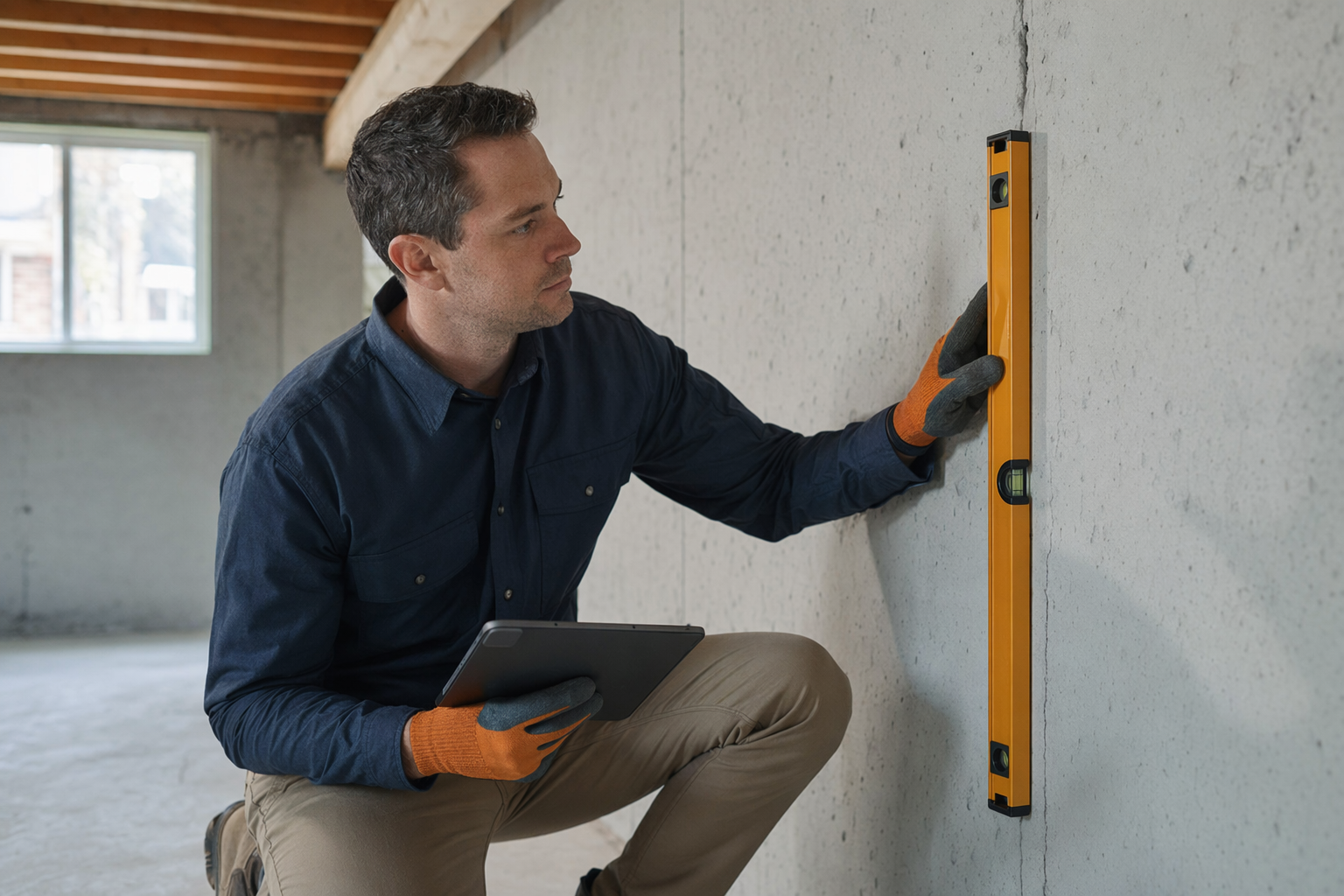
The most important question is not for the contractor. It is for you: Have I had this looked at by an independent, licensed structural engineer?
That step protects homeowners. A contractor sells repair work. An independent engineer evaluates the problem and recommends what is actually needed. Ideally, that engineer does not also sell the repair.
A written engineer report often costs about $400-$1,200. That is usually small compared with a repair job that could cost $10,000-$30,000+ if piers or major stabilization are involved. If you are not sure where to start, read how an independent engineer evaluation works.
If you see urgent signs like a wall actively moving, large new cracks opening fast, or signs of possible collapse, leave the area and contact a licensed structural engineer or your local building department right away.
Before you talk price with any contractor, ask:
- Did you review an independent engineer's report, or are you making your own recommendation?
- What problem are you saying exists, exactly? Settlement, lateral pressure, water intrusion, poor drainage, expansive soil, tree roots, plumbing leak, or something else?
- What evidence supports that conclusion?
- If I get an independent engineer's opinion, will you bid from that scope?
If a contractor pushes you to skip the engineer, that is a warning sign. So is a same-day pressure sale.
The core questions every homeowner should ask
Use these questions to slow the conversation down and make the contractor explain the job in plain language.
1. What is the root cause you think is causing the damage?
A crack is not a cause. A sticking door is not a cause. Ask what is driving the movement.
2. What repair method are you recommending, and why this one instead of other options?
For example, why steel push piers or helical piers instead of monitoring? Why carbon fiber or wall beams instead of drainage work first? Why crack injection instead of broader waterproofing?
3. What happens if I do nothing for 3, 6, or 12 months?
A trustworthy contractor should be honest about whether the issue appears urgent, moderate, or something to monitor.
4. What parts of the house will this fix, and what will it not fix?
Some repairs stabilize movement but do not make every crack disappear. Some lifting is limited.
5. How many piers, beams, straps, drains, or other components are included, and where will they go?
Get locations and quantities in writing.
6. Will you pull permits if required, and who is responsible for inspections?
Follow local permits and code.
7. Are you licensed and insured in my area, and can you send proof?
Then verify the license and insurance yourself.
8. What site conditions could change the price?
The real cost depends on the cause, soil and site conditions, access, the method required, and your area.
9. Can you give me the full scope, exclusions, and payment terms in writing before any deposit?
10. What warranty is offered, what exactly does it cover, and what does it exclude?
Ask whether it covers labor, materials, future movement, water entry, and transfer to a new owner.
If you want help comparing multiple local companies, you can get matched for free with licensed, insured pros. You still choose who to speak with and who to hire.
Questions about price, scope, and what can change
Many homeowners get burned because they compare one low number to one high number without noticing that the scopes are different.
Ask the contractor to break the estimate into parts:
- diagnosis they are relying on
- repair method proposed
- number of components, such as piers or wall supports
- excavation or interior access needed
- concrete removal and patch-back
- drainage or waterproofing included or excluded
- permit costs if applicable
- cleanup and disposal
- payment schedule
Typical ranges can help you spot whether a proposal is in the expected zone, but they are not quotes. Real pricing depends on the cause, soil and site conditions, access, method, and area.
Common ranges homeowners may hear include:
- Crack injection: about $300-$2,500 depending on crack size, number, access, and whether water is active. See foundation crack repair basics.
- Slabjacking or foam lifting: often $600-$3,500 for a typical area.
- Steel push piers or helical piers: often $1,200-$3,000 per pier, with many jobs needing 8-12 piers, so total projects can land around $10,000-$30,000+.
- Bowing wall stabilization: often $4,000-$15,000+ depending on wall length, severity, and method.
- Basement waterproofing or drainage: often $2,000-$12,000.
Useful price questions:
- What assumptions is this estimate based on?
- What hidden conditions could raise the cost after work starts?
- What is excluded?
- If you uncover a different cause, do you stop and revise the scope in writing first?
- Is this price for stabilization only, or also cosmetic repairs?
Do not rely on verbal promises. Get the scope and price in writing before any deposit.
Questions about the crew, method, and job quality
Foundation repair is not just about the sales pitch. It is also about who will actually show up and how the work will be done.
Ask questions like these:
- Who will supervise the job on site?
- Are the installers employees or subcontractors?
- How long should the work take in a normal case?
- What access do you need to the yard, driveway, basement, or crawl space?
- What damage to landscaping, concrete, flooring, drywall, or finishes might happen?
- What protection and cleanup are included?
- How will you document elevations, movement, or wall condition before and after?
- What level of lift is realistic, and what level is not safe or not promised?
If the recommendation involves underpinning or piers, ask whether the contractor can explain in simple terms:
- why that pier type fits your soil and structure
- how the load path works
- how pier locations were chosen
- whether all affected areas are included or only part of the house
For wall movement, ask whether water management is part of the problem. In many homes, exterior grading, downspouts, drainage, and hydrostatic pressure matter as much as the wall reinforcement itself. Learn more about piering and underpinning if that is the method being proposed.
A good contractor should answer clearly. If they avoid specifics or keep switching the story, slow down.
How to compare bids without getting pushed into a bad decision
Use a simple process.
1. Document what you are seeing.
Take photos of cracks, sticking doors, sloping floors, water entry, and exterior grading issues. Note whether changes seem new or worsening.
2. Get the independent engineer evaluation first when possible.
That gives you a neutral scope to price.
3. Get at least two or three written estimates from licensed and insured contractors.
Make sure each one is bidding the same problem and same area of the house.
4. Compare scope before price.
A lower bid may leave out piers, drainage, patch-back, permits, or cleanup.
5. Check license and insurance yourself.
Do not just take a business card or logo as proof.
6. Read the warranty carefully.
Ask what voids it and whether maintenance is required.
7. Do not sign under pressure.
A real structural problem deserves careful action, not a rushed kitchen-table sale.
If you want help organizing the process, BedrockBearing is a free matching service for homeowners. We help you describe what you are seeing and connect with licensed, insured local pros. We do not inspect, design repairs, or tell you what to buy. You compare estimates. You choose who to hire. You control final payment.
For more help screening companies, see how to vet a foundation contractor.
Before you hire a foundation contractor, ask what they think is causing the problem, why they recommend that repair, what is included in writing, and whether permits, warranty, and cleanup are covered. Best move: get an independent licensed structural engineer first, then compare written estimates from licensed and insured contractors.