Sloping or Uneven Floors — What It Means
A floor that feels sloped, bouncy, or uneven does not always mean the house is unsafe. But it can point to foundation movement, framing problems, moisture damage, or old settling, so it is worth checking carefully.
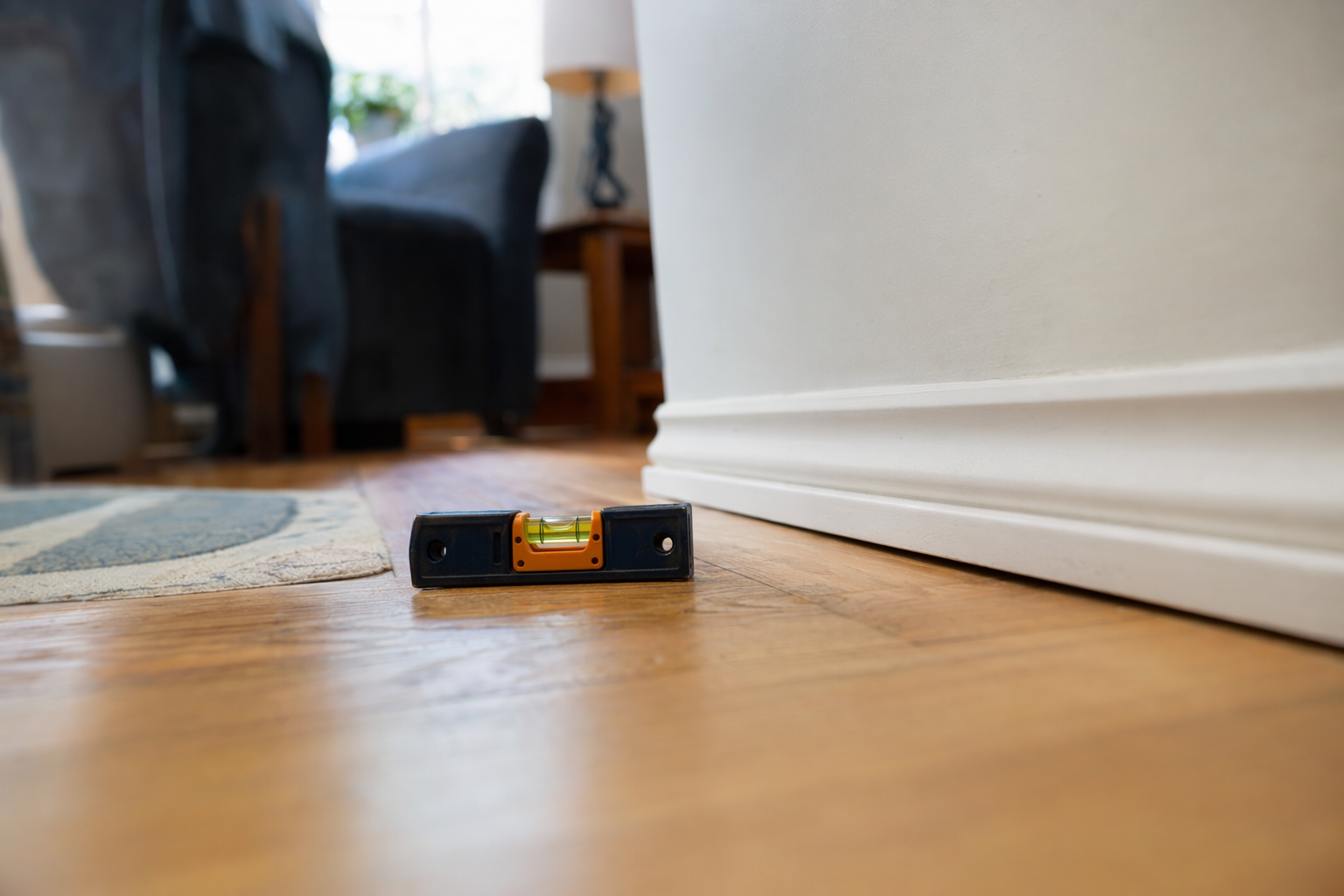
The short answer
Sloping or uneven floors are a symptom, not a diagnosis. The cause might be minor. It might also be a sign of structural movement that needs prompt attention.
Common reasons include:
- Normal age and settlement in an older house
- Foundation movement from shifting soil, poor drainage, or weak support
- Sagging floor framing such as undersized joists, damaged beams, or failing supports
- Moisture damage that weakens wood in a crawl space or basement
- Previous repairs that did not fully solve the cause
A small slope that has been unchanged for years is different from a floor that is getting worse, doors that suddenly stick, or new cracks showing up at the same time. If the floor change is recent, noticeable, or paired with other warning signs, take it seriously.
If you also see large new wall cracks, a wall that looks like it is moving, or signs that part of the structure could fail, leave the area and contact a licensed structural engineer or your local building department right away. For more signs to watch, see foundation warning signs.
What uneven floors can really mean
A floor can slope for more than one reason. That is why homeowners get burned when someone jumps straight to selling one repair method.
In many homes, the problem falls into one of these buckets:
1. Settlement at the foundation
If one part of the house moves down more than another, floors may tilt. This is common with expansive clay soil, poor drainage, erosion, or fill soil that was not compacted well. A slab house may show floor cracks or a ridge. A crawl space or basement house may show sagging above a settling beam or wall.
2. Weak or damaged framing
A floor can dip even when the foundation is mostly fine. Wood joists may be over-spanned, cut, cracked, rotted, or damaged by termites or moisture. Main beams and columns can also settle or deteriorate.
3. Moisture in the crawl space or basement
Long-term dampness can rot wood, rust metal supports, soften some soils, and create mold conditions. Water management matters. Sometimes the first repair is drainage or foundation waterproofing, not underpinning.
4. Old-house irregularity
Many older homes are simply not perfectly level. Some have been that way for decades. Level is less important than stable. A floor that is a little off but not changing is different from a floor that keeps moving.
5. Interior finish issues
In some cases, the structure is acceptable and the uneven feel comes from worn flooring, poor subfloor installation, or remodeling work.
This is why BedrockBearing strongly recommends starting with an independent, licensed structural engineer who does not sell the repair. An engineer can evaluate the likely cause and help you avoid paying for work you may not need. Learn more about a structural engineer evaluation.
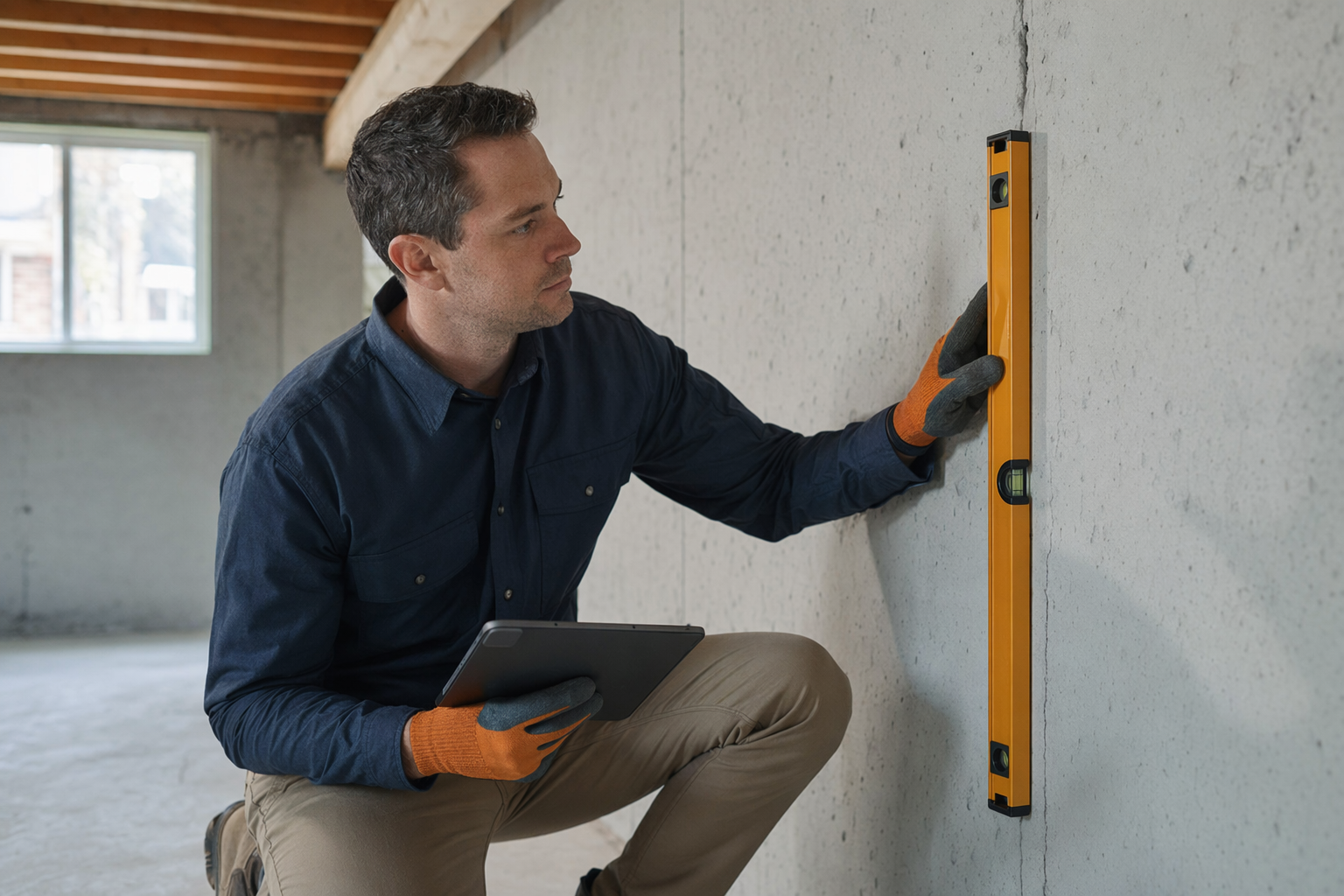
Signs that make the problem more serious
Not every uneven floor is an emergency. Some signs do raise the stakes.
Watch for these patterns:
- The slope seems new or clearly getting worse
- Doors or windows suddenly stick or will not latch
- You notice new cracks in drywall, tile, brick, or the foundation
- Cabinets, counters, or baseboards are separating from walls
- Floors feel soft, bouncy, or springy in one area
- In a crawl space or basement, a beam, post, or wall looks shifted, cracked, rotted, or crushed
- You see standing water, chronic dampness, or strong musty odor below the floor
A few things deserve extra caution:
- Bouncy floors often point to framing problems, not just cosmetic issues.
- Tile cracking repeatedly can mean ongoing movement.
- One-room slopes may trace to a local framing problem.
- Whole-house tilt may point to broader settlement.
Do not rely on a marble test alone. A rolling ball can confirm that a floor is not level, but it does not tell you why.
If a wall is actively bowing, major cracks are opening quickly, or any part of the structure seems close to failure, leave the area and contact a licensed structural engineer or your local building department immediately.
How the problem is usually evaluated and repaired
The right fix depends on the real cause. There is no honest one-price-fits-all answer.
Typical evaluation and repair paths include:
- Independent structural engineer report: often about $400-$1,200. This is usually money well spent before you hire a repair company.
- Crack repair: if there are related foundation cracks, injection work may run about $300-$2,500 for a typical crack repair scope. See foundation crack repair.
- Slab lifting: slabjacking, mudjacking, or foam lifting for a typical area often runs about $600-$3,500.
- Piering or underpinning: steel push or helical piers often run about $1,200-$3,000 per pier, and many homes need 8-12 piers, so totals often land around $10,000-$30,000+. More on piering and underpinning.
- Bowing wall stabilization: if floor slope is tied to basement wall movement, carbon fiber straps or beam systems may cost about $4,000-$15,000+.
- Water management or waterproofing: interior drainage, sump work, grading correction, or related waterproofing often runs about $2,000-$12,000.
These are typical ranges and estimates, not quotes or guarantees. Real price depends on the cause, the soil and site conditions, access, the repair method required, and your area.
Also, not every sloped floor should be made perfectly level. In some houses, trying to force a fully level result can crack finishes or create new problems. Sometimes the safer goal is to stabilize the structure and correct only what is reasonable.
What to do next
If you are worried about uneven floors, use this simple plan:
1. Document what you see
Write down where the floor slopes, whether it feels soft or bouncy, and any related cracks, sticking doors, or water issues. Take clear photos.
2. Check for urgency
If you see fast movement, large new cracks, or signs of possible collapse, leave the area and call a licensed structural engineer or your local building department.
3. Get an independent engineer first
Choose a licensed structural engineer who does not also sell repair work. This step can protect you from overspending.
4. Then compare contractor estimates
If repairs are recommended, get written estimates from licensed and insured contractors. Verify the license and insurance yourself. Make sure the scope, materials, and price are in writing before any deposit.
5. Follow permits and code
Foundation and structural work often requires permits and inspections. Follow local rules.
BedrockBearing is a free matching service. We help homeowners understand the issue and connect with licensed, insured foundation repair pros. We do not inspect, design repairs, or perform the work. You compare options. You choose who to hire. You control final payment. If you want help finding pros to speak with after you have the basics, start here: get matched.
A calm rule of thumb
If the floor has been slightly uneven for many years and nothing else is changing, the situation may be stable. If the floor is changing, feels weak, or comes with cracks, sticking openings, or moisture below, do not ignore it.
The smartest move is usually simple: get an independent engineer's opinion first, then compare written bids from licensed and insured contractors. That lowers the chance of buying the wrong repair or paying for more work than you need.
If you want to prepare before speaking with contractors, this guide can help: how to vet a foundation contractor.
Uneven floors do not always mean major foundation trouble, but they should not be brushed off if they are new, getting worse, feel weak, or come with cracks or moisture. Take photos, watch for urgent danger signs, get an independent licensed structural engineer first, then compare written estimates from licensed and insured contractors.