Foundation repair planning checklist
This free checklist helps you slow down, ask better questions, and keep your foundation repair project organized. BedrockBearing does not inspect or repair foundations. We help homeowners understand the issue and get matched, at no cost, with licensed, insured pros.

What this checklist is for
Foundation repair gets expensive fast. It is also an area where homeowners can get pushed into work they may not need. This checklist is a simple planning tool you can download and use before you sign anything.
It helps you track:
- what you are seeing at the home
- which warning signs seem urgent
- who you called and what each company said
- whether you got an independent, licensed structural engineer involved
- what repair method was proposed
- what permits, warranty terms, and payment terms were listed in writing
Important: this checklist is not an inspection, not a diagnosis, and not engineering advice. Foundation and structural problems can be serious and sometimes a safety risk. If a wall is actively moving, large new cracks are opening, or there are signs of possible collapse, leave the area and contact a licensed structural engineer or your local building department right away.
If you are still at the information-gathering stage, our guides on foundation warning signs and structural engineer evaluation can help you understand the next step.
How to use it before you hire anyone
Use the checklist as a decision tool, not just a note page.
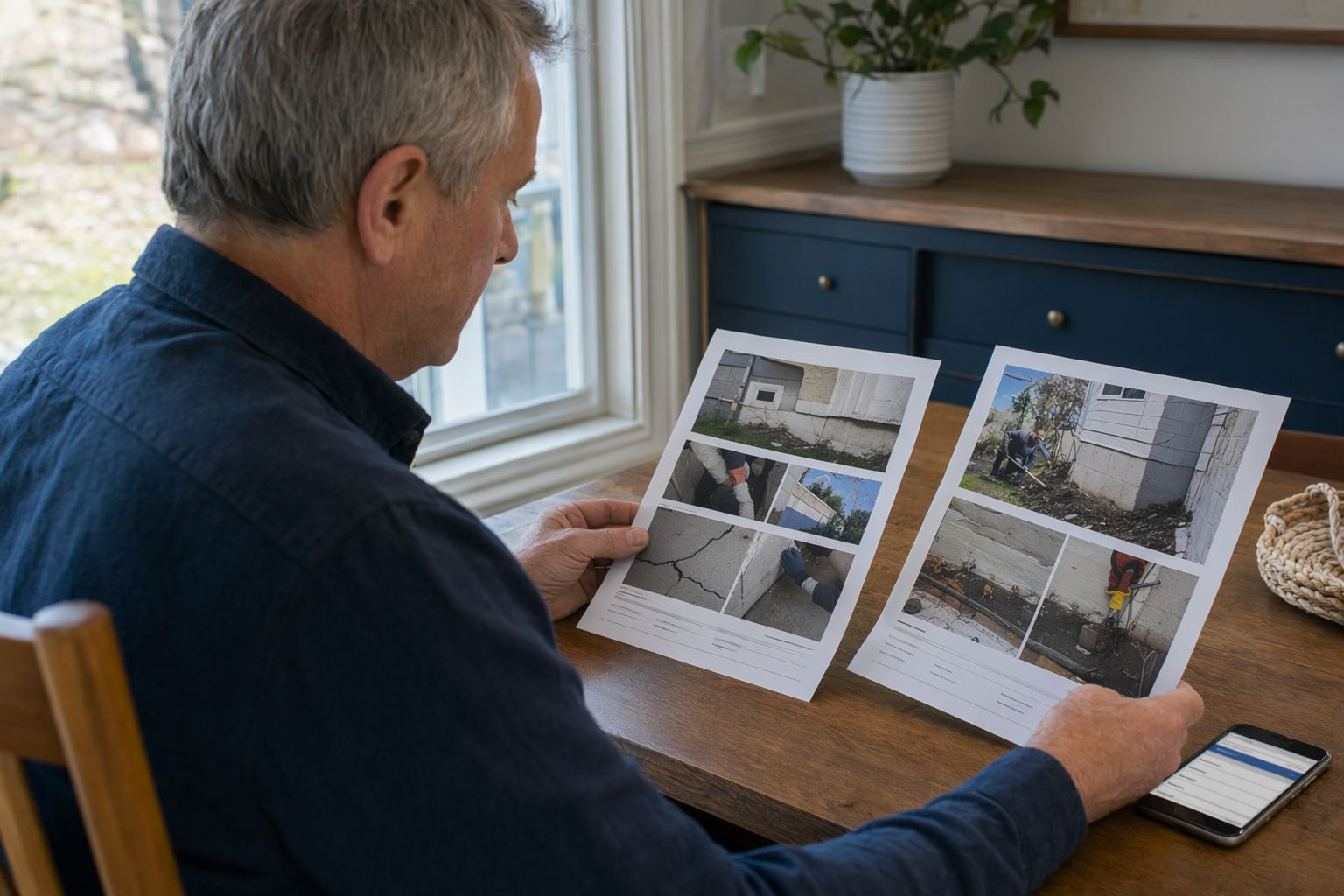
- Write down the symptoms. Note where you see cracks, sticking doors, sloping floors, bowing walls, water entry, or gaps around windows.
- Take dated photos. Clear photos help you compare whether movement seems old, stable, or getting worse.
- Start with an independent engineer when possible. A licensed structural engineer who does not also sell the repair can tell you what problem needs to be solved. That protects you from being sold the biggest job by default. An independent engineer report often costs about $400-$1,200.
- Get multiple written estimates. Compare scope, method, quantities, permits, timeline, cleanup, and payment schedule. Do not compare only the bottom-line number.
- Verify license and insurance yourself. Hire only licensed and insured contractors where your area requires it, and confirm the coverage is current.
- Do not pay based on pressure. Get the scope and price in writing before any deposit. Keep final payment until the agreed work is done and local permit requirements are satisfied.
If you want help lining up companies to compare, you can get matched for free. You still choose who to speak with and who to hire.
What costs to plan for
The checklist also helps you plan around typical ranges, not promises. Real cost depends on the cause, soil and site conditions, access, the repair method required, and your area.
Common ranges homeowners may see include:
- crack injection: about $300-$2,500
- slabjacking or foam lifting for a typical area: about $600-$3,500
- steel push piers or helical piers: about $1,200-$3,000 per pier, with many jobs needing 8-12 piers for totals often around $10,000-$30,000+
- bowing-wall stabilization: about $4,000-$15,000+
- basement waterproofing or drainage work: about $2,000-$12,000
Those are estimates, not quotes. A cheaper bid is not always cheaper if it leaves out the real cause, skips drainage, avoids permits, or uses a method that does not match the problem. Our foundation repair cost guide can help you understand the numbers before you compare proposals.
What to compare on each estimate
When you use the checklist, make sure each contractor answers the same core questions. That makes side-by-side comparison much easier.
Look for:
- the exact areas to be worked on
- the proposed method, such as crack repair, waterproofing, wall stabilization, or piers
- how many piers, beams, straps, drains, or other materials are included
- whether excavation, haul-away, patching, and cleanup are included
- whether permits are needed and who is responsible for them
- start date, estimated duration, and access needs
- warranty language in writing
- deposit amount and payment schedule
If a proposal is vague, ask for a revised written scope. If one contractor says you need a major piering job and another says you do not, that is a strong reason to get an independent engineer review before moving forward. You can also review our guide on how to vet a foundation contractor before signing.
Download the free checklist
The downloadable file is foundation-repair-planning-checklist.pdf. It is meant to help you stay organized, ask the right questions, and avoid rushed decisions.
Use it if:
- you are just starting to notice cracks or movement
- you already have one estimate and want to compare others fairly
- English is not your first language and you want a simple planning sheet you can work through step by step
- you want one place to keep notes, photos, and contractor details together
BedrockBearing is a free matching service for homeowners. We do not inspect, design repairs, or perform the work. Participating pros pay a flat fee to be included. The service is free to you. You stay in control: the engineer evaluates, you compare estimates, you choose who to hire, and you hold the final payment.
Download the free checklist, write down what you are seeing, take photos, and get an independent licensed structural engineer before you hire a repair company if you can. Then compare written estimates carefully, verify license and insurance yourself, and do not let anyone rush you.