Foundation severity checklist
This free checklist helps you organize what you are seeing before you talk to an engineer or contractor. It does not diagnose the problem, but it can help you spot warning signs, document changes, and take the next safe step.
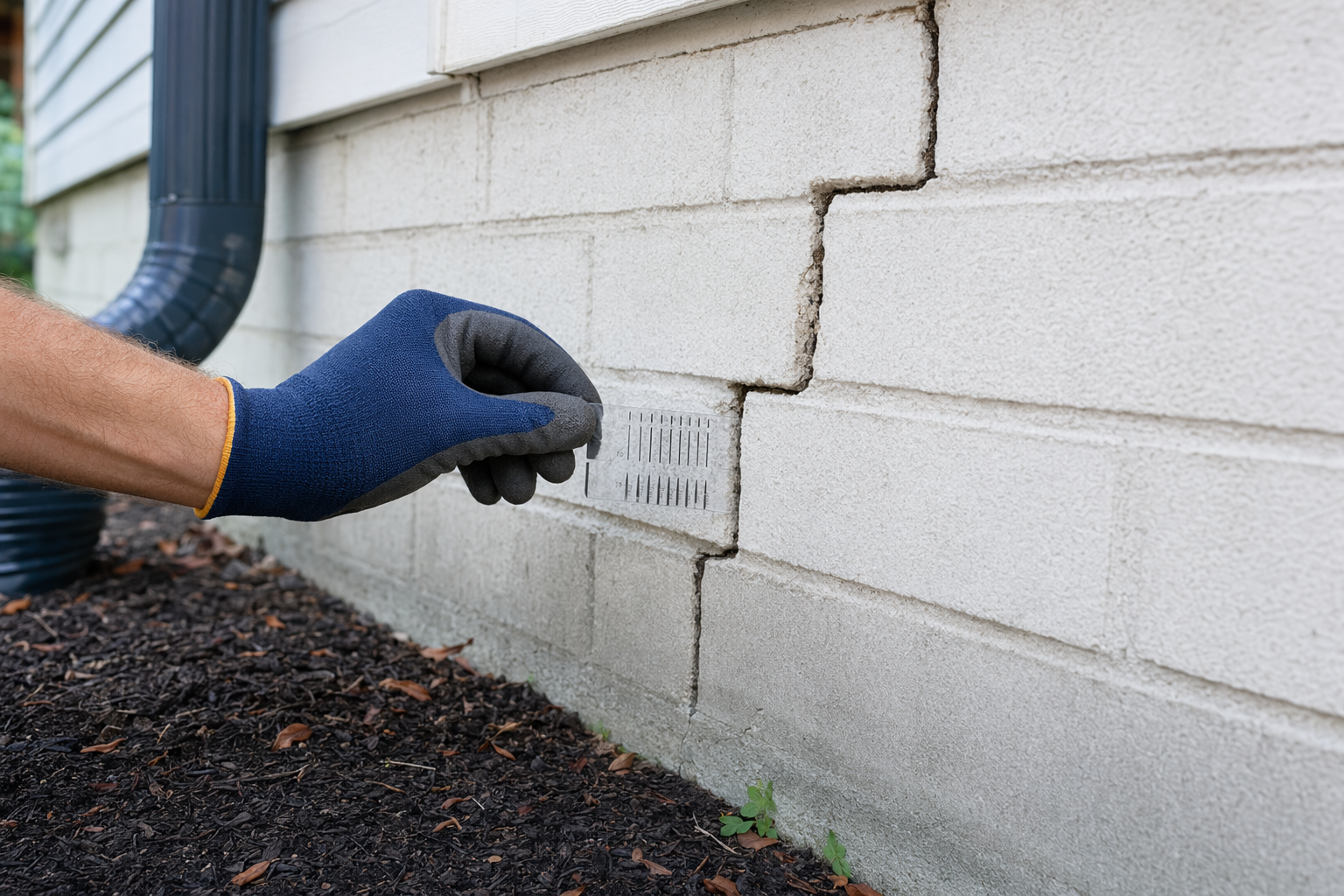
What this free checklist is for
A foundation problem can be small, or it can be serious. The hard part is knowing what deserves quick action and what can wait a little while.
Our free downloadable checklist is a simple homeowner tool. It helps you write down visible signs like cracks, sloping floors, sticking doors, water entry, wall movement, and changes over time. That record can help you ask better questions and compare opinions.
Important: BedrockBearing is a free matching service. We do not inspect homes, diagnose structural problems, or design repairs. The checklist is not engineering advice, not a repair plan, and not a permit document.
The safest next step for most homeowners is an evaluation by an independent, licensed structural engineer who does not also sell the repair. That protects you from being pushed into work you may not need. Learn more about that here: independent structural engineer evaluation.
What to pay close attention to
Use the checklist to note what you actually see, not what you guess the cause is.
- Cracks: where they are, whether they are new, and whether they seem wider or longer than before
- Doors and windows: sticking, rubbing, or not latching like they used to
- Floors: sloping, dipping, bouncing, or separated from baseboards
- Walls: bowing, leaning, stair-step cracking in masonry, or gaps at trim
- Moisture: damp basement walls, standing water, musty smells, or drainage problems outside
- Outside signs: sinking porches, separated steps, soil pulling away, or downspouts dumping near the home
Some signs need faster attention. If a wall is actively moving, a large new crack is opening quickly, or you see signs of possible imminent collapse, leave the area and contact a licensed structural engineer or your local building department right away.
If you want a simple overview of common warning signs, see foundation warning signs.
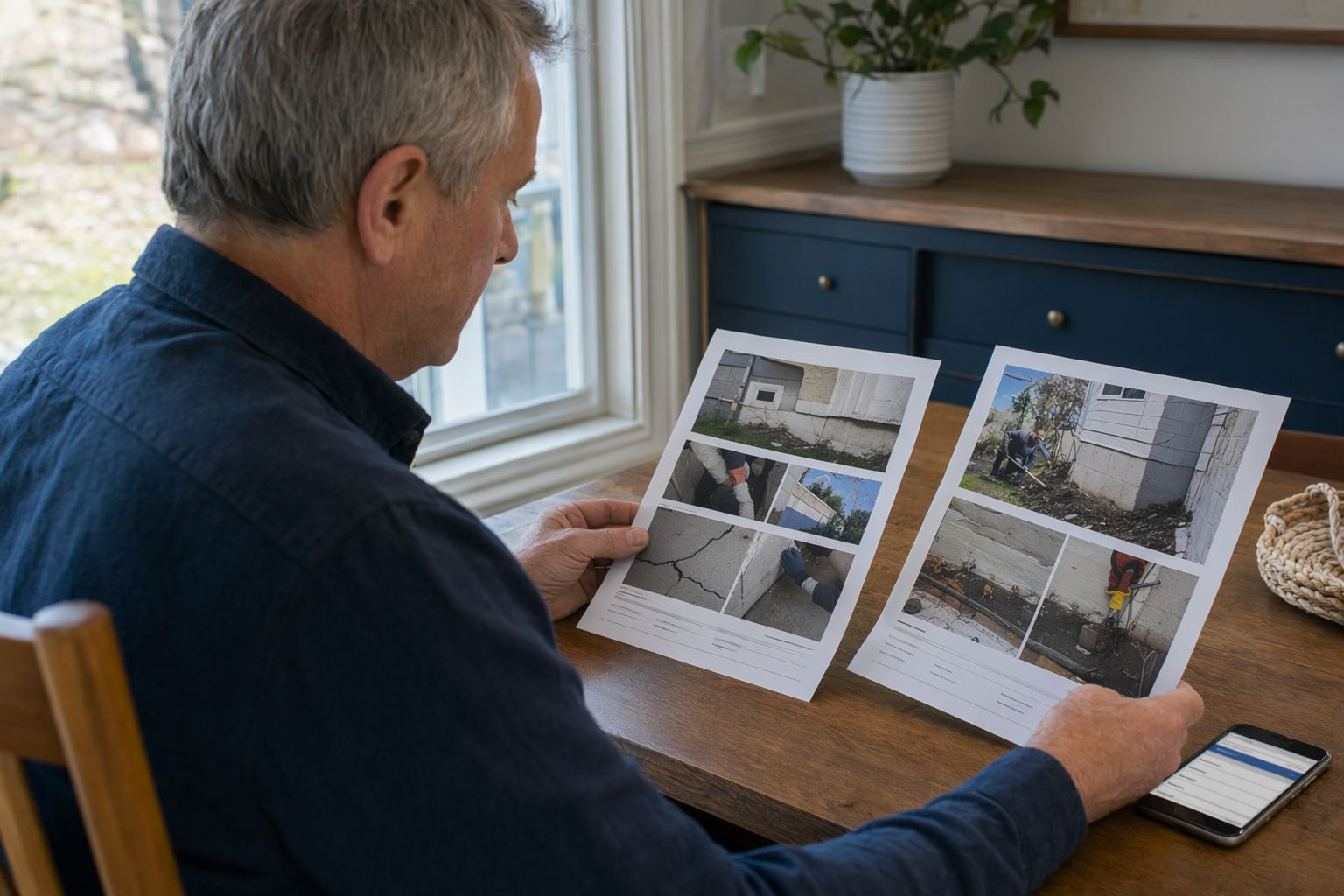
How to use the checklist well
The checklist is most useful when you use it the same way each time.
- Walk the same areas slowly. Check the basement, crawl space, garage slab, main living areas, and outside perimeter.
- Write down exact locations. Example: "north basement wall, near water heater" is better than "basement crack."
- Take clear photos. Use good light. Take one close photo and one wider photo for context.
- Add dates. A dated record helps show whether a problem is stable or changing.
- Measure if you can do it safely. Even a simple note like "about 1/8 inch" is better than guessing later.
- Bring the checklist to the engineer and to estimate appointments. This makes it easier to compare what each person says.
Do not rely on one contractor's opinion alone, especially if that company also sells the repair. An engineer evaluates. Then you compare estimates, you choose who to hire, and you hold the final payment.
What the checklist cannot tell you
A checklist can help you organize facts. It cannot confirm the cause.
Real foundation pricing depends on the cause, the soil and site conditions, access, the repair method required, and your area. Honest costs are usually given as ranges, not promises.
Typical ranges homeowners often see include:
- crack injection: $300-$2,500
- slabjacking or foam lifting for a typical area: $600-$3,500
- steel push or helical piers: about $1,200-$3,000 per pier, with many jobs needing 8-12 piers for totals around $10,000-$30,000+
- bowing-wall stabilization: $4,000-$15,000+
- basement waterproofing or drainage: $2,000-$12,000
- independent structural engineer report: often $400-$1,200
Those are estimates only, not quotes or guarantees. You can review more detail on foundation repair costs.
Download it, then use it to compare people fairly
Download the free PDF: foundation-severity-checklist.pdf.
After you fill it out:
- get an independent, licensed structural engineer evaluation first when possible
- ask each contractor to explain the recommended scope in writing
- hire only licensed and insured contractors, and verify the license and insurance yourself
- make sure permits and local code are followed
- do not pay a deposit until the scope and price are clearly written down
If you want, BedrockBearing can help you get connected with foundation repair pros in your area after you have documented the problem. Matching is free to homeowners. Start here: get matched or learn how to vet a foundation contractor.
Use this free checklist to write down cracks, movement, water, and other changes you can see. Then get an independent licensed structural engineer to evaluate it before you hire any repair company, and compare written estimates from licensed, insured contractors.