Contractor vetting checklist
This free checklist helps you compare foundation repair contractors in a calm, organized way. It is not technical advice. It is a practical tool to help you ask better questions, verify basics, and keep the process on paper.
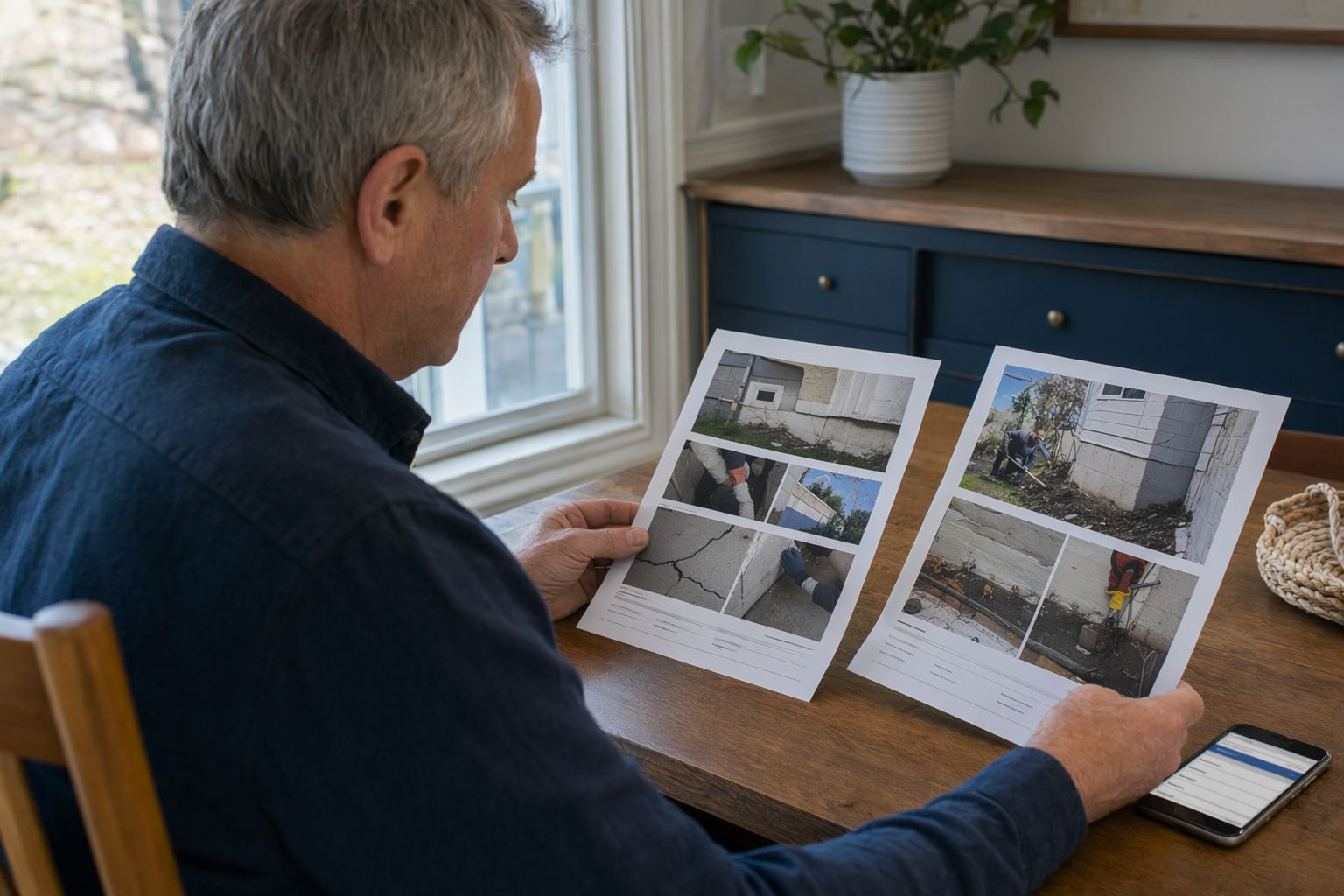
What this checklist is for
Foundation work can be expensive. It can also be easy to oversell if you are scared and need answers fast. This checklist is a simple download you can use when you talk to contractors.
It helps you track the basics that matter:
- Who is licensed and insured
- What repair method they recommend
- Whether they explain why that method fits your home
- What is included in the written scope
- Permit and inspection questions
- Warranty details and limits
- Deposit and payment terms
Just as important, it helps you slow down and compare offers side by side. Before you hire anyone, BedrockBearing strongly recommends an evaluation by an independent, licensed structural engineer who does not also sell the repair. That step can protect you from paying for work you do not need. See what an independent engineer evaluation is for.
How to use it the smart way
Use the checklist before you sign anything.
- Write down what you are seeing. Note cracks, sticking doors, sloping floors, water, or bowing walls. Photos help. If you are not sure what counts as serious, review common warning signs.
- Get an independent engineer first if the issue may be structural. A structural engineer report often runs about $400-$1,200. That is a typical range, not a quote. It can save much more by narrowing the right fix.
- Talk to at least 2-3 licensed and insured contractors. Use the same checklist with each one so you can compare apples to apples.
- Ask each contractor to explain the cause they believe is driving the problem. The real price depends on the cause, soil and site conditions, access, the method required, and your area.
- Get the full scope and price in writing before any deposit. Make sure materials, quantities, cleanup, permit responsibility, and payment schedule are written down.
- Verify license and insurance yourself. Do not rely only on a business card or verbal claim.
If a wall is actively moving, large new cracks are opening, or there are signs of possible collapse, leave the area and contact a licensed structural engineer or your local building department right away. This checklist is not for emergencies.

What good answers usually look like
A solid contractor should be willing to answer direct questions clearly.
Look for signs like these:
- They do not pressure you to sign the same day.
- They can explain why they recommend piers, crack repair, drainage, wall stabilization, or another method.
- Their scope is specific, not vague.
- They discuss permits and inspections when local rules require them.
- They explain warranty terms in plain language, including what is not covered.
- They are comfortable if you want another opinion.
Be careful if you hear things like:
- "You do not need an engineer."
- "This price is only good today."
- "Permits are not necessary" without a clear local basis.
- "Insurance and license paperwork will come later."
- A very large deposit with very little detail in writing.
For a deeper step-by-step review, see how to vet a foundation contractor.
What the checklist will not do
This download is meant to help you organize questions and compare contractors. It does not inspect your home. It does not diagnose the cause. It does not tell you which repair method is correct.
BedrockBearing is a free matching service. We help homeowners understand what they may be dealing with and get matched with licensed, insured foundation repair pros. We do not perform repairs, design fixes, pull permits, or provide engineering advice.
If you need to compare typical price ranges before you talk to anyone, you can review foundation repair costs. Those numbers are estimates only, not bids or guarantees.
Download and next step
Download the free file: foundation-contractor-vetting-checklist.pdf
Use it during calls, home visits, and estimate reviews. Keep one copy for each company so you can compare the details later without guessing.
If you want, we can also help you get matched with licensed and insured local pros. Matching is free to the homeowner. You still compare estimates, verify credentials yourself, choose who to hire, and hold the final payment until the written scope is completed.
Use this free checklist to compare foundation contractors carefully. Get an independent structural engineer first if the problem may be structural, verify license and insurance yourself, get the full scope and price in writing, and do not rush into a same-day deal.