Foundation repair permits & inspections
Permits and inspections for foundation repair are not just paperwork. They help make sure the work follows local rules and gives you a record of what was done.

Why permits matter on foundation work
Foundation work can affect the safety and value of your home. A permit is often required when the repair changes structural support, adds piers, replaces major sections, alters drainage, or involves excavation. Rules vary by city, county, and state, so the exact requirement depends on where you live and what method is used.
A permit does not prove the repair design is the best one for your house. It usually means the work was submitted to the local building department and may be checked for code compliance. That is helpful, but it is not the same as an independent diagnosis.
That is why we strongly recommend hiring an independent, licensed structural engineer before you sign with a repair company, especially for settlement, bowing walls, repeated cracking, or water-related movement. An engineer who does not also sell the repair can help you understand the likely cause and whether the proposed scope makes sense. Learn more about independent structural engineer evaluations.
If you are seeing urgent warning signs, take them seriously. If a wall is actively moving, large new cracks are opening fast, doors suddenly will not open because the frame shifted, or part of the structure looks close to collapse, leave the area and contact a licensed structural engineer or your local building department right away.
When a permit may be required
Many homeowners are told, "You don't need a permit for this." Sometimes that is true. Often it is not. Typical cases where permits may be required include:
- Piering or underpinning with steel push piers or helical piers
- Major slab lifting, slabjacking, or foam injection when it affects structure or elevation in a meaningful way
- Bowing wall stabilization using wall anchors, steel beams, or other structural systems
- Rebuilding or replacing part of a foundation wall
- Excavation that affects footings, retaining conditions, or drainage paths
- Adding drains, sump discharge lines, or waterproofing systems that connect to regulated drainage or plumbing components
Smaller cosmetic work may not require a permit. For example, simple non-structural crack sealing might not. But if the crack repair is part of a larger structural correction, permit rules can change.
The safest approach is simple: ask the building department directly and get the answer in writing if you can. Also ask the contractor to show you the permit requirement for your scope, not just tell you from memory.
If you are still trying to understand the repair method being proposed, these pages may help: piering and underpinning and foundation crack repair.
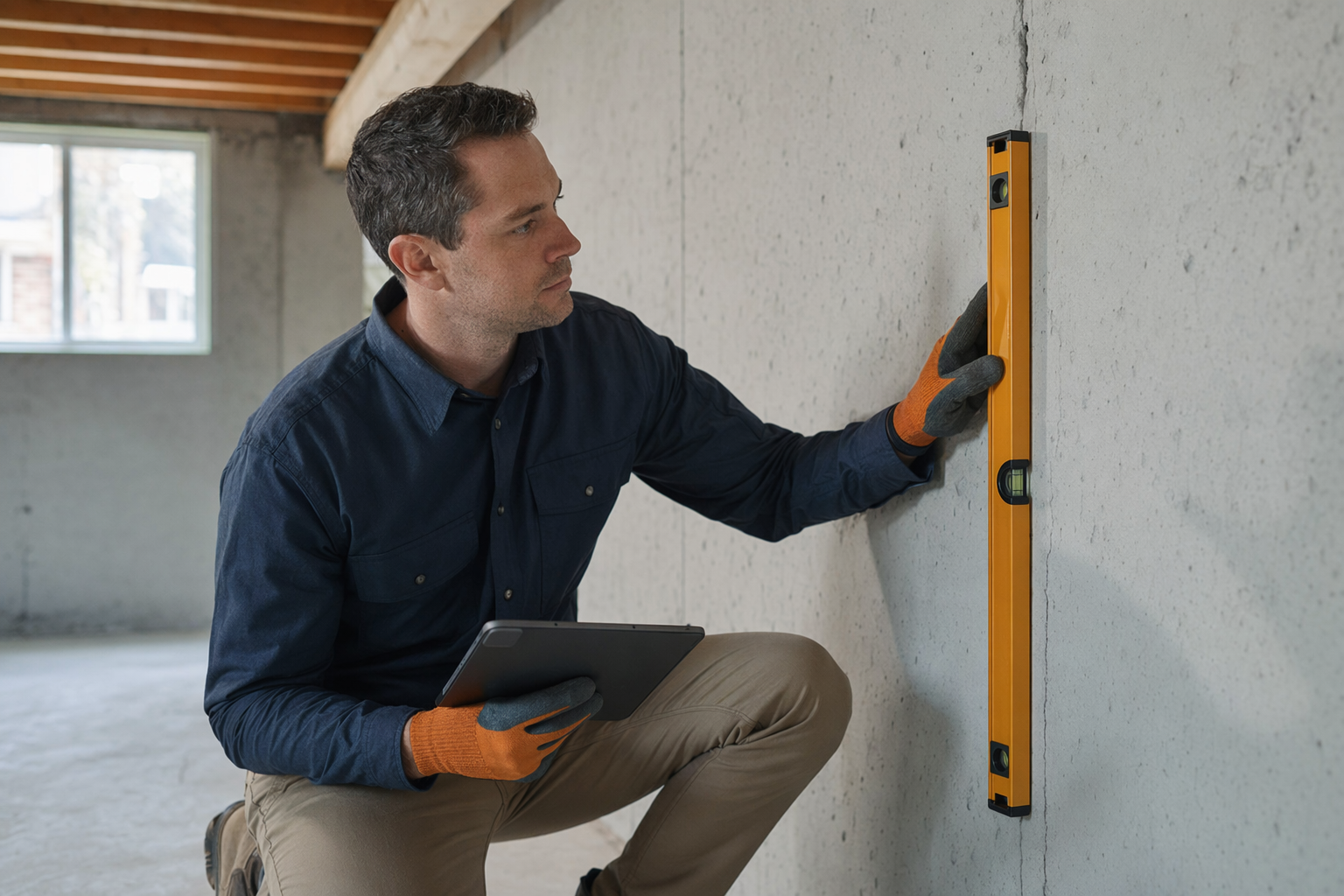
Who should pull the permit, and what inspections do
In many areas, the contractor should pull the permit for the work they are doing. That matters because the permit record shows who is responsible for the job. Be cautious if a contractor pushes you to pull the permit for their structural repair without a clear reason. In some places an owner-builder permit is allowed, but it can shift risk and responsibility onto you.
Ask these questions before work starts:
- Will a permit be required for this exact scope?
- Who is pulling it? Get the company name exactly as it appears on the license.
- What inspections are expected? For example, pre-pour, pier depth documentation, reinforcement, drainage, final inspection.
- Will I get copies of the permit card, approved scope, and final sign-off?
- If the inspector asks for changes, who pays for corrections? This should be clear in writing.
A local inspection can be useful, but keep your expectations realistic. Municipal inspectors often have limited time. They are checking code issues tied to the permit, not acting as your private engineer, project manager, or quality-control expert for every detail. That is another reason an independent engineer can protect you.
You should also verify the contractor is licensed and insured yourself. Do not rely only on a business card or website. Get the scope, materials, quantity of piers or anchors if applicable, cleanup terms, warranty language, total price, and payment schedule in writing before any deposit. More help here: how to vet a foundation contractor.
What to do before you sign anything
Here is a practical checklist for homeowners:
- Document what you see. Take dated photos of cracks, gaps, sticking doors, sloping areas, wet spots, and outside drainage.
- Learn the warning signs. Some cracks are minor. Some movement is not. Review these foundation warning signs.
- Get an independent structural engineer evaluation for serious, repeated, or unclear problems. A typical report often runs about $400-$1,200, depending on the home and area.
- Get 2-3 written estimates from licensed, insured contractors after you understand the likely cause.
- Ask about permits and inspections in writing. If needed, call the local building department yourself.
- Compare methods, not just price. A low number can leave out needed work. A high number can include work you may not need.
Typical repair cost ranges are only estimates, not quotes. Real price depends on the cause, soil and site conditions, access, the method required, and your area. For example:
- Crack injection: about $300-$2,500
- Slabjacking or foam lifting for a typical area: about $600-$3,500
- Steel push or helical piers: about $1,200-$3,000 per pier, with many jobs needing 8-12 piers for totals around $10,000-$30,000+
- Bowing-wall stabilization: about $4,000-$15,000+
- Basement waterproofing or drainage: about $2,000-$12,000
For a broader cost overview, see foundation repair costs.
Common mistakes that cost homeowners money
These are the problems we see again and again:
- Hiring the first company that says "no permit needed" without checking local rules
- Skipping the engineer and relying only on a sales inspection from a company that also sells the repair
- Comparing total prices without comparing scope. One bid may include 10 piers, another 14, another drainage, another patchwork only.
- Paying a large deposit before permit status is clear
- Failing to verify license and insurance directly with the state or local authority
- Not getting final inspection records after the work is done
- Ignoring water management. Many foundation problems get worse when grading, gutters, downspouts, or drainage are left uncorrected.
Another common mistake is treating permits as the whole solution. A permit helps with compliance. It does not replace good diagnosis. If the root cause is expansive soil, poor drainage, tree-related moisture changes, settlement, or lateral pressure on a basement wall, the right fix depends on that cause.
If your issue involves inward movement or cracking in a basement or retaining wall, read more about bowing wall stabilization or foundation waterproofing.
Your next step
If you think your home may need foundation repair, slow down and do it in the right order.
- Take serious movement and new major cracks seriously. If collapse seems possible or a wall is actively moving, leave the area and contact a licensed structural engineer or local building department right away.
- Get an independent engineer for anything structural, repeated, or expensive.
- Ask the building department about permits for your exact scope.
- Collect written estimates from licensed, insured contractors.
- Choose the company yourself after you compare scope, permit handling, documentation, and price.
BedrockBearing is a free matching service. We do not inspect homes, design repairs, pull permits, or perform the work. We help you explain what you are seeing and get matched with licensed, insured foundation repair pros so you can compare your options. Start here: get matched.
Do not treat permits like a small detail. For foundation work, ask your building department what is required, get an independent structural engineer for serious problems, hire licensed and insured contractors only, and get the scope, permit handling, and price in writing before you pay.