Signs You May Need Foundation Repair
Some foundation problems are minor. Some are not. The important thing is to notice the signs early, take real warning signs seriously, and get the right evaluation before you agree to any repair.

The short answer
You may need foundation repair if you are seeing new or growing cracks, uneven floors, doors or windows that suddenly stick, walls that bow or lean, gaps around trim, or water problems near the foundation. These signs do not always mean a major repair is needed. But they are worth checking.
A house can move a little from normal settling, humidity changes, and seasonal soil movement. The problem is when movement is new, getting worse, or showing up in several places at once.
Take warning signs seriously. If you see a wall actively moving, a large new crack opening quickly, part of a foundation wall leaning inward, or any sign that a porch, beam, wall, or ceiling could fail, leave the area and contact a licensed structural engineer or your local building department right away.
For non-urgent cases, the safest next step is usually an independent, licensed structural engineer who does not also sell the repair. That helps you understand whether you need monitoring, drainage work, a small repair, or a bigger stabilization plan. See foundation warning signs if you want a broader checklist.
Common signs homeowners notice first
Here are signs that often show up before a homeowner knows the cause:
- Cracks in interior drywall, especially over doors and windows, at ceiling corners, or recurring after patching
- Cracks in brick, block, stucco, or concrete, especially stair-step cracks in masonry or horizontal cracks in basement walls
- Doors and windows that stick, rub, will not latch, or suddenly have uneven gaps
- Sloping or bouncy floors, or a floor that feels lower in one room than another
- Gaps between walls, ceilings, cabinets, counters, or trim
- Basement or crawl space moisture, pooling water, damp walls, musty smell, or white chalky residue on masonry
- Bowing, leaning, or bulging foundation walls
- Chimney, porch, or steps pulling away from the house
- Cracked or uneven slab areas, including garage floors, patios near the home, and first-floor slabs
One crack by itself does not prove a failing foundation. Context matters.
A small hairline crack that has not changed may be less urgent than:
- a crack that is getting wider
- a horizontal crack in a basement wall
- several signs appearing together
- movement after heavy rain, drought, plumbing leaks, or drainage problems
If you are not sure what counts as a meaningful crack, our page on foundation crack repair explains common crack types and why the cause matters more than the cosmetic patch.
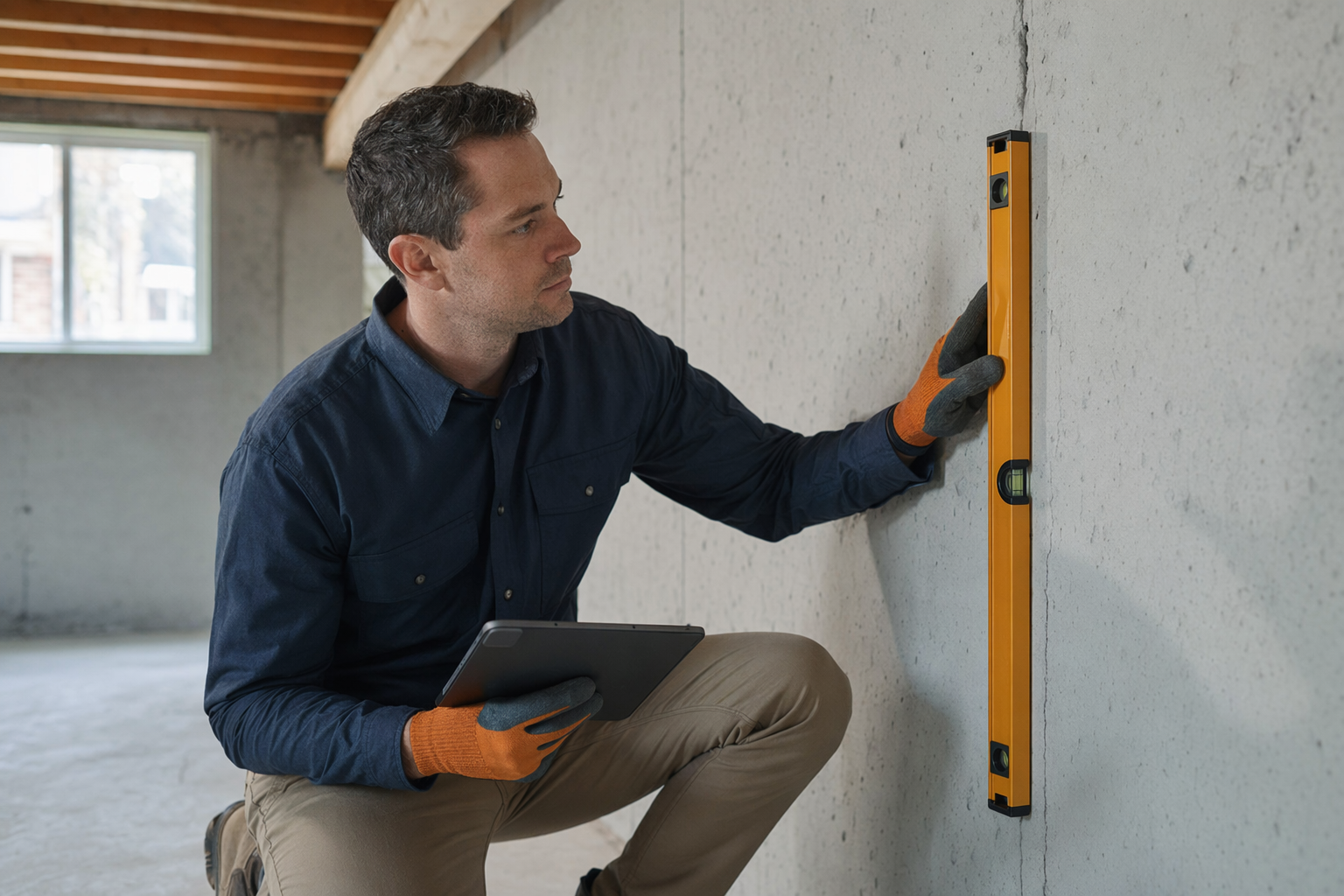
What these signs can mean
Foundation symptoms often point to one of a few root problems, but the symptom is not the same as the fix.
Soil movement: Expansive clay, poor compaction, erosion, or washout can let part of the house settle or lift. That can lead to cracks, sticking doors, and uneven floors.
Water and drainage: Gutters that dump near the house, bad grading, clogged drains, or repeated basement moisture can soften soils and increase movement. Sometimes the first job is water control, not underpinning. See foundation waterproofing for common drainage-related issues.
Wall pressure: In basements, wet soil can push laterally on foundation walls. That can cause horizontal cracking, inward bowing, or bulging. Those signs deserve prompt attention because wall movement can become a safety issue.
Slab voids or minor settlement: Some concrete slabs sink because soil below them shifted or washed out. In the right situation, slabjacking or foam lifting may help. Typical ranges are about $600-$3,500 for a typical area, but the real price depends on cause, soil and site conditions, access, method, and your area.
Deeper support problems: If a footing is no longer adequately supported, steel push piers or helical piers are sometimes used to transfer load deeper. Typical ranges are about $1,200-$3,000 per pier, and many jobs need 8-12 piers or more, so total project cost often lands around $10,000-$30,000+. That is a broad estimate, not a quote.
Crack sealing only: If a crack is mainly allowing water in and the structure is otherwise stable, injection can sometimes be part of the solution. Typical crack injection often runs about $300-$2,500. But sealing a crack without addressing active movement may only hide the real problem.
Bowing wall stabilization: Carbon fiber, wall anchors, or steel beams may be used depending on the wall condition and site. Typical ranges are about $4,000-$15,000+. Again, the right method depends on the engineer's evaluation, the amount of movement, access, and local conditions.
This is why BedrockBearing does not tell you what repair you need. We are a free matching service. We help you understand the warning signs and connect with licensed, insured pros. The diagnosis should come from an independent engineer and then from written contractor estimates you can compare.
How to tell if it is urgent
Use common sense here. Not every crack is an emergency. Some are.
Get urgent help now if you notice:
- a wall that is actively moving or suddenly leaning more
- a large new crack opening quickly
- a basement wall with major inward bowing or bulging
- sounds of cracking, shifting, or crushing near a damaged area
- a section of floor, ceiling, beam, porch, or chimney that looks like it may fail
If that is happening, leave the area and contact a licensed structural engineer or your local building department right away.
Schedule an evaluation soon if you notice:
- recurring cracks you keep patching
- several sticking doors or windows at the same time
- water intrusion with wall cracks
- floor slope that seems new or worse
- step cracks in brick or block that are widening
- a basement wall with any horizontal crack or modest inward movement
For many homeowners, paying for an independent structural engineer report is money well spent. A typical range is about $400-$1,200. It can help you avoid paying for work you do not need, or choosing the wrong method for the real cause. Read more about a structural engineer evaluation.
What to do next before you hire anyone
A calm process usually leads to a better outcome.
- Document what you see. Take clear photos. Write the date. Note whether the crack or gap seems wider after heavy rain or dry weather.
- Check simple water issues. Look at downspouts, gutter overflow, grading, sprinkler spray, and any plumbing leaks. Do not assume drainage is the whole issue, but do not ignore it either.
- Get an independent engineer first when possible. Choose a licensed structural engineer who does not also sell foundation repair. That reduces sales pressure and gives you a clearer basis for comparing bids.
- Then get written estimates from licensed, insured contractors. Verify the license and insurance yourself. Ask for the scope, method, areas included, permit responsibility, cleanup, and warranty terms in writing before any deposit.
- Follow local permits and code. Do not let anyone talk you into unpermitted structural work.
- Hold the final payment until the agreed work is complete. You compare estimates. You choose who to hire. You stay in control.
If you want help finding companies to quote the job after you understand the issue, use our free get matched service. Participating pros pay a flat fee to be included. Matching is free to homeowners.
If the engineer or contractor says you may need underpinning, read piering and underpinning before you sign anything.
Watch for new or growing cracks, sticking doors, sloping floors, bowing walls, and water near the foundation. If anything looks like it could fail, leave the area and call a licensed structural engineer or local building department right away. For non-urgent problems, get an independent engineer first, then compare written estimates from licensed, insured contractors.