Settlement & soil-movement repair
Settlement and soil movement can crack walls, tilt floors, and make doors stick. Some cases are minor. Some can become a real safety problem, so it is smart to understand what you are seeing and get the right evaluation before you hire anyone.
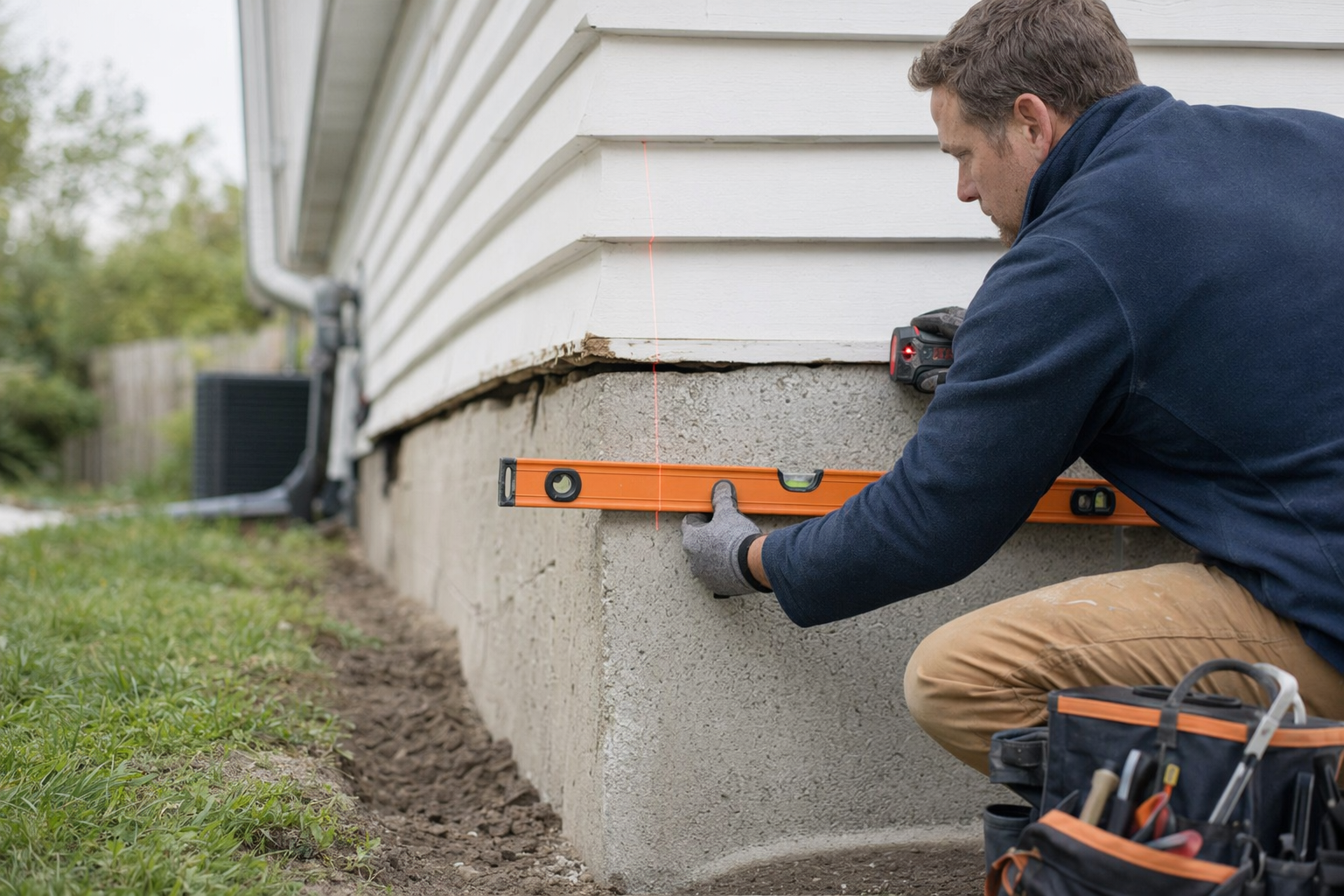
What settlement and soil movement usually look like
Homes move for different reasons. Settlement usually means part of the home is sinking. Heave usually means part of a slab or footing is pushing upward. Both can happen because of changing soil moisture, weak fill, erosion, expansive clay, plumbing leaks, poor drainage, tree roots, or older construction that was not built for the soil.
Common signs include:
- Stair-step cracks in brick or block
- Drywall cracks over doors and windows
- Doors that rub or will not latch
- Sloping or uneven floors
- Gaps at trim, cabinets, or countertops
- Cracks in a slab or garage floor
- Basement or crawl space walls that show movement
These signs do not always mean the foundation needs a big repair. Cosmetic cracking can happen in normal houses. But if cracks are getting wider, a wall looks like it is moving, or floors suddenly feel different, take it seriously. For urgent signs such as a wall actively moving, large new cracks opening, or any sign of possible collapse, leave the area and contact a licensed structural engineer or your local building department right away.
If you are not sure what counts as a warning sign, start here: foundation warning signs.
What the repair is trying to do
A good repair plan should match the cause of the movement, not just cover the crack.
If part of a house has settled, the goal is often to stabilize it so it stops moving. In some cases, the contractor may also be able to lift part of the structure closer to level. If a slab has heaved, the solution may be different. Sometimes the real fix is drainage control, plumbing repair, soil-moisture management, or removing pressure around the foundation. Sometimes underpinning is needed.
Typical repair methods may include:
1. Piering or underpinning to transfer load to deeper, more stable support. This is common when soils near the surface are weak or change a lot with moisture. Learn more about piering and underpinning.
2. Slabjacking or foam lifting to raise a settled slab area such as a garage floor, walkway, patio, or sometimes interior slab sections.
3. Drainage and waterproofing work when water around the home is making soil movement worse. Gutters, grading, drains, sump systems, and moisture control can matter as much as the structural work. See foundation waterproofing.
4. Crack repair after the movement has been evaluated and stabilized. Crack filling alone is not a structural plan if the home is still moving.
This is why BedrockBearing strongly recommends an independent, licensed structural engineer before you hire a repair contractor. An engineer who does not also sell the repair can tell you whether the issue is active, how serious it is, and what kind of fix makes sense. That helps protect you from being sold work you do not need.
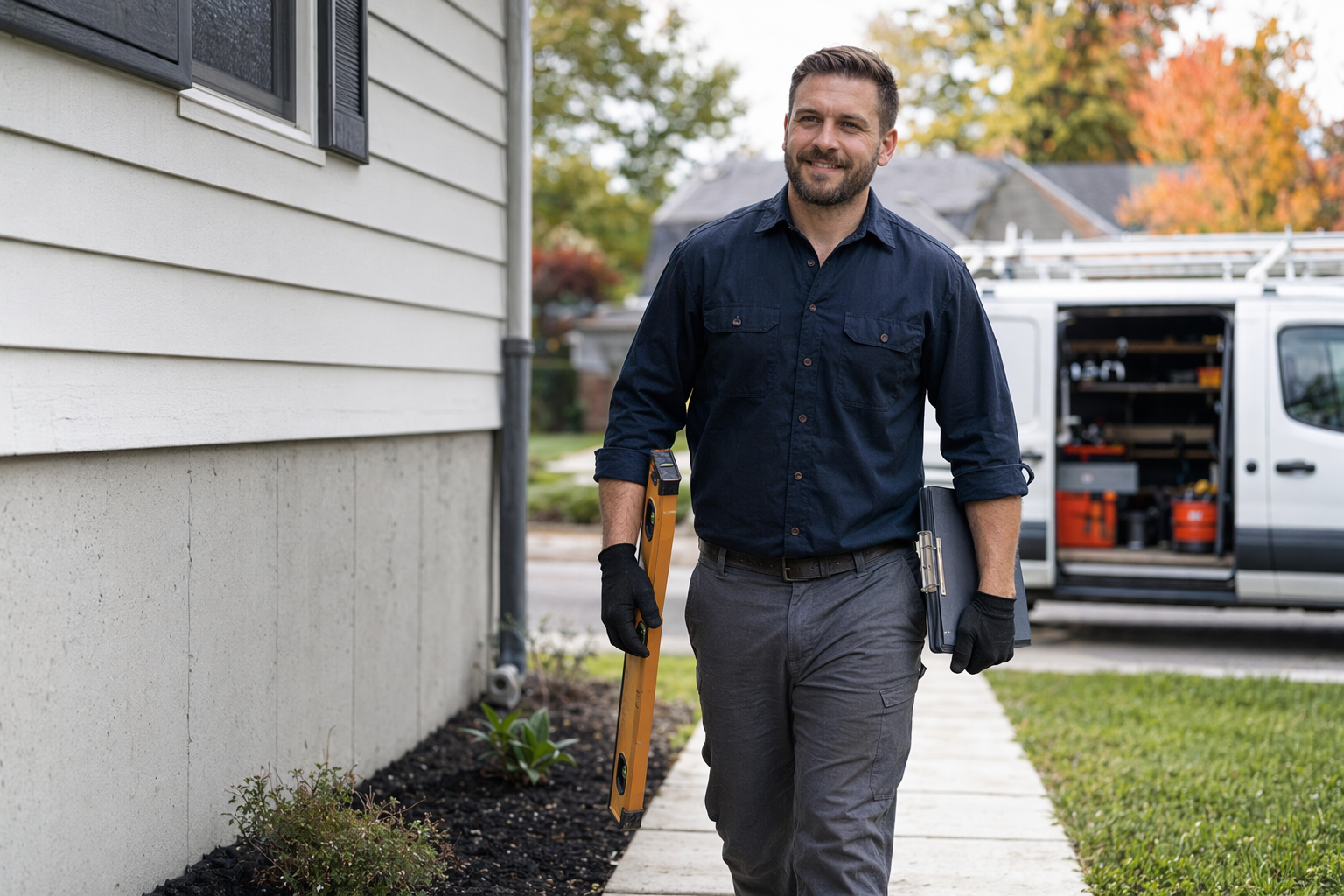
How the process usually works
Most homeowners do better when they slow the process down and follow a few steps.
- Document what you see. Take clear photos of cracks, sticking doors, sloped floors, water near the house, and any changes over time. Note where the problem is worst.
- Get an independent engineer evaluation first. A licensed structural engineer report often costs about $400-$1,200. That is usually money well spent because it gives you a neutral opinion.
- Compare repair approaches. If repair is needed, get written estimates from licensed and insured contractors. Make sure each scope matches the engineer's findings, or ask why it does not.
- Verify license, insurance, permits, and warranty terms yourself. Do not assume. Check. Read the scope line by line.
- Repair the cause when possible. If drainage, plumbing leaks, or water management are part of the problem, address those too. Otherwise movement may continue.
- Finish cosmetic repairs last. Drywall patching, paint, and trim should usually wait until the movement issue has been addressed.
BedrockBearing is a free matching service. We do not inspect, design repairs, or perform the work. We help homeowners understand the problem they are seeing and get matched with licensed, insured pros so they can compare options. If you want help starting that process, use get matched.
Typical costs and what changes the price
Real prices vary a lot. The true cost depends on the cause of the movement, soil and site conditions, access, repair method, and your area. Any number you see online should be treated as a typical range, not a quote.
Here are honest ballpark ranges homeowners often see:
- Independent structural engineer report: about $400-$1,200
- Crack injection or crack sealing: roughly $300-$2,500 depending on crack type, access, and whether it is only a leak repair or part of a larger issue
- Slabjacking, mudjacking, or foam lifting: roughly $600-$3,500 for a typical area
- Steel push piers or helical piers: often $1,200-$3,000 per pier, with many house jobs needing 8-12 piers, so total costs commonly land around $10,000-$30,000+
- Bowing-wall stabilization: roughly $4,000-$15,000+ when wall movement is part of the problem
- Basement waterproofing or drainage improvements: often $2,000-$12,000
A lower price is not always a better deal. A contractor can make a bid look cheap by proposing too few piers, skipping drainage work, or leaving out permit costs. A higher price is not automatically better either. What matters is whether the scope fits the actual problem.
For a broader breakdown, see foundation repair costs.
Timeline, disruption, and what daily life looks like during repair
Many homeowners worry that the whole house will be torn apart. Sometimes the disruption is modest. Sometimes it is not.
A small slab-lifting job may take only hours to a day. A piering project on one side of a home may take several days. Larger jobs with drainage, excavation, interior access work, permit inspections, or difficult soil conditions can take one to three weeks or more.
You may notice:
- Noise from drilling, hydraulic equipment, or excavation
- Dust in work areas
- Temporary access limits around the foundation perimeter
- Landscaping disturbance where digging is needed
- Minor interior changes after lifting, such as new drywall cracks or doors that need adjustment
Ask before work starts:
- Will the crew excavate by hand or machine?
- How will they protect landscaping, sidewalks, and driveways?
- Will permit inspections be required?
- What happens if they find hidden conditions once digging starts?
- Is the goal stabilization only, or stabilization plus lift?
That last question matters. Not every home can or should be lifted back to perfectly level. Sometimes trying to force a full lift can cause more interior damage. A good scope should explain the target clearly.
Pros, limits, and where homeowners get burned
Foundation repair can be the right move. It can also be oversold.
Potential benefits
- Stabilizes active settlement in many cases
- Can improve floor slope, sticking doors, and some cracking
- May help protect resale value when the problem is documented and repaired correctly
- Can reduce future damage when paired with drainage control
Real limits
- No repair method is magic for every soil problem
- Some cracks may still need cosmetic repair afterward
- Lifting can cause minor interior finish damage
- If the moisture or drainage issue is ignored, movement may continue
- Warranties vary a lot and do not replace good engineering and a good scope
Common ways homeowners get burned
- Hiring the first company that says "you need piers everywhere"
- Skipping the independent engineer and relying only on a sales inspection
- Comparing prices without comparing the actual scope
- Paying a large deposit before reading permit, insurance, and cancellation terms
- Trusting verbal promises instead of getting the scope and price in writing
Before you sign anything, read this guide on how to vet a foundation contractor. And again, BedrockBearing strongly recommends an independent, licensed structural engineer first. That step alone can save you from unnecessary work.
Questions to ask before you hire anyone
Bring these questions to the engineer and to each contractor:
- What is the most likely cause of the movement? Settlement, heave, drainage, expansive soil, plumbing leak, erosion, wall pressure, or a mix?
- Is the movement active right now, or does it look old and stable?
- What repair is actually needed, and what is optional?
- Why this method instead of another one? For example, piers versus slabjacking, or drainage work before underpinning.
- How many piers, where, and why? If one bid calls for 6 and another says 14, ask both to explain.
- Will permits be pulled if required locally? Who handles inspections?
- Are you licensed and insured in my area? Ask for proof and verify it yourself.
- What is excluded from the price? Cosmetic patching, plumbing repairs, engineering, permits, haul-off, clean-up?
- What happens if hidden conditions are found? How are change orders approved?
- What warranty is offered, and what does it really cover? Transferability, exclusions, and maintenance requirements matter.
You do not need to be an expert. You just need clear written answers. An honest company should be able to explain the problem in plain language.
If you want help finding licensed, insured pros to compare after you get your bearings, BedrockBearing can help you get matched for free.
If your home is cracking or sloping, do not guess and do not rush into a big repair sale. Get an independent licensed structural engineer first, then compare written estimates from licensed and insured contractors, verify everything yourself, and only pay for a scope that matches the real problem.