How to Fix a Bowing Basement Wall
A bowing basement wall is not something to ignore. Some walls can be stabilized, but the right fix depends on how far the wall has moved, what is pushing on it, and whether the movement is still active.
The short answer
There is no one-size-fits-all fix for a bowing basement wall. Common repair methods include carbon fiber straps, steel I-beams or channel braces, wall anchors, drainage and waterproofing improvements, and in more serious cases partial rebuild or foundation underpinning.
What works depends on the cause. Many basement walls bow because of outside soil pressure, poor drainage, water-saturated clay soil, freeze-thaw cycles, or a wall that was underbuilt for the load. If you only cover the crack or repaint the wall, the pressure usually stays there.
Before you hire a repair contractor, BedrockBearing strongly recommends getting an independent, licensed structural engineer to evaluate the wall first. An engineer who does not also sell the repair can tell you whether the wall likely needs stabilization, drainage changes, rebuilding, or more investigation. That protects you from paying for work you may not need. Read more about that here: structural engineer evaluation.
If the wall is actively moving, a large new crack is opening fast, blocks are sliding, the top of the wall is visibly leaning in, or there are signs of possible collapse, leave the area and contact a licensed structural engineer or your local building department right away.
How bad is a bowing wall? Warning signs that matter
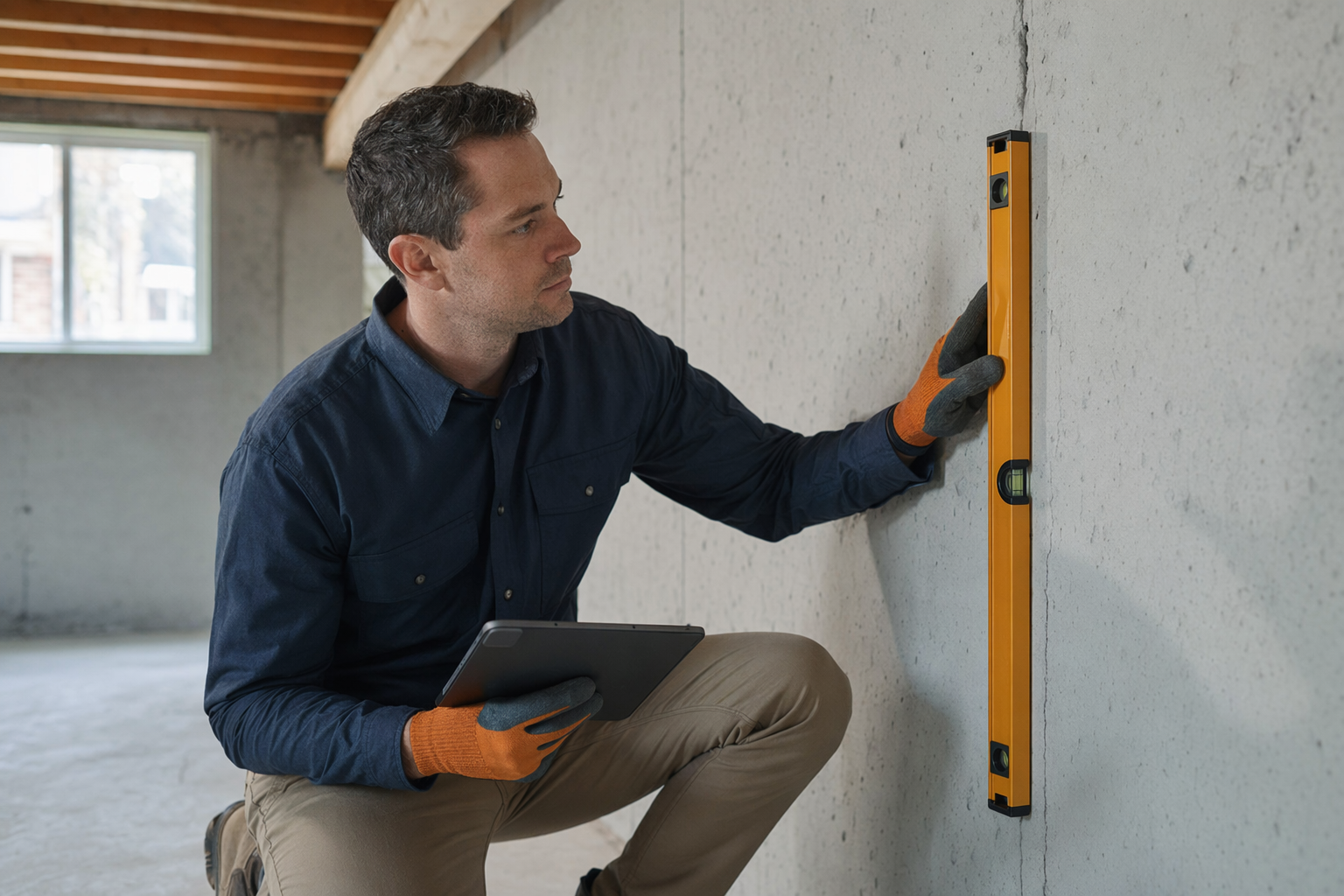
Not every crack means failure. But a bowing wall can be a real safety risk if movement is ongoing or severe.
Take these signs seriously:
- Horizontal cracking in a block or poured concrete basement wall
- A wall that curves inward at the middle
- Stair-step cracks in block or masonry joints
- Water seepage, damp spots, or white powdery residue on the wall
- Doors above the basement that start sticking along with basement wall movement
- A wall that looks worse after heavy rain or spring thaw
- Previous patching that cracked again
Some contractors talk about movement in inches. That can matter, but the pattern and cause matter too. A wall with modest bowing but clear active pressure may need prompt stabilization. A wall with more movement may need a more invasive fix. This is why the engineer evaluation matters.
For a broader list of danger signs, see foundation warning signs.
A few plain truths:
- Stopping water helps, but water control alone may not fix a bowed wall.
- A cheap cosmetic patch is not structural repair.
- The best repair often addresses both the wall and the outside conditions causing pressure.
Common repair options and when they are used
Here are the repair methods homeowners most often hear about. The right one depends on wall type, amount of movement, soil conditions, access, and whether the wall is still moving.
Carbon fiber straps
These are bonded vertically to the inside face of the wall. They are often used when bowing is present but still within the product and engineer limits, and when the goal is to stabilize the wall from further inward movement rather than push it back into place.
- Often used on poured concrete or block walls with limited to moderate inward deflection
- Low profile, so they do not take much basement space
- Usually require a sound wall surface and proper installation
- They do not solve exterior drainage by themselves
Typical range for bowing-wall stabilization systems: about $4,000-$15,000+, depending on wall length, severity, materials, and site conditions.
Steel beams or channel braces
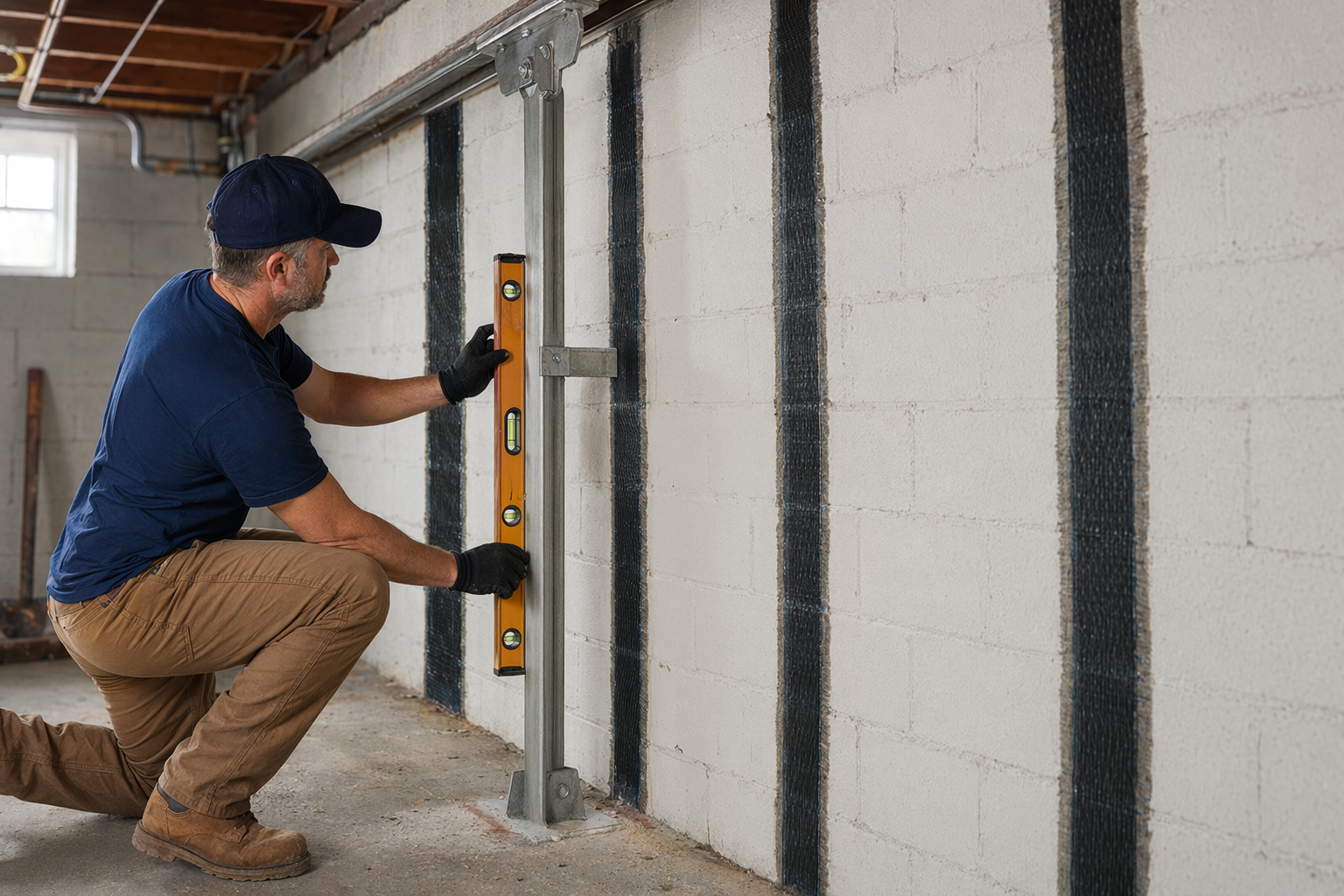
Steel braces are installed vertically against the wall and anchored at top and bottom. They are commonly used when stronger restraint is needed.
- Can be a good fit for more noticeable bowing
- Take up some interior space
- Sometimes adjustable, depending on system and conditions
- May be paired with drainage work
Wall anchors or tieback-style systems
These connect the wall to anchors placed in the yard. They may be used when there is enough exterior space and the soil conditions support the system.
- Can help stabilize and sometimes gradually improve wall position
- Require exterior access
- Not ideal for every lot line or hardscaped yard
Drainage and waterproofing improvements
If hydrostatic pressure is part of the problem, exterior grading correction, gutter and downspout changes, footing drains, sump systems, or other foundation waterproofing work may be part of the solution.
Typical basement waterproofing or drainage range: about $2,000-$12,000. Real cost depends on the water source, basement layout, access, and how much of the system needs to be addressed.
Partial rebuild or more extensive structural repair
If the wall is badly displaced, deteriorated, or no longer safely carrying load, stabilization alone may not be enough. In some cases a section of wall must be rebuilt. If settlement is also involved, piering and underpinning may be part of the larger repair plan.
Typical pier costs are often about $1,200-$3,000 per pier, and many jobs need 8-12 piers or more, so total piering jobs often fall around $10,000-$30,000+. Those are only rough ranges, not quotes.
If there are visible cracks along with bowing, you may also want to understand foundation crack repair and bowing wall stabilization.
What it usually costs and what changes the price
Homeowners often want one number. Realistically, price depends on the cause, the soil and site conditions, access, the method required, and your area.
Typical ranges to keep in mind:
- Independent structural engineer report: about $400-$1,200
- Crack injection for certain concrete cracks: about $300-$2,500
- Slabjacking or foam lifting for a typical area: about $600-$3,500
- Bowing-wall stabilization systems: about $4,000-$15,000+
- Basement waterproofing or drainage work: about $2,000-$12,000
- Steel push or helical piers: about $1,200-$3,000 per pier
What pushes cost up:
- More wall length or more than one wall affected
- Greater inward movement or active movement
- Poor access inside or outside
- Heavy clay soils, high water pressure, or difficult drainage conditions
- Need for engineering, permits, excavation, or rebuild work
- Finishing work after the repair
What can save money in the long run:
- Catching the issue before the wall gets worse
- Paying for an independent engineer first instead of buying the first repair pitch
- Comparing written scopes so you are comparing the same problem and not just the lowest number
For broader pricing help, see costs.
What to do next without getting burned
If you think a basement wall is bowing, move in this order:
- Document what you see. Take clear photos of cracks, bowing, water stains, and any areas that look worse after rain.
- Take urgent signs seriously. If the wall appears to be actively moving, cracking rapidly, or at risk of collapse, leave the area and contact a licensed structural engineer or your local building department right away.
- Get an independent structural engineer evaluation first. This is one of the best ways to avoid overspending.
- Then get estimates from licensed and insured contractors. Verify the license and insurance yourself.
- Ask each contractor to bid the same scope if possible. If one quote includes drainage and another does not, the numbers are not really comparable.
- Get the scope, materials, warranty terms, permit responsibility, and total price in writing before any deposit.
- Follow local permits and building code.
- Hold final payment until the contracted work is completed.
BedrockBearing does not inspect foundations, design repairs, or perform the work. We are a free matching service that helps homeowners understand the issue and connect with licensed, insured foundation repair pros. Participating pros pay a flat fee. You compare options and choose who to hire.
If you want help finding companies to quote the work after you understand the problem, you can get matched. Before signing anything, use this checklist to vet a foundation contractor.
If your basement wall is bowing, do not ignore it and do not rush into the first repair sale. Get an independent licensed structural engineer to evaluate it first, then compare written estimates from licensed and insured contractors, verify license and insurance yourself, and follow local permits and code.